| December 14, 2025

Mobile Power Play: Strategic Trade-Offs Shaping 5G Network Performance in Japan

日本語

Japan’s mobile market is one of the world’s most dynamic and technologically advanced, characterized by intense competition among four major operators: NTT DOCOMO, KDDI (au), SoftBank, and Rakuten Mobile. Each operator employs distinct strategies to secure market share in this highly competitive landscape. This report assesses 5G network performance and availability across Japan’s competitive mobile market.

Key Takeaways

  • 4G remains the essential mobile connectivity service nationwide, while 5G access is geographically segmented. 5G Availability varies dramatically by location, ranging nearly fourfold from a high of 35.2% in Osaka to a low of 9.1% in Yamanashi. Conversely, the 4G network provides a stable and highly reliable foundation, with 4G Availability consistently clustered above the 97% mark across all major operators.
  • Japan’s mobile market is strategically split, with operators prioritizing distinct performance goals. SoftBank and au lead in median download speed across all technologies, at 62.05 Mbps and 57.85 Mbps, respectively. Conversely, Rakuten Mobile achieved the fastest median 5G download speed at 128.39 Mbps. 
  • Operators’ 10th percentile download speeds across prefectures show that highly urbanized prefectures consistently receive higher minimum speeds, reflecting greater site density and capacity investment. NTT DOCOMO maintained the most consistent lower 10th percentile speed across prefectures, peaking at 41 Mbps in Ishikawa. SoftBank’s lower 10th percentile speeds show a significant variation that directly correlates with the urban-rural divide, peaking at 49 Mbps in Aomori but dropping to 4 Mbps in Nagano.

SoftBank leads all technologies in median download speed, while Rakuten Mobile achieves highest 5G speeds

Japan’s mobile telecommunications landscape features highly competitive networks and accelerating technology migration, which is reflected in operator performance data. Speedtest Intelligence®data from Q3 2025 shows SoftBank leading in median download speed across all technologies combined, at 62.05 Mbps, slightly surpassing au’s 57.85 Mbps. SoftBank’s leading performance stems from its notable network modernization and optimization initiatives, which aim to ensure reliable service delivery. Rakuten Mobile and NTT DOCOMO followed with median download speeds of 52.45 Mbps and 50.50 Mbps, respectively.

Mobile Operators All Technologies and 5G Performance, Japan
Source: Speedtest Intelligence® | Q3 2025

Conversely, Rakuten Mobile led in median 5G performance during the same period. Although its median download speed for all technologies combined was 52.45 Mbps (ranking third), Rakuten’s 5G median download and upload speeds were significantly higher at 128.39 Mbps and 22.34 Mbps, respectively. SoftBank followed with a median download speed of 127.45 Mbps and upload speed of 17.51 Mbps.

Nationwide availability data confirms extensive 4G baseline and differing 5G investment priorities

The Japanese mobile market operates under near-universal adoption, with approximately 194 million cellular connections and a penetration rate of 157% as of early 2025. This saturation dictates that competition is driven primarily by quality of service, speed, and next-generation network availability. According to the Ministry of Internal Affairs and Communications (MIC), the national 5G population coverage reached 98.4% by the end of fiscal year 2024.

Analysis of Network Availability using Ookla Speedtest Intelligence data from Q3 2025 measures how frequently mobile users connect to 4G and/or 5G networks. The data demonstrate the robust, widespread coverage of the 4G network across all major carriers, with scores clustered above 97%.

Mobile Operators 4G/5G Network Availability, Japan
Source: Speedtest Intelligence® | Q3 2025

5G Availability—the percentage of time users with 5G-capable devices spent connected to a 5G network—showed a more varied result. NTT DOCOMO led in 5G Availability with 38.4%, exceeding au by almost 6 percentage points. SoftBank recorded the lowest 5G Availability at 26.5%, despite achieving the fastest median download speed across all technologies. This outcome suggested a strategic trade-off, common across the industry due to Japan’s geographical challenges: operators often prioritize mid-band capacity and speed in accessible, high-traffic urban areas, while relying on their 4G networks for broader national coverage. 

Disparity in 5G footprint across prefectures

Japan’s mobile network strategy is fundamentally shaped by its unique geography and extreme population concentration. While approximately 92.1% of the population resides in urban areas, this density necessitates operators covering vast, geographically challenging territories for the remaining users. The Japanese Government, through the MIC, imposes strict mandates tied to 5G spectrum licensing to ensure equitable service access. These requirements compel operators to invest significantly beyond major urban centers, including mandatory coverage obligations across all 47 prefectures.

Speedtest Intelligence data reveals significant disparities in 5G Availability across Japan’s prefectures. This variation is largely due to the nation’s unique population distribution and the economics associated with network build-out. The 5G Availability percentages vary dramatically, from a high of 35.2% in Osaka to a low of 9.1% in Yamanashi. This disparity means users are nearly four times less likely to access 5G connectivity in the lowest-ranking prefecture (Yamanashi) than in the highest (Osaka).

5G Availability (%) Across Prefectures
Source: Speedtest Intelligence® | Q3 2025

The prefectures with the highest 5G Availability results correspond to Japan’s most populated and economically vital regions, led by Osaka (35.2%), Tokyo (33.7%), Aichi (30.6%), and Kanagawa (29.1%). Operators have strategically prioritized these high-density areas for 5G deployment to maximize capacity of more advanced technology, and secure high-value customers. Conversely, largely inland or mountainous prefectures with scattered populations, such as Yamanashi (9.1%) and Nagano (9.8%), recorded the lowest 5G Availability. This minimal 5G presence underscores the significant challenge of deploying 5G in regions with low population density and difficult terrain, compelling operators to continue relying on their existing 4G networks.

Median 5G Download Speed (Mbps) Across Prefectures
Source: Speedtest Intelligence® | Q3 2025

The data shows a regional digital divide, marked by a substantial disparity in 5G Availability between the prefectures with the highest and lowest network access. This inequality is compounded by the fact that users in more rural prefectures not only spend significantly less time connected to the 5G network but also experience lower median 5G download speeds, widening the gap between urban and rural areas.

Osaka for instance, recorded 35.2% 5G Availability and a median 5G download speed of 172 Mbps, while Tokyo achieved 33.7% 5G Availability and 128 Mbps median 5G download speed. The dense site deployment in these centers confirms substantial infrastructure investment, and a more robust spectrum strategy. This strategic metropolitan focus directly supports the recorded higher speeds.

However, several prefectures contradict this correlation. Yamagata, for example, is a clear exception to this trend, recording the nation’s highest speed at 181 Mbps despite low 5G Availability at 13.9%. This suggests a scenario where operators deployed 5G infrastructure to meet regulatory coverage commitments, but low user density prevents network contention.

Operators’ 10th percentile 5G performance underscores the urban-rural quality divide

The analysis of the 10th percentile 5G download speeds across the 47 Japanese prefectures in Q3 2025 provides a crucial measure of minimum quality of performance, representing the speeds experienced by the bottom 10% of all users.

NTT DOCOMO generally recorded higher download speeds at the 10th percentile, securing the highest (peaking at 41 Mbps in Ishikawa) or near-highest scores across the widest array of prefectures. Conversely, SoftBank recorded the single highest minimum 10th percentile download speed across all prefectures, reaching 49 Mbps in Aomori. However, SoftBank’s 10th percentile performance varied significantly, dropping to 4 Mbps in Nagano, and 6 Mbps in Chiba. au and Rakuten Mobile generally showed lower and more tightly grouped minimum speeds, suggesting greater performance vulnerability, typically observed at the cell edge or during times of congestion.

10th Percentile Download (Mbps) Speed by Operator and Prefecture
Source: Speedtest Intelligence® | Q3 2025

The data shows a clear link between 10th percentile download speeds and urbanization. Highly urbanized prefectures or those serving as regional capitals consistently show higher minimum speeds across all operators. This is likely due to higher site density and focused mid-band spectrum deployment to manage greater user volume. For instance, in Osaka, all operators reported narrower 10th percentile speed ranges, from 18 Mbps to 28 Mbps.

Speedtest data also reveals a positive correlation between the median 5G download speed and the 5G Consistency Score across Japan’s prefectures. Ookla’s 5G Consistency metric measures the network’s ability to consistently provide a high-quality user experience, such as for 4K video streaming. Specifically, it quantifies the proportion of user samples that meet or exceed the performance threshold of 25 Mbps download and 3 Mbps upload. Prefectures with higher median download speeds consistently demonstrate a proportionally higher probability of users experiencing a reliable service.

SoftBank recorded the highest 5G Consistency in many prefectures across all regions, demonstrating superior baseline reliability, particularly in Hokkaido and Tōhoku. Notable examples include Aomori in Tōhoku and Nagasaki in Kyūshū, both recording 90.9% consistency, and Iwate (Tōhoku) at 90.7%. NTT DOCOMO and au also demonstrated strong, consistent performance, reflecting the benefits of their mature, optimized infrastructure.

5G Consistency Across Prefectures
Source: Speedtest Intelligence® | Q3 2025

Significant regional disparities persist, highlighting specific areas that require immediate infrastructure improvement. The highest 5G Consistency scores were concentrated in the Chūgoku and Shikoku regions, with several operators exceeding 80%. Conversely, the lowest consistency scores are primarily found in rural or challenging prefectures, such as the northern Kanto region (Ibaraki, Gunma, Tochigi).

Japan’s 5G rollout has been a success, achieving high national coverage due to proactive regulatory policies and substantial investment from operators. The main policy goal of universal population coverage has clearly been met. However, an analysis of 5G performance shows a measurable disparity between urban and rural areas, likely influenced by strategic operator deployment decisions and geographical challenges. To ensure universal, high-quality digital connectivity across all of Japan’s 47 prefectures by the 2030 target, continued targeted investment in extending 5G infrastructure, coupled with the strategic integration of innovative technologies such as Non-Terrestrial Networks (NTN), is critical for bridging the digital divide.


モバイルパワープレイ:日本の5Gネットワークパフォーマンスを形作る戦略的なトレードオフ

日本のモバイル市場は、NTTドコモ、KDDI (au)、ソフトバンク、楽天モバイルという4つの主要な通信事業者の間で激しい競争が繰り広げられる、世界で最もダイナミックで技術的に進んだ市場の1つです。各事業者は、この競争の激しい環境で市場シェアを確保するために、明確な戦略を採用しています。本レポートは、日本の競争的なモバイル市場における5Gネットワークの性能と利用可能性を評価します。

主なポイント

  • 4Gは全国的に不可欠なモバイル接続サービスである一方、5Gアクセスは地理的に分断されています。 5Gの利用可能性は場所によって劇的に異なり、大阪の35.2%を最高に、山梨の9.1%を最低として、約4倍の開きがあります。対照的に、4Gネットワークは、すべての主要な通信事業者で4Gの利用可能性が一貫して97%以上に集約されており、安定した信頼性の高い基盤を提供しています。
  • 日本のモバイル市場は戦略的に二分されており、通信事業者は明確なパフォーマンス目標を優先しています。 SoftBankとauは、全技術のメディアンダウンロード速度でそれぞれ62.05 Mbpsと57.85 Mbpsを記録し、リードしています。一方、楽天モバイルは128.39 Mbpsで最速の5Gメディアンダウンロード速度を達成しました。
  • 都道府県ごとの通信事業者の10パーセンタイルダウンロード速度は、高度に都市化された都道府県が一貫してより高い最低速度を受け取っていることを示しており、 これはより高いサイト密度と容量投資を反映しています。NTTドコモは、石川県で41 Mbpsをピークとする、都道府県全体で最も一貫した低い10パーセンタイル速度を維持しました。SoftBankの低い10パーセンタイル速度は、都市と地方の格差に直接相関する大きな変動を示しており、青森県で49 Mbpsをピークに、長野県では4 Mbpsにまで落ち込んでいます。

SoftBankが全技術のメディアンダウンロード速度でリード、Rakutenが最高の5G速度を達成

日本のモバイル通信環境は、競争の激しいネットワークと加速する技術移行が特徴であり、これは通信事業者のパフォーマンスデータに反映されています。Speedtest Intelligence®の2025年第3四半期のデータによると、SoftBankが全技術を合わせたメディアンダウンロード速度で62.05 Mbpsを記録し、auの57.85 Mbpsをわずかに上回りリードしています。SoftBankの優れたパフォーマンスは、信頼性の高いサービス提供を目指した、注目すべきネットワーク近代化および最適化の取り組みに起因しています。楽天モバイルとNTT DOCOMOは、それぞれ53.54 Mbpsと50.50 Mbpsのメディアンダウンロード速度でそれに続きました。

日本の携帯電話事業者による全技術および5G性能
Source: Speedtest Intelligence® | Q3 2025

逆に、同期間の5GのメディアンパフォーマンスではRakuten Mobileがリードしました。全技術を合わせたメディアンダウンロード速度は52.45 Mbps(3位)でしたが、Rakutenの5Gメディアンダウンロード速度とアップロード速度はそれぞれ128.39 Mbpsと22.34 Mbpsと著しく高くなっています。SoftBankがこれに続き、メディアンダウンロード速度は127.45 Mbps、アップロード速度は17.51 Mbpsでした。

全国的な可用性データは、広範囲にわたる4Gベースラインと異なる5G投資の優先順位を裏付けています

日本のモバイル市場は、ほぼ普遍的な普及の状況下で運営されており、2025年初頭時点で約1億9400万の携帯電話接続と157%の普及率があります。この飽和状態により、競争は主にサービスの品質、速度、次世代ネットワークの可用性によって推進されています。総務省(MIC)によると、全国の5G人口カバー率は2024年度末までに98.4%に達しました

2025年第3四半期のOokla Speedtest Intelligenceデータを使用したネットワーク可用性の分析は、モバイルユーザーが4Gまたは5Gネットワークに接続する頻度を測定しています。このデータは、すべての主要なキャリアで4Gネットワークが堅牢かつ広範囲にカバーされており、スコアが97%以上に集約されていることを明確に示しています。

携帯電話事業者による4G/5Gネットワーク可用性、日本
Source: Speedtest Intelligence® | Q3 2025

5G Availability—5G対応デバイスを持つユーザーが5Gネットワークに接続して過ごした時間の割合—は、より多様な結果を示しました。NTT DOCOMOが38.4%で5G Availabilityをリードし、auをほぼ6パーセントポイント上回りました。SoftBankは、全技術のメディアンダウンロード速度で最速を達成したにもかかわらず、26.5%で最も低い5G Availabilityを記録しました。この結果は、日本の地理的課題により業界全体で一般的な戦略的トレードオフを示唆しています。すなわち、通信事業者は、アクセスしやすくトラフィックの多い都市部でミッドバンドの容量と速度を優先する一方で、より広範な全国カバレッジには4Gネットワークに依存しているということです。

都道府県全体での5Gフットプリントの格差

日本のモバイルネットワーク戦略は、その独自の地理と極端な人口集中によって根本的に形成されています。人口の約92.1%が都市部に居住している一方で、この密度により、通信事業者は残りのユーザーのために広大で地理的に困難な地域をカバーする必要があります。

日本政府は、MICを通じて、公平なサービスアクセスを確保するために5Gスペクトルライセンスに厳格な義務を課しています。これらの要件により、通信事業者は、すべての47都道府県にわたる義務的なカバレッジ義務を含め、主要な都市中心部を超えて大幅な投資を行うことを余儀なくされています。

Speedtest Intelligenceデータは、日本の都道府県全体で5G Availabilityに重大な格差があることを明らかにしています。この変動は、主に国の独自の人口分布と、ネットワーク構築に伴う経済的要因に起因しています。5G Availabilityのパーセンテージは、大阪の35.2%を最高に、山梨の9.1%を最低として、劇的に異なっています。この格差は、ユーザーが最も低いランクの都道府県(山梨)で最も高いランクの都道府県(大阪)と比較して、5G接続にアクセスできる可能性が約4分の1未満であることを意味します。

都道府県別 5G Availability (%)
Source: Speedtest Intelligence® | Q3 2025

5G Availabilityの結果が最も高い都道府県は、日本の最も人口が多く経済的に重要な地域に対応しており、大阪 (35.2%)、東京 (33.7%)、愛知 (30.6%)、神奈川 (29.1%) がリードしています。通信事業者は、より高度な技術の容量を最大化し、高価値の顧客を確保するために、これらの高密度地域での5G展開を戦略的に優先してきました。対照的に、山梨 (9.1%) や長野 (9.8%) のように、人口が散在している内陸または山岳部の多い都道府県では、最低の5G Availabilityが記録されました。この最小限の5Gの存在は、人口密度の低い地域や困難な地形での5G展開の重大な課題を浮き彫りにしており、通信事業者は既存の4Gネットワークに頼り続けることを余儀なくされています。

都道府県別 5G中央値ダウンロード速度(Mbps)
Source: Speedtest Intelligence® | Q3 2025

データは、最高のネットワークアクセスを持つ都道府県と最低のネットワークアクセスを持つ都道府県との間で、5G Availabilityに大きな格差がある地域的なデジタルデバイドを示しています。この不平等は、より地方の都道府県のユーザーが5Gネットワークに接続して過ごす時間が著しく少ないだけでなく、メディアン5Gダウンロード速度も低く、都市部と地方の格差を広げているという事実によってさらに悪化しています。

例えば、大阪では5G Availabilityが35.2%、メディアン5Gダウンロード速度が172 Mbpsを記録しましたが、東京では5G Availabilityが33.7%、メディアン5Gダウンロード速度が128 Mbpsでした。これらの中心地での高密度なサイト展開は、大規模なインフラ投資と、より堅牢なスペクトル戦略を裏付けています。この戦略的な大都市圏への集中は、記録されたより高い速度を直接的に支えています。

しかし、いくつかの都道府県はこの相関関係に反しています。例えば、山形県は、5G Availabilityが13.9%と低いにもかかわらず、国内最高の速度である181 Mbpsを記録しており、この傾向の明確な例外です。これは、通信事業者が規制上のカバレッジ義務を満たすために5Gインフラを展開したものの、ユーザー密度の低さがネットワークの競合を防いでいるシナリオを示唆しています。

通信事業者の10パーセンタイル5Gパフォーマンスが、都市と地方の品質格差を浮き彫りに

2025年第3四半期における日本の47都道府県全体での10パーセンタイル5Gダウンロード速度の分析は、最低限のパフォーマンス品質の重要な指標を提供し、全ユーザーの下位10%が経験する速度を表しています。

NTT DOCOMOは、一般的に10パーセンタイルでより高いダウンロード速度を記録し、最も広範な都道府県で最高(石川県で41 Mbpsをピーク)またはそれに近いスコアを確保しました。対照的に、SoftBankは、全都道府県の中で単一で最高の最低10パーセンタイルダウンロード速度を記録し、青森県で49 Mbpsに達しました。しかし、SoftBankの10パーセンタイルパフォーマンスは大きく変動し、長野県で4 Mbps、千葉県で6 Mbpsにまで落ち込みました。auとRakuten Mobileは、一般的に低く、より密接にグループ化された最低速度を示しており、通常、セルエッジや混雑時に見られる、より大きなパフォーマンスの脆弱性を示唆しています。

事業者および都道府県別10パーセンタイルダウンロード速度(Mbps)
Source: Speedtest Intelligence® | Q3 2025

データは、10パーセンタイルダウンロード速度と都市化の間に明確な関連性があることを示しています。高度に都市化された都道府県、または地方の中心都市として機能する都道府県は、すべての通信事業者で一貫してより高い最低速度を示しています。これは、より高いサイト密度と、より大きなユーザーボリュームを管理するための集中的なミッドバンドスペクトル展開による可能性が高いです。例えば、大阪では、すべての通信事業者が10パーセンタイル速度でより狭い範囲を報告しており、それは18 Mbpsから28 Mbpsの間に及んでいます。

Speedtest dataはまた、日本の都道府県全体で、メディアン5Gダウンロード速度と5G Consistency Scoreの間に正の相関関係があることを示しています。Ooklaの5G Consistency metricは、4Kビデオストリーミングなどの高品質なユーザーエクスペリエンスを一貫して提供するネットワークの能力を測定します。具体的には、25 Mbpsのダウンロード速度と3 Mbpsのアップロード速度の性能閾値を満たす、または超えるユーザーサンプルの割合を定量化します。メディアンダウンロード速度が高い都道府県は、ユーザーが信頼性の高いサービスを経験する可能性が比例して高いことを一貫して示しています。

SoftBankは、すべての地域で多くの都道府県で最高の5G Consistencyを記録し、特に北海道と東北地方で優れたベースラインの信頼性を示しています。注目すべき例としては、東北の青森県と九州の長崎県があり、どちらも90.9%のconsistencyを記録し、岩手県(東北)は90.7%でした。NTT DOCOMOとauもまた、成熟した最適化されたインフラストラクチャの利点を反映して、強力で一貫したパフォーマンスを示しました。

都道府県別 5G Consistency
Source: Speedtest Intelligence® | Q3 2025

地域間の大きな格差が依然として残っており、早急なインフラ改善が必要な特定の地域を浮き彫りにしています。最高の5G Consistency scoresは中国・四国地方に集中しており、複数の通信事業者が80%を超えています。逆に、最低のconsistency scoresは、主に北関東地方(茨城、群馬、栃木)のような地方や困難な環境の都道府県で見られます。

日本の5G展開は成功しており、積極的な規制政策と通信事業者からの多大な投資により、高い全国カバレッジを達成しました。ユニバーサルな人口カバレッジという主要な政策目標は明確に達成されています。しかし、5Gパフォーマンスの分析は、戦略的な通信事業者の展開決定と地理的な課題の影響を受けている可能性が高い、都市部と地方との間に測定可能な格差があることを示しています。2030年という目標までに、日本の47すべての都道府県でユニバーサルで高品質なデジタル接続を確保するためには、5Gインフラの拡張への継続的かつ的を絞った投資と、Non-Terrestrial Networks (NTN) のような革新的な技術の戦略的な統合が、デジタルデバイドを埋めるために不可欠です。

Ookla retains ownership of this article including all of the intellectual property rights, data, content graphs and analysis. This article may not be quoted, reproduced, distributed or published for any commercial purpose without prior consent. Members of the press and others using the findings in this article for non-commercial purposes are welcome to publicly share and link to report information with attribution to Ookla.


| March 25, 2025

Charting Malaysia’s 5G Journey: From Urban Priorities to Nationwide Coverage

Malaysia has made strong progress in improving mobile internet connectivity nationwide in recent years. Key government initiatives, particularly the National Digital Network Plan (JENDELA), combined with investments by telecommunications operators, have driven this growth. However, challenges remain in rural areas, where coverage is still inconsistent.

Key Takeaways

  • Malaysia’s mobile download speed increased 2.3 times as 5G adoption surged. Malaysia’s mobile performance improved significantly between Q1 2023 and Q4 2024, with median download speeds increasing 2.3 times from 45.57 Mbps to 105.36 Mbps. Upload speeds also rose from 12.84 Mbps to 19.62 Mbps. 5G adoption played a key role, growing from 6.7% of connections in Q1 2023 to 41.9% by Q4 2024.
  • From early to mid-2023, 5G Availability in Malaysia expanded from major urban states to more rural areas. Between Q1 2023 and Q4 2024, rural states saw noticeable increases in 5G Availability — the proportion of users of 5G-capable devices who spend most of their time on 5G networks — driven by network expansion beyond urban centers. Labuan Federal Territory recorded the largest increase, with a 34.3 percentage point rise.
  • Rural states reported faster 5G speeds than urban ones, due to lower congestion and network demand. In Q4 2024, states with lower 5G Availability, such as Kelantan, Terengganu, and Pahang, recorded median 5G download speeds exceeding 366 Mbps. Meanwhile, urbanized states like Selangor and Kuala Lumpur, with higher 5G Availability, reported slower speeds below 280 Mbps, highlighting the increasing strain on urban networks as 5G adoption accelerates.

Improving Nationwide Connectivity in Malaysia

The efforts of the Malaysian regulator, Malaysian Communications and Multimedia Commission (MCMC), and major telecommunications operators have been pivotal in narrowing the digital divide and improving internet connectivity nationwide. Central to these efforts is the Jalinan Digital Negara (JENDELA) program, which aims to expand 4G coverage, increase mobile broadband speeds, and prepare the country for 5G rollout. Phase 1, completed in 2022, focused on strengthening 4G networks and shutting down 3G services. By the end of this phase, 4G coverage had reached 96.9% of populated areas, with average mobile broadband speeds of 116.03 Mbps. Phase 2, which runs from 2022 to 2025, builds on this progress with targets of mean mobile broadband speeds of 100 Mbps and achieving 100% 4G and 80% 5G population coverage.

Malaysia’s 5G rollout has been a central part of its connectivity strategy, with Digital Nasional Berhad (DNB) leading the deployment of 5G infrastructure as the single wholesale network provider. The rollout aims to provide widespread 5G coverage by 2025, unlocking opportunities for advancements in smart cities, healthcare, and logistics.  In May 2023, the Malaysian government announced plans to introduce a second 5G network provider, contingent on DNB reaching 80% population coverage. DNB met this milestone in December 2023, recording 80.2% coverage. This achievement paved the path for the government to award the second 5G network license to U Mobile. According to MCMC, introducing a second provider is expected to drive competition, enhance network resilience, and help lower costs for consumers in the long term.

Steady 5G adoption pushes Malaysia’s mobile download speeds past 100 Mbps

Speedtest Intelligence® data reveals that Malaysia has experienced a steady increase in both mobile median download and upload speeds for all technologies. Our data reveals that median mobile download speeds for all technologies combined in Malaysia increased 2.3 times from 45.57 Mbps up to 105.36 Mbps between Q1 2023 and Q4 2024. There was a slight improvement across upload speeds, with the median mobile upload speed in the market  increasing in the same period from 12.84 Mbps to 19.62 Mbps.

Mobile (All Technologies Combined) Performance, Malaysia
Speedtest Intelligence® | Q1 2023 – Q4 2024

The continuous expansion of the 5G network by the nation’s 5G single wholesale network (SWN) provider, DNB, and increased 5G adoption has helped with the upward increase of mobile speed in the past two years. Data from GSMA Intelligence shows a steady and consistent increase in the percentage of 5G connections in Malaysia from Q1 2023 to Q4 2024. 5G connections grew from 6.7% in Q1 2023 to 21.7% by Q4 2023, and further to 41.9% by Q4 2024.

Percentage of Mobile Connections on 5G in Malaysia
GSMA Intelligence | Q1 2023 – Q4 2024

This sustained growth reflects expanding 5G coverage, the increasing availability of 5G devices, and growing consumer and enterprise demand for faster, more reliable mobile connectivity. The rollout by DNB and efforts by mobile operators to make 5G plans more accessible have contributed to this adoption. The data suggests that 5G has transitioned from early adoption stages to becoming a mainstream technology, with continued growth expected as 5G coverage expands nationwide.

5G Deployment Focus Shifts Toward Broader State-Level Coverage

By the end of 2022, DNB had achieved 50% 5G coverage of populated areas. Following this milestone, the government accelerated its target, mandating DNB to reach 80% coverage by the end of 2023 — a goal that was originally set for the end of 2024. Ookla’s 5G Availability data from Speedtest Intelligence represents the proportion of users of 5G-capable devices who spend most of their time on 5G networks. Between Q1 2023 and Q4 2024, Malaysia’s 5G Availability increased from 20.9% to 32.8%.

Analysis of the data from Q1 2023 to Q4 2024 reveals clear shifts in 5G deployment patterns across Malaysia. In early 2023, major cities and urban centers such as Putrajaya (35.4%), the Federal Territory of Kuala Lumpur (29.3%), and Johor (18%) reported the highest levels of 5G Availability. This early focus on urban areas was expected, as these densely populated locations provided faster returns on investment and met immediate demand from businesses and consumers.

5G Availability (%) Trend by State, Malaysia
Speedtest Intelligence® | Q1 2023 – Q4 2024

By mid-2023, deployment efforts began shifting toward smaller and more rural states. This shift is reflected in the substantial increases in 5G Availability in areas such as Labuan Federal Territory (+34.4 percentage points), Penang (+20.8), Kedah (+19.1), and Terengganu (+18.4). These gains align with the objectives of JENDELA Phase 2, which aims to extend 5G connectivity nationwide. The strong growth in these regions demonstrates the government’s and operators’ commitment to bridging the digital divide and ensuring more balanced connectivity between urban centers and rural communities.

Percentage Point Growth in 5G Availability Across Malaysian States
Speedtest Intelligence® | Q1 2023 – Q4 2024

Urbanized states and territories continued to see steady growth in 5G Availability, though at a slower rate compared to more rural states. For example, Putrajaya and Kuala Lumpur reported smaller increases of 16.1 and 10.4 percentage points, respectively, showing that these areas were already well covered and improvements were focused on coverage quality and capacity enhancements rather than new deployments. This deployment strategy reflects a balanced national approach — solidifying urban 5G readiness while expanding access into smaller cities and rural regions to meet nationwide targets.

Rural states show lower 5G Availability but experience faster 5G speeds

Data for Q4 2024 highlights significant differences in 5G performance across Malaysian states. Rural states such as Kelantan, Terengganu, and Pahang report the highest median 5G download speeds, with Kelantan leading at 392.04 Mbps, followed by Terengganu at 375.38 Mbps and Pahang at 366.03 Mbps. However, these states also have lower 5G Availability, with Kelantan at 18.2%, Pahang at 17.3%, and Terengganu at 23.4%. In contrast, more developed areas such as Putrajaya and the Federal Territory of Kuala Lumpur, despite having higher 5G Availability rates of 51.5% and 39.7%, show lower median download speeds of 325.47 Mbps and 243.21 Mbps, respectively.

5G Availability (%) and Median 5G Download Speed (Mbps) By State, Malaysia
Speedtest Intelligence® | Q4 2024

This is somewhat expected, as the higher 5G speeds in rural states can be attributed to lower user density and less network congestion. With fewer users accessing the network simultaneously, available bandwidth is distributed among a smaller number of connections, resulting in faster speeds. Additionally, the rollout of 5G infrastructure in these states is often targeted at the state’s capital city and  major towns. However, the limited availability indicates that coverage is still expanding and does not yet reach the broader population. In contrast, urban areas such as Kuala Lumpur, Penang, and Selangor, which have higher 5G Availability, experience lower median speeds due to higher user demand and potential network congestion. As 5G adoption continues to grow and more users connect to the network, performance fluctuations are expected due to increasing traffic demand.

Malaysia’s 5G landscape faces new dynamics with the introduction of a second 5G provider

In November 2024, Malaysia’s government announced a shift to a 5G dual-network wholesale model, and granted a second 5G wholesale network license to U Mobile, the country’s third-largest mobile network operator. The government’s decision to introduce a second 5G network reflects a strategic effort to increase competition, improve service delivery, and accelerate the nationwide rollout of 5G. U Mobile has committed to deploying this network independently, with a target completion by mid-2026, positioning itself as a major player in Malaysia’s next-generation connectivity landscape.

The shift to a dual-network model is expected to bring several advantages to the market. Increased competition between two wholesale providers should lead to better network quality and more competitive pricing for mobile network operators and end consumers. This dual-network setup strengthens resilience in the national network infrastructure by reducing reliance on a single provider. Furthermore, having two competing 5G networks could drive innovation and encourage more aggressive investment in new technologies and service enhancements that will benefit sectors like healthcare, smart cities, and logistics, all of which are part of Malaysia’s digital transformation agenda. 

However, this development does not come without challenges. Deploying a second nationwide 5G network requires significant investment in infrastructure, spectrum management, and network operations. There is a risk of resource duplication and inefficiencies if the two operators do not coordinate their efforts, especially in areas where coverage overlaps. Additionally, dual wholesale network could become an issue, potentially slowing the unified growth of the 5G ecosystem. Interoperability between the two networks, as well as integration with existing 4G infrastructure, will also require careful management to ensure seamless service quality for consumers and businesses alike.

We will continue to monitor Malaysia’s telecom market as it evolves. For more information about Speedtest Intelligence data and insights, please contact us.

Ookla retains ownership of this article including all of the intellectual property rights, data, content graphs and analysis. This article may not be quoted, reproduced, distributed or published for any commercial purpose without prior consent. Members of the press and others using the findings in this article for non-commercial purposes are welcome to publicly share and link to report information with attribution to Ookla.

| August 13, 2025

Many U.S. Tribal Nations Still Lack Access to Adequate Fixed and Mobile Connectivity

While some Tribal Nations have made great progress toward improving their fixed and mobile broadband speeds, others are falling further behind.

Key Takeaways: 

  • There are stark contrasts in fixed connectivity among the 110 Tribal Nations we analyzed. For example, 36% of them have median fixed download speeds below 100 Mbps, which is the minimum download speed for broadband connectivity as defined by the Federal Communications Commission (FCC). However, nineteen Tribal communities have median fixed download speeds greater than 300 Mbps. Similar to fixed, 47 Tribal Nations had median 5G mobile download speeds of less than 100 Mbps and 12 communities have median mobile download speeds of 300 Mbps or greater. 
  • Funding and partnerships are critical to successful broadband deployments in Tribal Nations. The Zuni Nation, which shares geography with New Mexico, has exceptionally high median fixed download speeds of 458.1 Mbps. Its partnership with the Continental Divide Electric Cooperative (CDEC) plays a key role in this community’s high broadband speeds. 
  • Three Tribal Nations with the slowest median mobile download speeds share geographies with the state of Alaska and their remote locations make them prone to poor connectivity. 
  • The Shakopee Mdewakanton Sioux Community recorded surprisingly high median 5G mobile download speeds of 468.42 Mbps in Q1 2025, which is more than 60% faster than the median 5G mobile download speeds of Minnesota, which shares geography with the Tribal Nation. 

U.S. Tribal Nations experience some of the biggest gaps when it comes to access to fast and reliable fixed and mobile connectivity. While progress has been made in some Tribal Nations, the connectivity gap for many remains quite large. 

According to the FCC’s 2024 data, approximately 23% of residents of Tribal Nations lack access to high-speed internet service, defined as 100 Mbps download speed and 20 Mbps upload speed (100/20 Mbps). 

Using Ookla® Speedtest® data, we analyzed the fixed and mobile broadband performance of 110 Tribal Nations in the U.S. from Q1 2021 to Q1 2025 and compared them with the connectivity speeds of the states that share geography with them. 

This isn’t the first time Ookla has looked at the status of connectivity in Tribal Lands. Ookla for Good™, which has a mission to help bring fast and reliable internet access to every person, regardless of location or socioeconomic status, examined the disparity in connectivity among Tribal Nations in the United States in 2021 and this report serves as a follow up to that report.

The Gaps in Fixed Broadband Speeds Vary Greatly 

The results are quite surprising. Of the 110 Tribal Nations we analyzed, 74.5% had median download speeds below the median download speeds of the states where they share geographies. However, there were 19 Tribal Nations that had median download speeds greater than 300 Mbps and 18 of those communities have median download speeds faster than the state where they share geographies.

In addition, 36.4% of them have median download speeds below 100 Mbps, which is the minimum download speed that the Federal Communications Commission (FCC) uses to define broadband connectivity. 

The Zuni Tribe, which shares geography with New Mexico, stands apart from the rest with its exceptionally high median download and upload speeds. Members of the Zuni Tribe experienced median fixed download speeds of 458.1 Mbps as of Q1 2025, which is more than double the median download speed of 208.59 Mbps that New Mexico users experienced in Q1 2025. In addition, Zuni Tribe members log fixed median upload speeds of 248.21 Mbps in Q1 2025, which are nearly 10x the 25.35 Mbps median upload speed that New Mexico users experienced in the same time period.

U.S. Tribal Nations with the Fastest Fixed Download Speeds
Comparing the median download speed of tribal nations with the median download speed of the state where they share geography | Q1 2025
U.S. tribal nations with the highest fixed median download speeds and how that compares to the median download speed of the state where they share geography as of Q1 2025.

There are other examples as well. Two Tribes that share geography with North Carolina —the Meherrin Tribe and the Lumbee Tribe— also surpassed North Carolina in median download speeds but to a lesser extent than the Zuni Tribe.

The Meherrin Tribe experienced median download speeds of 384.32 Mbps in Q1 2025 compared to North Carolina broadband users that experienced median download speeds of 312.36 Mbps in the same quarter. Likewise, the Lumbee Tribe clocked a median download speed of 374.67 Mbps in Q1 2025, which is about 20% higher than North Carolina.

Upload speeds, however, paint a different picture for the Meherrin Tribe and the Lumbee Tribe. The Meherrin Tribe experienced median upload speeds of 32.95 Mbps and the Lumbee Tribe experienced median upload speeds of 32.98 Mbps in Q1 2025. These speeds are slightly lower than the median upload speeds of 35.07 Mbps experienced by North Carolina users in the same time period. 

U.S. Tribal Nations with the Fastest Fixed Upload Speeds
Comparing the median upload speed of tribal nations with the median upload speed of the state where they share geography | Q1 2025
U.S. Tribal nations with the highest fixed median upload speeds and how that compares to the state median upload speed where they share geography as of Q1 2025.


Some Tribal Nations Rely on Painfully Slow Internet Speeds


In contrast to the Zuni Nation, users in the Mashantucket Pequot Tribal Nation, which inhabits the same region as Connecticut, experience fixed median download speeds of just 6.15 Mbps in Q1 2025, which likely means they rely on DSL or satellite for their internet connectivity. Mashantucket Pequot Tribe’s median download speeds were 98.2% lower than the 332.92 Mbps median download speed that users in Connecticut experienced in Q1 2025. In addition, Mashantucket Pequot Tribe members clocked a median upload speed of just 6.59 Mbps, which is 91.4% lower than the 76.72 Mbps median upload speed that Connecticut users experienced in Q1 2025. 

The Mashantucket Pequot Tribal Nation was awarded $493,008 in October 2022 through the Tribal Broadband Connectivity Program (TBCP) to improve its broadband connectivity. The grant is intended to assist 163 tribal households with broadband connectivity, which is equal to $3,024 per household. The project was initially supposed to be completed in 2023, however, that deadline was recently extended to April 2026 so it’s likely we will see an increase in the tribal nation’s median broadband speeds after that date. Although it’s unclear why this project’s deadline was extended, many tribal entities have had their deadlines extended to give them more time to get access to the technical expertise needed for this type of project. 

Similar to the Mashantucket Pequot Tribal Nation, the Kotzebue Tribe also suffers from poor fixed broadband speeds. The Kotzebue Tribe is located on the Baldwin Peninsula in Kotzebue Sound, about 33 miles north of the Arctic Circle. This area is a transportation hub and is often referred to as the “Gateway to the Arctic.” The Kotzebue Tribe shares geography with Alaska where residents get an average median download speed of 167.34 Mbps, which is 91.7% higher than the Kotzebue Tribe’s median download speed of 13.9 Mbps. 

A similar trend exists in median upload speeds. Alaska residents experience a median fixed upload speed of 23.83 Mbps, which is 81.1% higher than the 4.50 Mbps in median upload speeds experienced by Kotzebue Tribe members. 

U.S. Tribal Nations with the Slowest Fixed Download Speeds
Comparing the median fixed download speed of tribal lands with the median fixed download speed of the state where they share geography. | Q1 2025
U.S. Tribal lands with the slowest fixed median download speeds and how that compares to the overall state's median fixed download speed.


U.S. Tribal Nations with the Slowest Fixed Upload Speeds
Comparing the median fixed upload speed of tribal lands with the median fixed upload speed of the state where they share geography | Q1 2025
U.S. Tribal lands with the slowest fixed median upload speeds and how that compares to the median fixed upload speed of the state where they share geography.

The Kotzebue Tribe’s remote location contributes to its inability to get high-speed service. This area is typically reliant upon subsea fiber optic cable for connectivity but these are often damaged resulting in interruptions to service. In addition, deploying fiber optic cables to remote areas such as this is extremely challenging and expensive. 

Funding, Tribal Support Key to Delivering Strong Connectivity

Funding and tribal support play a very big role in the state of broadband connectivity in Tribal Nations. The National Telecommunications and Information Administration (NTIA) established the TBCP in 2021. The TBCP is a $3 billion grant program established through two key pieces of legislation: the Consolidated Appropriations Act, 2021, which provided an initial $980 million, and the Infrastructure Investment and Jobs Act (IIJA), which added another $2 billion in funding. 

As of 2024, the TBCP had awarded $1.8 billion in funding to 226 Tribal entities. 

The TBCP is complemented by the $42.45 billion Broadband Equity, Access, and Deployment (BEAD) program, which requires collaboration between states and Tribal governments on broadband. Other agencies, such as the U.S. Department of Agriculture (USDA), and the FCC also offer rural development grants and affordable broadband programs that help Tribal Nations get better access to broadband. 

For example, Zuni Tribe’s superior fixed broadband speed is due to its partnership with the Continental Divide Electric Cooperative’s (CDEC). The CDEC in March 2022 received a $4.4 million grant from the New Mexico Public Regulation Commission to deploy high-speed gigabit fiber to approximately 2,200 households and businesses, which is equal to about $2,000 per location, in the Zuni Nation. The goal was to extend broadband to every family on the reservation by the summer of 2023. 

The chart below shows the dramatic uptick in median download speeds for the Zuni Nation between Q3 2023 and Q4 2023 when households and businesses gained access to gigabit fiber. 

The Zuni Tribe's Fixed Download Speed Evolution
Speedtest | Q3 2022 through Q1 2025
A comparison of the Zuni Tribe's Median Download Speeds with the state of New Mexico.

Not surprising, Tribal Nations that are able to secure broadband funding from programs such as the TBCP are likely to have the best median download and upload speeds. Similar to Zuni, the Lumbee Tribal Nation of North Carolina received a $19 million grant in 2021 to assist with hardships created by the Covid-19 pandemic, including assistance with Internet access for distance learning. 

Mobile Connectivity on Tribal Lands Differs Greatly Too

Similar to fixed broadband connectivity, mobile service performance in Tribal communities also varies dramatically. When looking specifically at 5G connectivity 19% of Tribal communities had median mobile download speeds that outpaced the 5G median mobile download speeds of the states where they share geographies. 

For example, the Shakopee Mdewakanton Sioux Community experienced median 5G mobile download speeds of 468.42 Mbps in Q1 2025, which is 64.3% faster than the median 5G mobile download speeds of 285.05 Mbps for Q1 2025 for the state of Minnesota, which shares geography with the Shakopee Mdewakanton Tribal Nation. 

Shakopee Mdewakanton also was a top performer in median 5G mobile upload speeds of 36.92 Mbps in Q1 2025, which is more than double Minnesota’s 5G median mobile upload speeds of 14.87 Mbps. 

These fast 5G speeds are likely a result of the Shakopee Mdewakanton Tribal Nation’s many gaming and resort ventures, including the Mystic Lake Casino Hotel and the Little Six Casino, which are large employers and generate a lot of revenue for the Tribal Nation, which drive investments in 5G infrastructure. 

The Puyallup Tribal Nation, which is one of the more urban tribal lands, located near Tacoma, Washington, also experienced strong median 5G mobile download speeds in Q1 2025 of 369.33 Mbps, which is 58.8% greater than the median 5G mobile download speeds of the state of Washington, which clocked in at 232.63 Mbps in Q1 2025. The Tribal Nation also surpassed the state of Washington in median 5G mobile upload speeds of 17.57 Mbps in Q1 2025 compared to Washington’s median 5G mobile upload speeds of 12.8 Mbps.

U.S. Tribal Nations with the Fastest 5G Mobile Download Speeds
Comparing the median mobile download speed of tribal nations with the median mobile download speed of the state where they share geography | Q1 2025
U.S. Tribal nations with the fastest mobile median download speeds and how that compares to the median mobile download speed of the states where they share geography.

U.S. Tribal Nations with the Fastest 5G Mobile Upload Speeds
Comparing the median mobile upload speed of tribal nations with the median mobile upload speed of the state where they share geography | Q1 2025
U.S. Tribal lands with the fastest mobile median upload speeds and how that compares to the median mobile upload speed of the state where they share geography.

Tribal Nations Near Alaska Struggle with Mobile Connectivity

Three Tribal Nations with the slowest median mobile download speeds and the two Tribal Nations with the slowest median mobile upload speeds are tribal lands that share geographies with the state of Alaska. Barrow (also known as Iñupiat people of Utqiaġvik), Bethel and Wassamasaw are the top three in slowest median mobile upload speeds, which includes all cellular technologies including 5G, 4G and 2G combined. These three Tribal Nations logged painfully slow mobile upload speeds in the single digits compared to Alaska, which has a median mobile upload speed of 8.35 Mbps. 

Utqiaġvik, also known as Barrow, is the northernmost community in the United States and is only reachable by airplane. The Bethel Tribal Nation is not as remote as Barrow but is 400 miles northwest of Anchorage, Alaska. The extreme remote location of these Tribal Communities make their access to both mobile and fixed broadband services particularly challenging. 

U.S. Tribal Nations with the Slowest Mobile Download Speeds
Comparing the median mobile download speed of tribal nations with the median mobile download speed of the state where they share geography | Q1 2025
U.S. Tribal lands with the slowest mobile median upload speeds and how that compares to the median mobile upload speed of the state where they share geography

U.S. Tribal Nations with the Slowest Mobile Upload Speeds
Comparing the median mobile upload speed of tribal nations with the median mobile upload speed of the state where they share geography | Q1 2025
U.S. Tribal lands with the slowest mobile median upload speeds and how that compares to the median mobile upload speed of the states where they share geography.

Funding, Remote Locations Create Obstacles for Tribal Nations

There are many reasons for the connectivity gap we see between Tribal Nations and the states where they share geographies. Some Tribal Nations are located in remote areas with difficult terrain making it costly and challenging to deploy telecom infrastructure. In addition, the low population density on tribal lands discourages private service providers from investing in infrastructure. 

Even though there are federal funding programs like the TBCP available to Tribal Nations, many Tribes lack the resources to navigate those programs because each has its own eligibility requirements, application processes, and reporting requirements. 

Infrastructure Ownership Differs in Tribal Lands

Telecom infrastructure ownership is handled differently in Tribal Nations. In some instances, the Tribe owns and operates the telecom infrastructure giving them more control over the services and a revenue stream. However, this requires an upfront investment in deploying the infrastructure and running the network. One example of this is Yurok Telecommunications, which is 100% tribal-owned and is in the process of deploying fiber to 2,000 homes. 

In other cases, such as the Zuni Tribe, a partnership is formed between the Tribal Nation and a private company, or as in the Zuni example with a utility company, to help the tribe manage the operations and deliver the services. 

Mobile services also are delivered on Tribal lands in a variety of ways. Major cellular operators such as Verizon, T-Mobile and AT&T lease land from Tribal Nations for their cell towers and related infrastructure and then offer services (often discounted through programs such as Lifeline, which when offered to residents of Tribal Nations includes an additional discount) to the community. This type of partnership allows Tribal Nations to generate revenue through land leases and provides long-term steady income. 

Spectrum ownership is another potential revenue stream for Tribal Nations. The FCC in 2020 opened a Rural Tribal Priority Window allowing Tribal Nations in rural areas to directly obtain unassigned 2.5 GHz spectrum licenses before that spectrum was offered for auction. This move was intended to empower the Tribal Nations to provide their own wireless services.

Many Tribal governments are interested in having more ownership over telecom networks and are exploring different approaches, ranging from full ownership of infrastructure to partnerships with private entities such as ISPs or even creating a mobile virtual network operator (MVNO) model. 

Data For Further Analysis Available Through Ookla for Good

Tribal Nations that are lacking in broadband and mobile connectivity may want to take a close look at some of their peers that are flourishing such as the Zuni Tribe and the Shakopee Tribe. 

Ookla for Good™ offers our full Tribal data set to anyone that would like to do further analyses. This is just one example of how our work with academic, humanitarian, and community-focused partners extends beyond improving internet speeds. We aim to leave a lasting impact on the communities we support worldwide. To access the Ookla for Good full dataset:

 To find out more about Speedtest Intelligence® data and insights, please contact us here.

Ookla retains ownership of this article including all of the intellectual property rights, data, content graphs and analysis. This article may not be quoted, reproduced, distributed or published for any commercial purpose without prior consent. Members of the press and others using the findings in this article for non-commercial purposes are welcome to publicly share and link to report information with attribution to Ookla.

| May 14, 2025

Accelerating Azerbaijan's Digital Future: The 'Online Azerbaijan' Project

The ‘Online Azerbaijan’ project was launched in 2021, and within four years, it expanded high-speed broadband access to nearly all households and businesses and significantly enhanced network performance across the country. This article provides an overview of the project and explores its impact on Azerbaijan’s fixed broadband market and network performance using Ookla’s Speedtest® data.

Key Takeaways:

  • The ‘Online Azerbaijan’ project achieved quasi-nationwide fiber coverage by the end of 2024. The initiative successfully expanded fiber broadband coverage from 9% of households and businesses in 2020 to nearly 100% by 2024. This expansion has notably reduced the digital divide, particularly in rural areas.
  • Rapid increase in fixed broadband speeds as a direct result of the ‘Online Azerbaijan’ project. National median internet speeds surged from around 10 Mbps in 2020 to 73 Mbps in early 2025, driven by infrastructure upgrades and increased fiber adoption.
  • Despite a rise in fiber subscriptions to 93.2% of all fixed connections, challenges like digital literacy persist, especially in rural regions. The government and ISPs are stepping up efforts to increase digital inclusion, especially in remote areas, through public awareness initiatives, localized support services, and discounted packages.

‘Online Azerbaijan’ aims to deliver high-speed broadband access, especially in underserved regions

The Ministry of Digital Development and Transport (MinCom) launched the ‘Online Azerbaijan’ project in 2021 as part of the “Strategic Roadmap for the Development of Telecommunications and Information Technologies.” The project aims to deliver high-speed broadband services, predominantly in remote areas, aiming for 95% of the population to enjoy average speeds of 50 Mbps by 2025 while keeping broadband costs relatively stable. The ultimate objective is to bolster the digital economy and attract foreign investment, reducing the country’s reliance on oil and gas revenues.

The project involves replacing the legacy copper backbone that powered ADSL services with a GPON-based optical infrastructure. A consortium of ISPs, including Aztelekom, spearheaded the development of the national fiber network through a public-private partnership. Since its inception, the number of households covered by high-speed fixed broadband access has increased 13-fold, according to MinCom. It reached nearly 3 million at the end of 2024 (up from 227,000 in 2020), corresponding to virtually nationwide coverage (up from 9% in 2020), signaling the completion of the project. This achievement underscores the project’s effectiveness in bridging the digital divide for a large portion of the population who live in rural areas (45.5% of the total population in 2024).

FTTH Coverage and Penetration of the Population, Azerbaijan
Source: Ministry of Digital Development and Transport (MinCom) | 2020 – 2024
FTTH Coverage and Penetration of the Population, Azerbaijan

‘Online Azerbaijan’ was the main driver for the rapid improvement of fixed broadband speeds

Based on Ookla Speedtest data, Azerbaijan experienced a significant increase in median download and upload speeds, with download speeds at 10.52 Mbps and upload speeds at 11.10 Mbps in 2020. Both metrics nearly tripled by 2023 to 29.70 Mbps and 30.82 Mbps, respectively. By early 2025, speeds had more than doubled again, reaching 73.57 Mbps for downloads and 74.13 Mbps for uploads. These gains reflect significant fiber infrastructure investments and a growing demand for high-speed connectivity.

Fixed Broadband Services Performance, Azerbaijan
Source: Speedtest Intelligence® | 2020 – Q1 2025
Fixed Broadband Services Performance, Azerbaijan

These improvements were also supported by free speed upgrades for broadband package speeds (from 40 Mbps to 100 Mbps and from 100 Mbps to 250 Mbps). The cost per Mbps also dropped from AZN0.45 (US$0.26) to AZN0.25 (US$0.15) as 100 Mbps became the minimum speed offered on these packages. Prices range from AZN25 (US$14.7) for 100 Mbps to AZN36 (US$21.1) for 250 Mbps. This helped to maintain broadband internet connection expenditure as a share of GDP at around 3%.

Ookla Speedtest Intelligence® reveals that major cities in Azerbaijan have experienced significant speed improvements. Looking at download speeds, all cities have seen a substantial rise from 2021 to Q1 2025. Shirvan saw its download speed jump from 9.22 Mbps in 2021 to 85.43 Mbps in Q1 2025. 

Baku also recorded impressive growth, rising from 16.92 Mbps to 73.27 Mbps over the same period. Similar patterns can be observed in Ganja and Sumgayit, where speeds have at least tripled. Upload speeds have shown a comparable increase from 2021 to Q1 2025. For example, Baku’s upload speed rose from 18.45 Mbps in 2021 to 74.24 Mbps in Q1 2025, while Ganja saw an increase from 11.07 Mbps to 68.57 Mbps. The improvement is consistent across Shirvan and Sumgayit.

Multi-server latency has also improved significantly. Ganja saw the most dramatic decrease, with latency dropping from 121 ms in 2022 to 91 ms in Q1 2025, though it is still very high. Other cities, including Sumgayit, Baku, and Shirvan, have also reduced latency, with some achieving nearly a 50% reduction.

Fixed Broadband Services Performance, Top Cities in Azerbaijan
Source: Speedtest Intelligence® | 2020 – Q1 2025
Fixed Broadband Services Performance, Top Cities in Azerbaijan

Rapid fiber expansion and adoption with room for further growth

Since 2020, Azerbaijan’s fixed broadband market has undergone a remarkable transformation, driven by technological and infrastructural advancements. These include the migration from traditional DSL, which accounted for most connections and had limited download speeds of around 10 Mbps, to fiber-optic technology. Between 2020 and 2024, the number of fixed broadband connections, including wired, fixed-wireless, and satellite technologies, nearly doubled to 2.24 million. Fiber-based technologies have been instrumental in increasing broadband penetration and speeds across Azerbaijan. Investments in GPON infrastructure have not only improved urban connectivity but also reduced the digital divide by expanding access to rural areas. In fact, more than 40% of ‘Online Azerbaijan’ project’s efforts have been directed towards these regions.

Fixed Broadband Subscribers by Technology, Azerbaijan
Source: ICTA | 2023–2024
Fixed Broadband Subscribers by Technology, Azerbaijan

This transition has enabled more users to take up fiber packages with up to 1 Gbps speeds. ISPs have made great efforts to make their broadband propositions more attractive, for example, by including free Wi-Fi routers and bundling VoIP and IPTV services alongside targeted marketing campaigns and special discounts.

By the end of 2024, the number of fiber subscribers (including dedicated lines and Ethernet lines) had grown by more than 670,00, reaching 2.02 million and representing 93.24% of total fixed connections, up from 71.1% the previous year. The introduction of a minimum speed of 100 Mbps by most ISPs in August 2023 further shifted the distribution of broadband packages. While 53% of fixed users subscribed to plans with download speeds between 30 Mbps and 50 Mbps in 2023, nearly 63% were on a 100 Mbps to 1 Gbps plan by the end of 2024, significantly boosting the country’s median download speed, as shown above.

Despite these advances, there remains potential for converting customers still using legacy technologies and those without fixed broadband subscriptions. Although the extensive fiber coverage theoretically makes access possible in remote areas, challenges such as limited digital literacy persist, particularly in rural regions. The government and the ISPs are committed to addressing these challenges through public awareness campaigns and local customer support, in addition to offering package discounts.

Azerbaijan’s rapid digital transformation through the ‘Online Azerbaijan’ project has positioned the country as a leader in broadband expansion. Azerbaijan has made significant strides in bridging the digital divide, with near-universal fiber coverage and drastically improved internet speeds, especially benefiting rural communities. The widespread adoption of high-speed broadband is expected to spur economic growth, enhance digital literacy, and increase the country’s appeal to investors. While challenges remain in ensuring adoption in remote areas, the progress so far highlights Azerbaijan’s commitment to a fully connected future.We will continue to monitor and report on fiber deployment and network performance in Europe and Asia. If you are interested in Ookla’s solutions and services for network intelligence and management, get in touch.

Ookla retains ownership of this article including all of the intellectual property rights, data, content graphs and analysis. This article may not be quoted, reproduced, distributed or published for any commercial purpose without prior consent. Members of the press and others using the findings in this article for non-commercial purposes are welcome to publicly share and link to report information with attribution to Ookla.

| May 12, 2022

Introducing a Better Measure of Latency

Latency can seem like a sleeper metric — one that you may not think about when you’re troubleshooting your connections but one that deeply affects your online experience. As speeds increase globally, it’s becoming increasingly obvious to many that something is still getting in the way of the seamless video calls, streaming, and gaming we dream of. That something is often latency and we at Ookla® have recently redesigned how Speedtest® measures latency to give you better access to this essential metric.

What latency is and why it matters

Latency (sometimes called ping) measures how quickly your device gets a response after you’ve sent out a request. A low latency means the server is responding quickly to your request whereas a high latency means a slow response. An example of how this works in online gaming is when you ask your character to move — if your character moves almost immediately, you have a low latency, if there is a delay in your character completing that movement, you might have a high latency.

Latency has always mattered to online experience. However, it has often been difficult to tell the difference between a slow connection and a high latency as both can delay you from getting what you want from the internet. These days, many folks have faster connections but there’s still a disconnect between asking their device to perform an action online and having it complete that action. Which means poor latency is becoming more obvious as the internet gets faster and more devices are connected online.

How our metric is changing (and why)

Speedtest has always tested for latency. A simple measure, labeled “ping,” has been at the top of the app next to download speed. However, we’re no longer living in a world where one device is connected to one router. Instead, you might find yourself with a laptop, tablet, phone, TV and even other smart devices connected to Wi-Fi all at once. And that’s just in your living room.

Former Latency Location in iOS Speedtest

Our new latency test measures loaded latency, giving a more nuanced picture of responsiveness and what the bottlenecks in your connection really are. The loaded latency test measures ping during three stages, giving you a convenient, easy to use way to better understand your network experience. These three stages are:

  • Idle Ping. This test at the beginning of your Speedtest measures the response of a request on your network as if it is not in use.
  • Download Ping. Latency is measured while the download test is in progress to see how it is affected by download activity on your network, like a household member downloading a large game while you’re trying to work.
  • Upload Ping. Latency is also measured while the upload test is in progress to see how it is affected by upload activity on your network, like someone on your home network uploading a year’s worth of photos.

Location of new Loaded Latency information during testing

Our mission at Ookla is to empower consumers across the globe to understand and optimize their internet experience. This new metric gives you the detailed information you need to understand where the bottlenecks in your network’s responsiveness really are. If you’re looking for our old latency metric for comparison, look for the “idle low” in the detailed section of the test.

How you can use our new latency metrics in the real world

All you have to do to get these new latency measures is take the same Speedtest on your Android or iOS device that you’ve been using all along. It’s free (always) and will give you even more insight into the performance of your network. If you don’t see it yet on your mobile device, simply update the app.

Run the Speedtest to see where your latency issues actually lie. You can use your mobile device to test both your cellular network (which you don’t have a lot of control over) and your Wi-Fi network (which you have a lot of room to troubleshoot).

  • If your idle ping is high, you have an overall latency problem. You will want to test the network with another device to see if the issue affects both. If it does, restart your router. If the problem continues, consider moving your router someplace more central.
  • If your download or upload ping is high, you may have a bigger problem. Contact your router manufacturer or internet service provider (ISP) to see if they can help. Advanced users may find this guide useful.

Improve the responsiveness of your online experience. Test your latency on Android or iOS today.

Editor’s note: This article was updated on May 20 with details on where to find the older latency metric.

Ookla retains ownership of this article including all of the intellectual property rights, data, content graphs and analysis. This article may not be quoted, reproduced, distributed or published for any commercial purpose without prior consent. Members of the press and others using the findings in this article for non-commercial purposes are welcome to publicly share and link to report information with attribution to Ookla.

| July 8, 2025

Airport Internet Isn’t Always Ready for Takeoff: A Global Look at Wi-Fi and Mobile Performance

Whether you’re streaming a show before boarding or trying to jump on a quick video call, airport internet can make or break your travel experience. But how well do major airports actually deliver the speeds travelers need—especially when thousands of devices are competing for signal at once?

To find out, we analyzed Speedtest® Intelligence data from 48 major airports around the world. We compared median mobile and Wi-Fi speeds at each airport against the FCC’s fixed broadband speed benchmark of 100 Mbps download and 20 Mbps upload—a widely recognized standard for high-quality internet. It’s the baseline we used to assess which airports are keeping up with modern connectivity demands—and which ones aren’t.

While this article highlights a few key takeaways from our analysis, the full report includes complete results for all 48 airports—along with regional comparisons, a look at the real-world challenges of airport connectivity, and insights from operators like Boingo on how networks are being designed and optimized.

Key Takeaways from the Report

  • Only three airports met the FCC benchmark on both Wi-Fi and mobile: Phoenix Sky Harbor (U.S.), Hangzhou Xiaoshan (China), and Toronto Pearson (Canada) each delivered median speeds of at least 100 Mbps download and 20 Mbps upload on both Wi-Fi and mobile. 
  • More airports met the benchmark on mobile than Wi-Fi: While 21 airports qualified on mobile, only 12 reached the same threshold on Wi-Fi—highlighting a performance gap between the two connection types.
  • Performance varied significantly by region—and even within regions: No airports in Europe or Latin America met the benchmark on either connection type, while many in North America and China did—especially on mobile. But even in high-performing regions, results weren’t guaranteed, reflecting real differences in infrastructure, spectrum use, and investment.
  • Some airports delivered excellent speeds—others, not even close: Istanbul topped 600 Mbps on mobile, and San Francisco pushed 200 Mbps on Wi‑Fi. Mexico City, on the other hand, fell below 20 Mbps on both—reminding travelers that airport internet quality can vary wildly across airports.
  • 5G performance varied widely across airports: Some global airports, like Istanbul, delivered median 5G download speeds approaching 1 Gbps. Others—like Indira Gandhi International in Delhi—barely cleared 20 Mbps, illustrating just how uneven 5G performance can be from airport to airport.

These findings only scratch the surface. The complete report explores what contributes to performance differences across airports—including structural and environmental challenges, spectrum congestion, and infrastructure limitations. It also includes full tables showing Wi-Fi and mobile speeds for all 48 airports, along with whether each one hit the benchmark of 100/20 Mbps. 

Below, we’ve included a preview of two tables from the report, highlighting a handful of airports that recorded some of the highest median download speeds in Q1 2025. Access the full report for complete results and deeper analysis.

Sample – Airport Wi-Fi Performance: Median Download Speed (Q1 2025)

Sample – Airport Mobile Performance: Median Download Speed (Q1 2025)

Ookla retains ownership of this article including all of the intellectual property rights, data, content graphs and analysis. This article may not be quoted, reproduced, distributed or published for any commercial purpose without prior consent. Members of the press and others using the findings in this article for non-commercial purposes are welcome to publicly share and link to report information with attribution to Ookla.

| October 7, 2025

Fast Trains, Slow Wi-Fi: The Reality of Onboard Connectivity in Europe and Asia

Market-led fragmentation has left rail passengers with wildly uneven Wi-Fi experiences across different countries.

Europe and Asia’s rail networks, long heralded as a backbone of economic competitiveness, are now judged not only on punctuality and comfort but on the quality of the digital experience onboard. High-quality train Wi-Fi has shifted from nice-to-have to essential rail infrastructure. Commuters expect a home broadband-like experience for streaming, work calls and gaming while crossing the Swiss Alps or skirting Mount Fuji.

Where countries treat train connectivity as rail infrastructure and pair onboard Wi-Fi with rail-specific infrastructure (trackside, LEO satellite or both), everyday outcomes improve measurably for passengers. This study is the first of its kind to use crowdsourced Ookla Speedtest® data to benchmark country-level train Wi-Fi performance across Europe and Asia.

Key Takeaways:

  • The gap separating Europe’s best and worst is startling. In Q2 2025, Sweden set the pace for train Wi-Fi in Europe with a 64.58 Mbps median download, followed by Switzerland (29.79 Mbps) and Ireland (26.33 Mbps). Laggards like Spain (1.45 Mbps), the UK (1.09 Mbps) and the Netherlands (0.41 Mbps) featured the poorest outcomes, with download speeds as much as 158 times slower than top-performing Sweden.
  • Legacy Wi-Fi tech drags many rail networks. Across the European markets studied, nearly two in five connections still run on Wi-Fi 4 (a standard dating to 2009), and ~22% use the lower-capacity, more congestion- and interference-prone 2.4 GHz band. The UK still sees over half of all rail connections on Wi-Fi 4, with 38% on 2.4 GHz. In Poland, rail connections remain almost entirely on Wi-Fi 4 and the 2.4 GHz band. 
  • Band and Wi-Fi gen matter, but backhaul is the real bottleneck. Within-country comparisons show substantial uplifts for 5 GHz vs 2.4 GHz (e.g., +328% in Germany) and Wi-Fi 5 vs Wi-Fi 4 (e.g., +241% in Germany). Yet countries that feature a more modern Wi-Fi mix and thus drive greater use of the 5 GHz band, like Spain and Italy, can still underperform on speeds. This demonstrates that backhaul (i.e., the connection between the train’s roof antennas and the public mobile networks), not just cabin Wi-Fi, is the dominant driver of performance.
  • Asian rail networks feature modern Wi-Fi mix and lower latency but are not always faster. Taiwan posted the lowest latency and the only material Wi-Fi 6 share (~20%), while Japan and South Korea showed virtually no legacy Wi-Fi 4 or 2.4 GHz usage. Across Asia, typical median download speeds (6-8 Mbps) cluster below Europe’s leaders but above its laggards, reflecting different policy approaches (i.e., greater emphasis on cellular than Wi-Fi).
  • Policy fingerprints are unmistakable and outweigh topographic and demographic factors. When governments and operators treat mobile networks as core rail infrastructure, and invest in dedicated trackside systems, higher-order MIMO with multi-operator bonded train-mounted antennas, and RF-permeable rolling-stock window retrofits, outcomes improve dramatically.

Fragmented Wi-Fi outcomes reflect different policy attitudes across Europe and Asia

Sweden and Switzerland lead the frontier, puncturing the premise that terrain is destiny

Analysis of Speedtest Intelligence® data reveals Europe’s train Wi-Fi experience is split between a performance frontier and a long tail, with a distribution that resembles two radically different market contexts. Sweden led the continent in Q2 2025 with a median download speed of 64.58 Mbps, more than four times Europe’s country-level median (7.59 Mbps) and over 150 times the Netherlands (0.41 Mbps). This lead extended to upload performance, with Sweden delivering uploads (54.95 Mbps) more than twice as fast as the next fastest country.

It was not always this way. From Q1 2022 to Q1 2024, Wi-Fi performance on Sweden’s train networks was flat at ~2 Mbps down and ~0.7–1.9 Mbps up, placing it in the bottom half of European countries. In Q2 2024, however, there was a clear structural break in the trend, with speeds jumping sharply and continuing to rise through Q1 2025. In practical terms, this means Swedish rail users have moved from a constrained Wi-Fi experience (where even video access was marginal) to a level that supports multi-user carriages with HD streaming and smoother video conferencing.

Sweden Delivers the Fastest Wi-Fi on European Trains by a Wide Margin
Speedtest Intelligence® | Q2 2025

Sweden’s strong performance in mobile coverage along rail corridors has emerged despite challenging conditions, such as long, sparse tracks in the northern regions that face severe winter weather. This success stems from a pragmatic, modular policy framework that delivers targeted state aid where market failures are most evident. For instance, in 2022, the Swedish telecoms regulator PTS allocated €2 million to Telia and Net4Mobility for installing passive, operator-neutral infrastructure in select tunnels. Additionally, rail-specific coverage and capacity obligations were integrated into the 2023 spectrum auction for the 900/2100/2600 MHz bands, setting performance targets to boost capacity on mainlines using the 2100 and 2600 MHz bands while adding new sites for 900 MHz coverage.

In 2023, the Swedish government and PTS proposed that the rail infrastructure operator open access to mobile sites, fibre and power along rights-of-way. It also mandated mapping tunnel coverage, which identified 45 tunnels longer than 300 meters still lacking mobile service, along with developing a comprehensive cost plan. The assessment revealed 630 km of track falling below a 10 Mbps threshold (with a 16 dB margin), prompting efforts to address these gaps through the tunnel support initiatives and rail coverage obligations.

While eclipsed by Sweden for the first time in recent quarters and undergoing a decline in competitiveness, Swiss trains continue to be state of the art in terms of onboard connectivity, delivering median download speeds of 29.79 Mbps in Q2 2025 (albeit down significantly from 85.31 Mbps in Q1 2023, likely reflecting architectural changes or additional congestion). Like Sweden, it represents an exemplary engineering feat for a country characterized by extremely difficult terrain, with Swiss rail operator SBB’s network piercing the Alps with steep approaches, tight valleys, long tunnels, high viaducts and avalanche and rockfall zones.

Northern and Central European Rail Networks Perform Strongest on Wi-Fi Upload Speeds Too
Speedtest Intelligence® | Q2 2025

The Swiss model for onboard connectivity differs markedly from most countries. While SBB offers public Wi-Fi on cross-border services (reflecting the data shared here) and at stations, domestic trains rely primarily on zero-rated mobile data via “SBB FreeSurf” rather than universal onboard Wi-Fi. FreeSurf requires a Swiss SIM and the SBB FreeSurf app; once on board, Bluetooth Low Energy (BLE) beacons in the carriage recognize the device and flag the journey segment, allowing traffic to flow over the public mobile networks without debiting the passenger’s data allowance. SBB then settles the associated data usage with participating mobile operators, effectively subsidizing onboard connectivity.

This model sidesteps the shared onboard Wi-Fi bottleneck and the operating expense of repeaters and cellular backhaul, allowing rail and mobile operators to channel capital into a high-quality radio layer along rail corridors. Its critical limitation is access, however, as onboard connectivity effectively extends only to devices and users with a Swiss-issued SIM, constraining tourists and many business travelers.

Beyond Sweden and Switzerland, other countries that performed well above the European average for download speeds last quarter included Ireland (26.33 Mbps), Czechia (23.36 Mbps) and France (19.12 Mbps). Ireland also recorded the lowest latency of any European country in the period at 40 ms. That strong outcome, despite a disproportionately rural geography, is likely aided by legacy diesel rolling stock. With virtually no electrification and trains operating at lower speeds than many networks on the continent, cellular handovers occur less frequently, which can make better RF outcomes easier to achieve. 

Outside Central and Northern Europe, train Wi-Fi slows to a crawl

The performance delta between leading countries and laggards like Spain, the Netherlands and the UK was stark in Q2 2025 and has continued to widen over time. Median download speeds in these countries were as much as 158 times slower than in Sweden in Q2 2025, meaning the average rail passenger connected to a Wi-Fi network in these countries suffers a very poor quality of experience in basic applications like video streaming.

Train Wi-Fi Remains Stuck Firmly in the Slow Lane Across Most European Countries
Speedtest Intelligence® | Q1 2023 – Q2 2025

The UK’s underperformance is not a single-cause issue but the result of weaknesses across multiple layers. At the cabin level, over half of connections still run on Wi-Fi 4, and 38% of samples used the 2.4 GHz band in Q2 2025. This continued reliance on legacy Wi-Fi and the interference-prone, capacity-limited 2.4 GHz band constrains performance regardless of cellular backhaul quality. 

Compared with several European peers that organize rail under a single state holding or a clearly empowered state infrastructure manager, the UK has historically split responsibility for stations, services and rolling stock across multiple entities, which complicates collaboration with mobile operators. This friction is easing as GBR reforms bring passenger operations under public control and simplify coordination with state-owned Network Rail. Even so, performance remains weak, reflecting the UK mobile market’s lagging position in network quality (57th globally in the latest Speedtest Global Index™) and the reliance on patchy, incidental public mobile coverage for cellular backhaul.

Newer Wi-Fi Standards Deliver Substantial Speed Gains on Germany's Rail Networks
Speedtest Intelligence® | Q2 2025

The Netherlands’ poor train Wi-Fi performance is striking given it ranks in the global top 15 for mobile network quality over the same period, with favorable terrain and high urbanization that enables low-cost coverage along rail corridors. The gap reflects under-investment in the onboard Wi-Fi layer: virtually all connections still use Wi-Fi 4, and usage is very low and has collapsed as passengers shift to their own 5G connections. Dutch rail operator NS has reportedly floated ending the Wi-Fi service if the ministry waives the concession requirement.

Cellular takes precedence over Wi-Fi onboard leading Asian rail networks

Policy muscle in South Korea, Japan and Taiwan has prioritized dedicated trackside cellular coverage, with public Wi-Fi treated more as an amenity than a core service and most passengers relying on their own 4G/5G connections onboard (as in the Netherlands and Switzerland). Even so, rail operators still provide Wi-Fi across much of their rolling stock, and deployments are generally more modern than in Europe.

Wi-Fi 5 and the 5 GHz band are widespread in Japan and South Korea (>90% sample share) on rail networks, with little of the legacy burden seen in countries like the UK or Poland, and Taiwan already features a meaningful and growing share of Wi-Fi 6 (about 20% in Q2 2025) despite still featuring some Wi-Fi 4 (30% sample share). 

Taiwan Leads on Latency on the Tracks, Providing a Superior Experience in Interactive Applications
Speedtest Intelligence® | Q2 2025

While none of the studied Asian countries competed at the level of the best European performers in terms of speeds on train Wi-Fi in Q2 2025, each performed well above the long tail of laggards in Europe and close to the average. Taiwan led the pack with median download speeds of 8.1 Mbps in Q2 2025, followed by South Korea (7.11 Mbps) and Japan (6.89 Mbps). The same ranking pattern was observed for upload speeds.

Taiwan delivered the lowest latency of any country in the same period (13 ms), with median response significantly below South Korea (62 ms) and Japan (83 ms). 

Rail networks pose one of the most daunting engineering challenges for high-quality Wi-Fi

Rail operators view onboard connectivity as a lever for revenue, loyalty and operations, while policymakers increasingly frame it as part of the digital backbone of national transport systems. The engineering reality is harsher: a train carriage is a metal Faraday cage moving through tunnels, cuttings and rural not-spots, where cellular handovers are frequent and fragile. Best-effort aggregation of public 4G and 5G networks rarely delivers the capacity, stability and latency modern use cases demand.

Delivering a home broadband-like experience on the tracks requires tight coordination across multiple infrastructure layers managed by different entities, typically split into train-to-ground backhaul (via cellular and/or satellite) and on-train distribution systems (via Wi-Fi). 

Backhaul still mostly relies on incidental mobile network coverage

The prevailing approach, still used in the vast majority of European countries, relies on wireless backhaul that piggybacks on “incidental” public mobile coverage, feeding dedicated external antennas on each carriage. Because this coverage is incidental, the mobile site grid is usually optimized for nearby population centers rather than the rail corridor itself, creating frequent not-spots and forcing fallback to lower-frequency spectrum with less bandwidth and capacity at cell edges.

Modern Wi-Fi Equipment But Poor Speeds in Countries like Taiwan Indicates Backhaul Problems
Speedtest Intelligence® | Q1 2023 – Q2 2025


On the train itself, regardless of the backhaul feeding the roof-mounted antennas, multi-SIM gateways bond signals from public mobile networks (and, increasingly, LEO providers such as Starlink) and feed an Ethernet backbone to multiple Wi-Fi access points per carriage. Greater bonding diversity across public mobile networks (i.e., using operators with independent infrastructure, not actively shared RAN) typically improves outcomes, since connections can switch dynamically as signal conditions vary. That diversity also adds cost, meaning some rail operators choose a single-network arrangement to contain spend at the expense of performance.

The train carriage itself has become a signal attenuator

The use of external antennas for backhaul is specifically intended to mitigate the fact that rail carriages themselves have become a significant signal attenuator and Faraday cage (and means onboard Wi-Fi can play a complementary role in mitigating against signal loss suffered by 4G and 5G signals on user devices). Modern rolling stock often uses low-E glass with metalized coatings (inducing more signal loss than a layer of concrete in many cases) and foil-backed insulation to reduce heat loss and act as an acoustic barrier. The impact of these RF-hostile designs is compounded at speed, when frequent cell handovers, the Doppler effect, cuttings and tunnels can create jitter (variance in latency over time) and signal dropouts.

Inside the train, crowding adds “body loss” and concentrates hundreds of users onto whatever backhaul is available. This also strains the onboard Wi-Fi, a shared medium whose performance depends on access point placement, channel planning, per-car Ethernet backhaul, and QoS or fair-use policies that may aggressively shape traffic and artificially depress performance.

Leading countries are mobilizing a diverse policy toolkit to deliver better outcomes

Dedicated trackside deployments are needed to tackle cellular not-spots

While cost-effective, leading countries are moving away from the incidental coverage model and converging on dedicated trackside deployments, fostering tighter collaboration between mobile and rail operators to deliver better outcomes. Purpose-built radios along the rail right-of-way, with close inter-site spacing and engineered tunnel coverage using leaky feeders and small cells, allow capacity to scale with corridor demand rather than the surrounding macro grid.

In France, for example, a dedicated trackside layer was introduced on flagship corridors beginning with Paris/Lyon. Orange won an SNCF-run tender to build the network (known as NET.SNCF). Site spacing of ~2–3 km was initially targeted, including the implementation of antenna downtilt and clutter management in cuttings and tunnels, to cater to a TGV (French high-speed train) traveling at 300 km/h handing over base stations as frequent as every 15 seconds. 

Notwithstanding the poor performance observed in this study, Austria has employed a similar state-orchestrated, co-funded program since 2015. It has deployed hundreds of mobile sites across 1,500 km of track, initially targeting trackside 4G sites roughly every 5 km and DAS/leaky-feeder systems in tunnels, delivered through a mixture of new-build sites and co-location on existing rail operator ÖBB assets such as GSM-R masts and catenary masts (used to support the overhead electric wires).

Adoption of Higher Wi-Fi Bands Like 5 GHz and 6 GHz Can Improve Performance in Crowded Trains
Speedtest Intelligence® | Q2 2025

Austria’s interventions are based on three-way governance, with ÖBB as the corridor owner and project integrator, mobile operators funding and operating the networks, and the Ministry co-funding and setting expectations via the Rahmenplan (the federal financing instrument that underwrites rail infrastructure programmes in Austria).

In Asia, meanwhile, the Japanese government has subsidized cellular extensions into tunnel segments through a “Radio Shadow Countermeasure Program” with dedicated DAS/relay installations. This means all Shinkansen tunnels have been covered with mobile coverage across NTT Docomo, KDDI and SoftBank since 2020.

Rolling stock retrofits focus on making modern glass less like a layer of concrete

Maximizing returns on dedicated trackside investment means treating the rolling stock as part of the policy toolkit too. Upgrades to the external train-to-ground path focus on multi-band 4×4 (and higher) MIMO and adopting active rooftop antennas powered over Ethernet (PoE). By moving filters and radio components into the antenna radome, operators can avoid long RF coax runs and cut signal losses. Germany’s Deutsche Bahn, for example, used its “advanced TrainLab” program to test and compare rooftop antenna carriers and component combinations, and has since signed a turnkey retrofit and new-build contract with HUBER+SUHNER and McLaren Applied for active PoE rooftop antennas as part of its fleet modernization.

To cut reliance on on-board repeaters and reduce signal attenuation in cellular-based systems (e.g., Switzerland’s SBB FreeSurf) where Wi-Fi is not used, operators have turned to window-replacement programs using laser-treated, RF-permeable low-E glass. Research by EPFL, Swisscom and SUPSI found such windows to be “as good as ordinary glass” for mobile signal, mitigating the 20–30 dB losses recorded by the UK Department for Transport in testing.

Over the last two years, Germany’s Deutsche Bahn announced the laser treatment of 70,000 windows across 3,300 ICE/IC cars (at a cost of €50 million, US$58.7M) and began regional retrofits, following the 2020 decision to equip new high-speed ICE rolling stock with RF-permeable glass as standard. Belgium has pursued a similar policy, abandoning a national on-train Wi-Fi rollout (projected to cost €173 million (US$203M) upfront and €13 million (US $15.3M) in annual operating costs) and redirecting €40 million (US$47M) to alter window coatings and prompt passengers to rely only on their cellular subscriptions while on board.

LEO satellite is emerging as a complement to cellular backhaul for trains

The appeal of low Earth orbit (LEO) for rail operators is increasingly clear. It can add coverage resilience when bonded with cellular on rural, coastal and non-electrified corridors where dedicated trackside and macro layers are thin. LEO’s markedly lower latency and strong burst capacity relative to legacy GEO systems used by many rail operators enables step-change improvements in the onboard passenger Wi-Fi experience and supports operational uses such as CCTV backhaul.

Notwithstanding the opportunity, the constraints of LEO solutions in a rail context are just as real. Hardware maturity still lags aviation and maritime, with far fewer rail-certified, low-profile roof-mount terminals that combine ingress protection, shock and vibration resilience and compliance with EN rail standards, which limits scale for now. Other barriers include sky-view limitations in tunnels and deep cuttings, the operating cost of LEO backhaul for high-demand Wi-Fi unless traffic is shaped and offloaded to cellular, and roof space, power and EMC (electromagnetic compatibility) trade-offs on legacy rolling stock.

Recent commercial and policy developments point to a hybrid end state for LEO on trains, rather than a full replacement for cellular backhaul. Momentum is building in Europe through targeted route trials, limited fit-outs and active procurements, with noticeably less activity in Asia so far. SpaceX’s Starlink and Eutelsat’s OneWeb are the primary LEO constellations in the rail segment, both now in live trials with integrators such as Icomera and CGI, following successful deployments across other transport modes like aviation. 

ScotRail, backed by the Scottish Government, has been an early mover with a six-month Starlink pilot on rural northern routes, targeting enhanced passenger Wi-Fi, GPS tracking and live CCTV. In France, SNCF has launched a national tender to equip the fleet with hybrid satellite and terrestrial cellular backhaul, with Eutelsat OneWeb signalling its intent to bid. Italy has ministry-sponsored LEO trials on the Rome to Milan corridor with Trenitalia. PKP Intercity in Poland, České dráhy in Czechia and LTG Link in Lithuania have also tested Starlink terminals to lift onboard Wi-Fi performance.

Policy is converging on using LEO as an additive layer within a multi-link software-defined wide area network ( SD-WAN) gateway onboard that also bonds multiple independent terrestrial cellular networks. In the near term, rail operators will prioritise the corridors with the highest return on investment, need to engineer antenna diversity onboard (for example, two spaced flat-panel terminals to improve link availability through slews, curves and partial obstructions) and issue RFPs that preserve multi-orbit and multi-provider choice with rail-grade certifications for LEO terminals.

Rail connectivity is undergoing a renaissance as satellite and dedicated 5G networks for rail converge

Alongside investments in LEO solutions, rail operators in developed markets are preparing to migrate from legacy GSM-R to Future Railway Mobile Communications System (FRMCS), a 5G-based railway communications standard defined by 3GPP for mission-critical rail. The shift is capital intensive but delivers a dedicated, private 5G trackside network for safety-critical functions such as driver-to-signaler voice, ETCS train control data, remote monitoring and control of trackside assets and live operational and security video.

In Europe, deployments are planned (into the 2030s) primarily in the 900 MHz band with an additional 1.9 GHz capacity layer, and the system will incorporate mission-critical push-to-talk, strict quality of service and, in time, network slicing. While FRMCS focuses on operational communications rather than passenger Wi-Fi or public cellular, the trackside densification it drives is likely to lift the baseline for onboard Wi-Fi by delivering a stronger, more contiguous cellular backhaul layer for bonding.

Together with more capable roof-mounted antennas, RF-permeable window retrofits and Wi-Fi 6E/7 upgrades, these interventions give lagging countries a clear set of levers to lift passenger Wi-Fi performance on board over the coming years. 

Ookla retains ownership of this article including all of the intellectual property rights, data, content graphs and analysis. This article may not be quoted, reproduced, distributed or published for any commercial purpose without prior consent. Members of the press and others using the findings in this article for non-commercial purposes are welcome to publicly share and link to report information with attribution to Ookla.

| June 10, 2025

Starlink’s U.S. Performance is on the Rise, Making it a Viable Broadband Option in Some States

The LEO satellite provider is giving free gear to new customers in areas where it has excess capacity. Will it be able to handle an influx of new customers and still maintain its broadband speeds? 

Key Takeaways

  • Users on Starlink’s network experienced median download speeds nearly double from 53.95 Mbps in Q3 2022 to 104.71 Mbps in Q1 2025. Median upload speeds also increased dramatically during the same period from 7.50 Mbps in Q3 2022 and to 14.84 Mbps in Q1 2025.
  • Only 17.4% of U.S. Starlink Speedtest users nationwide were able to get broadband speeds consistent with the FCC’s minimum requirement for broadband of 100 Mbps download speeds and 20 Mbps upload speeds. However, this small percentage of Starlink users is primarily due to its low upload speeds.
  • Speedtest® data for the states where Starlink is offering its free equipment to new users indicates that existing Starlink users are experiencing a range of median download speeds — from as high as 136.93 Mbps in Maine to as low as 72.65 Mbps in Alaska.
  • With Starlink’s substantial increase to its median upload and download speeds and ability to deliver broadband speeds of 100/20 Mbps to nearly 20% of Speedtest users across the country, the satellite provider is becoming an increasingly attractive broadband option for many.  

SpaceX’s low-Earth orbit (LEO) satellite provider Starlink is making inroads in the U.S. broadband market and trying to attract more subscribers by offering free equipment to new customers in states where it says it has excess capacity (more on this below).

Ookla® Speedtest data on Starlink indicates that the satellite company’s network performance has been on the uptick over the past couple of years and as of Q1 2025 17.42% of U.S. Starlink Speedtest users were able to get speeds consistent with the FCC’s minimum requirement for fixed broadband of 100 Mbps download speeds and 20 Mbps upload speeds. 

Starlink is positioned to benefit from recent changes to the Broadband Equity, Access and Deployment (BEAD) program. The National Telecommunications and Information Administration (NTIA) announced June 6 that it had reviewed the BEAD program and, as expected, it adopted a technology-neutral stance instead of prioritizing fiber deployments, making way for LEO satellite systems like Starlink to get BEAD funding. 

In addition, some states such as Maine have launched state-funded programs that subsidize Starlink for some rural addresses and more are likely to follow. The Texas Broadband Development Office, for example, announced in January 2025 that it is developing a grant program to support LEO satellite broadband service in rural areas. 

Starlink Upload, Download Speeds Are On the Rise

Starlink’s network performance over the past three years shows a dramatic increase in median download and upload speeds as well as a decline in latency. 

Starlink’s performance across the U.S. from Q1 2022 until Q1 2025 indicates that after experiencing a decline in download speeds between Q1 2022 and Q3 2022, U.S. Speedtest users on Starlink’s network saw a median download speeds nearly double from 53.95 Mbps in Q3 2022 to 104.71 Mbps in Q1 2025. 

The decline in median download speeds between Q1 2022 and Q3 2022 was likely due to growing pains as the satellite service added more subscribers and network usage increased. 

A similar trend was observed in median upload speeds as Speedtest users saw their median upload speeds decline between Q1 2022 from 9.81 Mbps to 7.50 Mbps in Q3 2022 and then tick upward to Q1 2025 when median upload speeds reached 14.84 Mbps.

Starlink's Median Upload, Download and Latency Speeds
Q1 2022 through Q1 2025
Starlink's Median Upload, Download and Latency Speeds Over Time

Starlink’s Latency Ticks Downward

Perhaps more importantly than download and upload speeds is latency, which is the time it takes to transmit data from one point in the network to another. Transmitting data between earth and space is particularly challenging because of the distance involved. However, because Starlink’s satellites orbit the planet in low-orbit (about 340 miles above the earth) its latency is much lower than geostationary satellite systems that orbit about 22,000 miles above the earth. For example, signals from satellite system such as HughesNet have a much greater distance to travel, which is why Speedtest users on HughesNet experience a much higher median latency than Starlink Speedtest users. 

A comparison of Starlink's Median Latency with HughesNet's Median Latency
Q1 2022 through Q1 2025
Starlink's low-Earth orbit median latency compared with geostationary satellite system's median latency

Starlink users in the U.S. experienced a median multi-server latency of 76 milliseconds (ms) in Q2 2022, but latency measurements ticked downward over time and in Q1 2025 Speedtest users clocked an average median latency of 45 ms.

Starlink said in March 2024 that it was improving its latency in the U.S. by adding six additional internet connection locations (also referred to as PoPs) and optimizing its gateway locations and its planning algorithms to ensure that traffic lands as close to its destination point as possible. 

In addition, the satellite company has also steadily added more satellites to its constellation. In February 2022 Starlink had 1,560 satellites in orbit and as of February 2025 it had 6,751 satellites in orbit. At publication of this report, Starlink had launched an additional 24 satellites into low Earth orbit. 


Starlink’s New Free Equipment Offer Targets Several States

Starlink recently announced plans to offer free equipment (valued at around $350) to new customers in areas where it has excess capacity. In the U.S., those areas are depicted on the map below and include all or portions of about 33 states. 

Map of Starlink's Free Equipment Offer Includes These States

Customers who receive the free gear must commit to a one-year plan, and they have a choice of one of two residential plans: An $80/mo plan that will give them speeds between 50-100 Mbps and a $120/mo plan that provides speeds of 250 Mbps. 

Ookla Speedtest data for the states where Starlink is offering the free equipment indicates that existing Starlink users are experiencing a range of median download speeds — from as high as 136.93 Mbps in Maine to as low as 72.65 Mbps in Alaska. Perhaps more telling is the download speeds for Speedtest users in the 25th percentile, which provides the download speed performance for the bottom quarter of Speedtest users in these states. 

With the exception of Alaska, the overall performance of the rest of the states, particularly the 25th percentile users in Nebraska, Colorado, Maine, Massachusetts, Nevada and Wyoming is probably a better indication of why Starlink is offering free gear to these states. With the 25th percentile of Starlink users in these states experiencing download speeds of more than 80 Mbps there is likely plenty of excess capacity. 

Although Starlink said its goal is to deliver service with just 20 milliseconds (ms) median latency, the lowest median latency rates recorded by Speedtest users in all or portions of the selected states was 38 ms in the District of Columbia and 39 ms in Arizona, Colorado and New Jersey. Alaska and Hawaii have the highest latency rates of 105 ms and 115 ms respectively. The higher latency rates in these two states is likely due to these two states being more geographically distant from Starlink’s constellation of satellites and not having the same density of satellites as the continental U.S.

Speedtest Performance for Starlink Users in States that Get Free Gear 

The portions or entirety of 33 states or territories where Starlink has decided to offer free gear to potential customers include both high density areas such as Washington D.C. and New Jersey as well as low density states like Alaska and Wyoming. With the exception of Alaska and West Texas, all of the states have a median download speed of more than 100 Mbps.

When looking at the 25th percentile of users (which are the bottom quarter of Starlink users in download speed performance) only one state – Alaska– has a download speed in the 30 Mbps range and three states have 25th percentile users getting in the 50 Mbps range for download speeds. 

In addition, when it comes to latency, 20 states have a median latency between 40-49 ms and two states on this list—Arizona and New Jersey— and Washington, D.C. —have median latency under 40 ms.

Starlink Speedtest Performance In the 50 U.S. States
How each state performs in latency, median download, and 25th percentile download
Starlink's performance in latency, median download, and 25th percentile download in all 50 states in the U.S.

Speedtest Performance in States Not Included in Starlink’s Free Equipment Offer

Many of the states where residents are not eligible to get Starlink’s free equipment offer are in the middle and southeastern areas of the U.S. and only eleven of those states have median download speeds over 100 Mbps compared to 28 states and Washington, D.C. that are in the eligible equipment list. 

Median latency rates in these ineligible states are very similar to the eligible states with 14 states having a median latency rate between 40- 49 ms. However, when examining the 25th percentile of users (which are the bottom quarter of Starlink users in download speed performance) one state — Florida — has 25th percentile download speeds of just 27.12 Mbps, Washington has 25th percentile download speeds of 46.92 Mbps and Louisiana has 25th percentile download speeds of just 48.25 Mbps. 

Northeast and Rural Mid-West States Win in Minimum Broadband Speeds 

Only 17.4% of Starlink Speedtest users are able to get broadband speeds consistent with the FCC’s minimum requirement for broadband of 100 Mbps download speeds and 20 Mbps upload speeds. Much of this is due to Starlink’s low upload speeds, which are on the uptick but with a combined overall median upload speed of 14.84 Mbps in Q1 2025 there is still room for improvement. 

However, when we look at all satellite providers that deliver service in the U.S., these providers combined are only able to provide 15.75% of Speedtest users with speeds that meet the FCC’s minimum requirement of 100/20 Mbps, which means Starlink outperforms the other providers in this category. 

On a state level analysis, when comparing the median download and upload speeds collected in Q1 2025 across all 50 states and Washington, D.C., South Dakota is the No. 1 state with 42.3% of Starlink users getting the FCC’s minimum standard for fixed broadband speeds (100 Mbps downstream/20 Mbps upstream). All of the top-performing Starlink states are in the Northeastern and Midwestern U.S. 

On the opposite end of the spectrum, the states with the lowest percentage of users receiving 100/20 Mbps broadband speeds are primarily in the Southeastern U.S. The only state outside of that area is Alaska with the smallest number of Speedtest users —just 5.3%—receiving 100/20 Mbps.

States With the Highest % of Starlink Users that Receive 100/20 Mbps Broadband Speeds 

State% of Starlink users that receive 100/20 Mbps
South Dakota42.3
Rhode Island 39.0
Wyoming38.5
Maine 36.5
Massachusetts 35.1
Data as of Q1 2025

States with the Lowest % of Starlink Users that Receive 100/20 Mbps Broadband Speeds

State % of Starlink users that receive 100/20 Mbps
Alaska5.3
Mississippi8.4
Louisiana9.0
Arkansas9.6
Florida9.8
Data as of Q1 2025

Starlink Delivers a Viable Broadband Option for Many

In our recent U.S. state broadband report which focused on Speedtest data from the 2H of 2024, we found that the number of states with 60% or more of Speedtest users getting speeds of 100/20 Mbps had increased substantially from the 1H of 2024. 

However, it was disheartening to discover that during that same time period the digital divide within many states had actually increased (some of this is attributed to the demise of the Affordable Connectivity Program) rather than decreased leading us to conclude that many of the recent broadband investments were resulting in better urban coverage rather than closing the gap in rural areas. 

With Starlink’s substantial increase to its median upload and download speeds and ability to deliver broadband speeds of 100/20 Mbps to nearly 20% of Speedtest users across the country, the satellite provider is becoming an increasingly attractive broadband option for many. 

With Starlink’s latest promotional offer of free equipment to consumers in areas where it has excess capacity, we expect to see the company’s subscriber count grow throughout 2025. It will be interesting to see how the LEO provider balances subscriber growth with capacity. 

We will continue to monitor Starlink’s speed performance in the U.S. throughout the year. For more information about Speedtest Intelligence® data and insights, please get in touch.

Ookla retains ownership of this article including all of the intellectual property rights, data, content graphs and analysis. This article may not be quoted, reproduced, distributed or published for any commercial purpose without prior consent. Members of the press and others using the findings in this article for non-commercial purposes are welcome to publicly share and link to report information with attribution to Ookla.
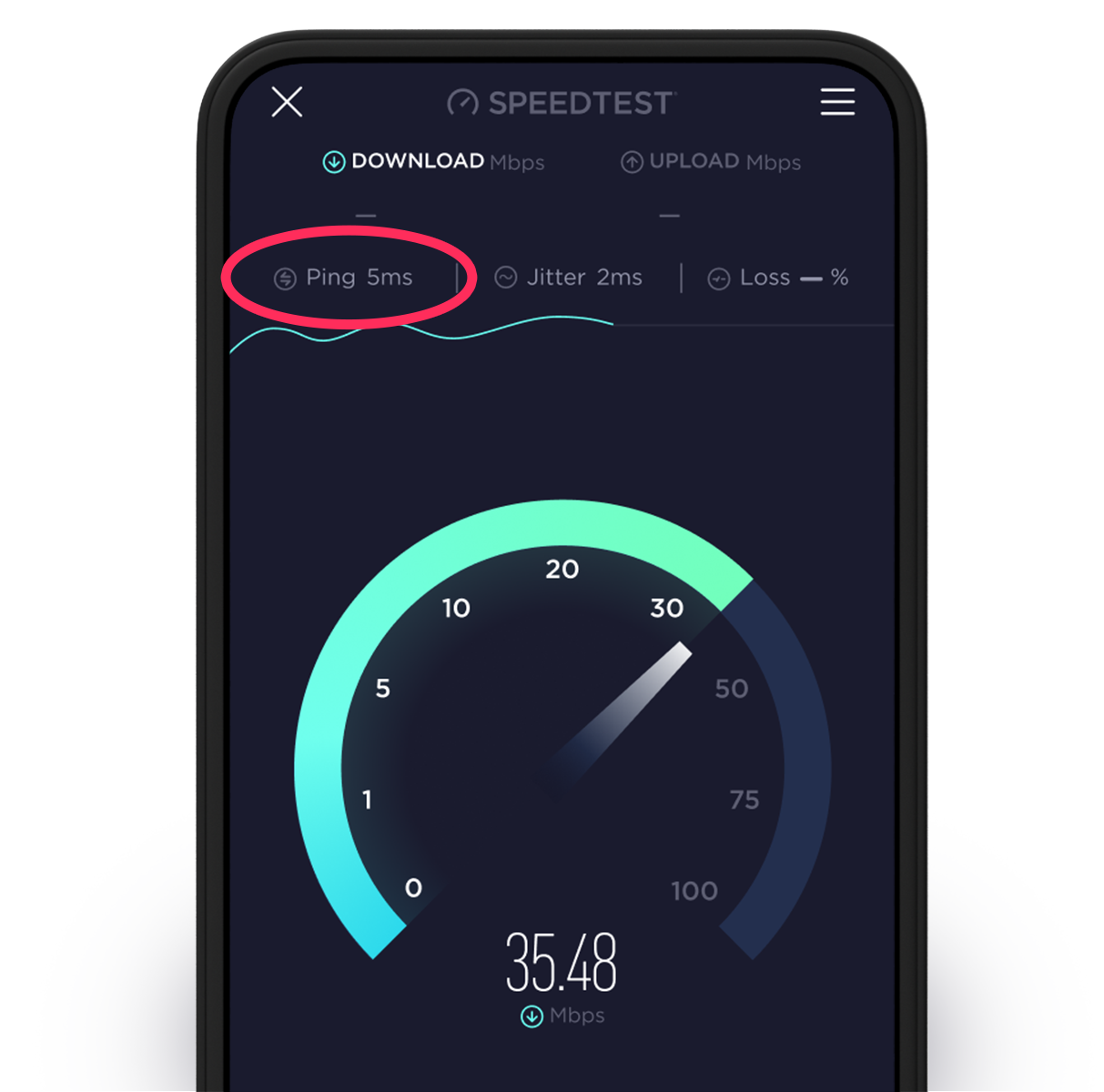
| December 3, 2025

The Need for Ongoing Network Performance Monitoring by U.S. States

Establishing Best Practices for U.S. State Broadband Program Accountability

Billions of dollars have already been deployed in the last several years to close the digital divide through state-directed projects with funding from the American Rescue Plan Act (ARPA) and the Capital Projects Fund (CPF). In 2026, we will finally start to see deployments begin with funding from the Broadband Equity, Access, and Deployment (BEAD) Program. State broadband offices are managing this unprecedented influx of federal funding, overseeing projects that are reshaping local economies, and transforming how communities access education, healthcare, and jobs.

The challenge now isn’t just about building networks; it’s also about monitoring the progress of delivering broadband to underserved communities. While the National Telecommunications and Information Administration (NTIA) sets broad guardrails for BEAD, most accountability for these expenditures ultimately falls on the states. Governors, legislatures, and local communities will all want proof that taxpayer-funded projects are delivering real, measurable improvements in connectivity and adoption.

In this article, we’ll explore why traditional oversight and one-time site inspection isn’t enough, how regular monitoring can strengthen state broadband programs, and how Ookla’s data and mapping tools help agencies maintain transparency for monitoring performance over time.

The Accountability Challenge Beyond Federal Mandates

State broadband offices aren’t just following federal guidance—they’re responsible for demonstrating that public investments are delivering measurable improvements in connectivity. Governors, legislators, and community officials expect clear evidence that awarded projects are expanding coverage and improving network performance. ARPA and CPF projects have already been funding large-scale broadband expansion, but those programs do not include any significant federal requirements for long-term performance monitoring. As BEAD-funded buildouts begin, NTIA is expected to require limited ongoing verification similar to what has been implemented for the Connect America Fund (CAF).

Without broad, consistent network performance testing, states risk losing visibility into how billions in public funds are being used, undermining their ability to demonstrate results or enforce accountability. Legislators and local officials will increasingly demand that broadband offices demonstrate outcomes, not just project completion, and pressure for transparent, data-backed reporting is only growing stronger.

Key considerations for state broadband offices include:

  • ARPA and CPF oversight gaps: Many of these earlier programs lack ongoing testing requirements, leaving states to fill the void with their own network performance monitoring standards.
  • BEAD expectations: Preliminary NTIA guidance, released September 19, 2025, suggests that testing requirements will likely follow those already outlined for CAF. That equates to a minimum of 5 and no more than 50 testing locations being required per award area, depending on the number of locations served. Testing requirements do not extend beyond the award areas in an ISP’s footprint unless necessitated by other support programs. 
  • Public accountability: State agencies must be ready to justify funding decisions and results to policymakers and the public alike. Search engines, and now AI, have given all of us an expectation of immediate answers. While annual reports serve as important milestones, most stakeholders will have no more patience than the general public. There is a high value in having more current statistics and updated maps readily available.

As states shift from deployment to documentation, accountability becomes not just a compliance measure but a foundation of trust with ISP partners and a direct responsibility to the communities involved.

The Limitations of One-Time Physical Inspection

Regularly monitoring performance is the only way to know whether broadband networks are actually delivering on their promises over time. Inspecting a project once—checking that equipment is installed and operating—might confirm that a build is complete, but it doesn’t reveal how that network performs for real users after the ribbon-cutting. Physical inspections can serve an important purpose at an early phase, but the expectation is that these new deployments will continue to meet the performance metrics promised in their award applications, at a minimum, over the next decade and beyond.

Broadband networks evolve with population shifts, infrastructure upgrades, and increasing user demand. What performs well during an initial inspection may degrade over time due to usage congestion, higher than expected adoption, aging equipment, or inadequate maintenance. One-time field checks simply cannot capture:

  • Actual user experience: A one-time test doesn’t reflect what residents see day to day.
  • Performance trends: Ongoing data collection via crowdsourced testing reveals where service quality improves, plateaus, or declines.
  • Adoption patterns: Geolocated test data helps identify whether networks are gaining traction across different communities.

NTIA uses Ookla data in its mapping tools to understand how connectivity looks at the community level—offering proof that consistent, crowdsourced insights add value far beyond one-time field inspections. Continuous visibility ensures states aren’t just checking boxes but improving outcomes for the people these programs were designed to help.

Speedtest Data Paints a Picture of Success

In the example below, we see the best 10% of Download Speeds for all fixed operators aggregated to Hex Resolution 7 in and around the Buena Vista, Georgia, community. The left image represents six months of Speedtest results ending on December 31, 2024. The right image represents six months of tests ending July 31, 2025 after new network equipment has been deployed.

Areas on the left map shown in yellow saw the best 10% of Speedtest results below 100 Mbps. Those in red saw the best 10% of Speedtest results at less than 10 Mbps. These same areas, six months later, broadly show best speeds over 500 Mbps. In fact, many areas shown in dark green have best speeds results above 900 Mbps (see chart below). This constitutes broad evidence that residents in proximity of Buena Vista, Georgia, have seen an astonishing improvement in their access to high quality broadband. 

The “Best 10%” metric is used to better represent what the ISPs are capable of delivering to their subscribers as opposed to the variety of experiences users have beyond the gateway. In contrast, median speeds are often used to competitively benchmark ISP performance. In Q3 2024, the median download speed on the Download chart below was 87.37 Mbps. By Q2 2025, the median speed had jumped to 211.73 Mbps for an increase of 142%. These examples demonstrate how real-world, continuously updated Speedtest results can be used to monitor improvements over time within a community.

Upload speeds have also increased with the best 10% of tests improving by 151% and median speeds improving by over 708%. These boosts in upload speeds are a strong indicator of significant deployment of synchronous fiber within the study area. Multisever latencies are also moving in the right direction, with the best tests improving (or falling) by almost 34% and median results by 42%. Also noteworthy, as households gained access to new services, the number of Speedtest results jumped from 1,008 in the earlier six month period to 2,352 in the latter six month period. This represents a 133% increase in testing activity as both service technicians and subscribers validated the improved broadband access.

While all of these metrics and more can be broken out by individual ISPs, the purpose of these generic “All Providers” illustrations is to show how overall connectivity in an area can dramatically improve, whether from a single provider or from incumbents finding themselves pressured to improve and retain market share. 

How States Can Implement Ongoing Monitoring

For most state broadband offices, accountability will not end when a project is marked complete. Leaders need to prove that networks are performing as promised, closing coverage gaps, and improving user experience long after construction wraps up. That level of visibility requires tools that turn speed and latency data into something decision-makers can easily interpret and act upon. State broadband offices can take accountability further by adopting platforms that transform large tables of testing data into actionable intelligence. 

Ookla’s datasets and visualizations allow agencies to move beyond compliance toward ongoing transparency and smarter, data-driven decision-making:

  • ArcGIS Layers: As an Esri™ partner, Ookla provides pre-aggregated data in formats that integrate directly with ArcGIS platforms. States can visualize broadband performance by census boundaries or hexagon grids, making it easier to track buildouts and evaluate service quality across geographies.
  • Dashboards and Reports: State broadband offices require data that is ready-to-use and actionable. New pre-built dashboards display both current and historical trends in metrics such as speed, latency, and consistency. These views can be shown by state, county, or census block group, supporting quarterly and annual reporting, as well as benchmarking against all other U.S. states and territories. Custom reports are also available for deeper performance insights.
  • Speedtest Insights: Ookla’s Speedtest Insights data helps states identify mobile coverage gaps and highlight disparities in both urban and rural connectivity. Some states have their own initiatives to improve wireless coverage and also use Ookla data to inform funding strategies for unserved and underserved areas. Should non-deployment funds be approved for wireless infrastructure investment, it could prove to be another game-changer for solving the digital divide and it is anticipated that the FCC will be sharing guidance in 2026 on the $9 billion Rural 5G Fund. 

Using these tools together gives broadband offices a current view of network health, helps track awardee performance, and ensures that investments translate into measurable improvements for residents and businesses.

Data-Backed Accountability: Best Practices for State Broadband Offices

State broadband programs have entered a new phase—one where oversight, transparency, and public accountability will be in demand as connectivity is already expanding using taxpayer subsidies. Physical inspection and limited performance checks will not meet the demands of governors, legislators, or the public. Ongoing monitoring, backed by trusted third-party data, is emerging as the new standard best practice.

Ookla’s datasets and visual tools give state broadband offices the means to see how well networks are performing in the real world, identify where support is still needed, and hold awardees accountable for promised outcomes. With ongoing visibility into performance, states can ensure their broadband dollars deliver long-term impact, genuine connectivity, and real accountability for every community they serve.

Reach out if you’d like to explore how Ookla data can support your efforts to expand quality broadband access to everyone.

Ookla retains ownership of this article including all of the intellectual property rights, data, content graphs and analysis. This article may not be quoted, reproduced, distributed or published for any commercial purpose without prior consent. Members of the press and others using the findings in this article for non-commercial purposes are welcome to publicly share and link to report information with attribution to Ookla.
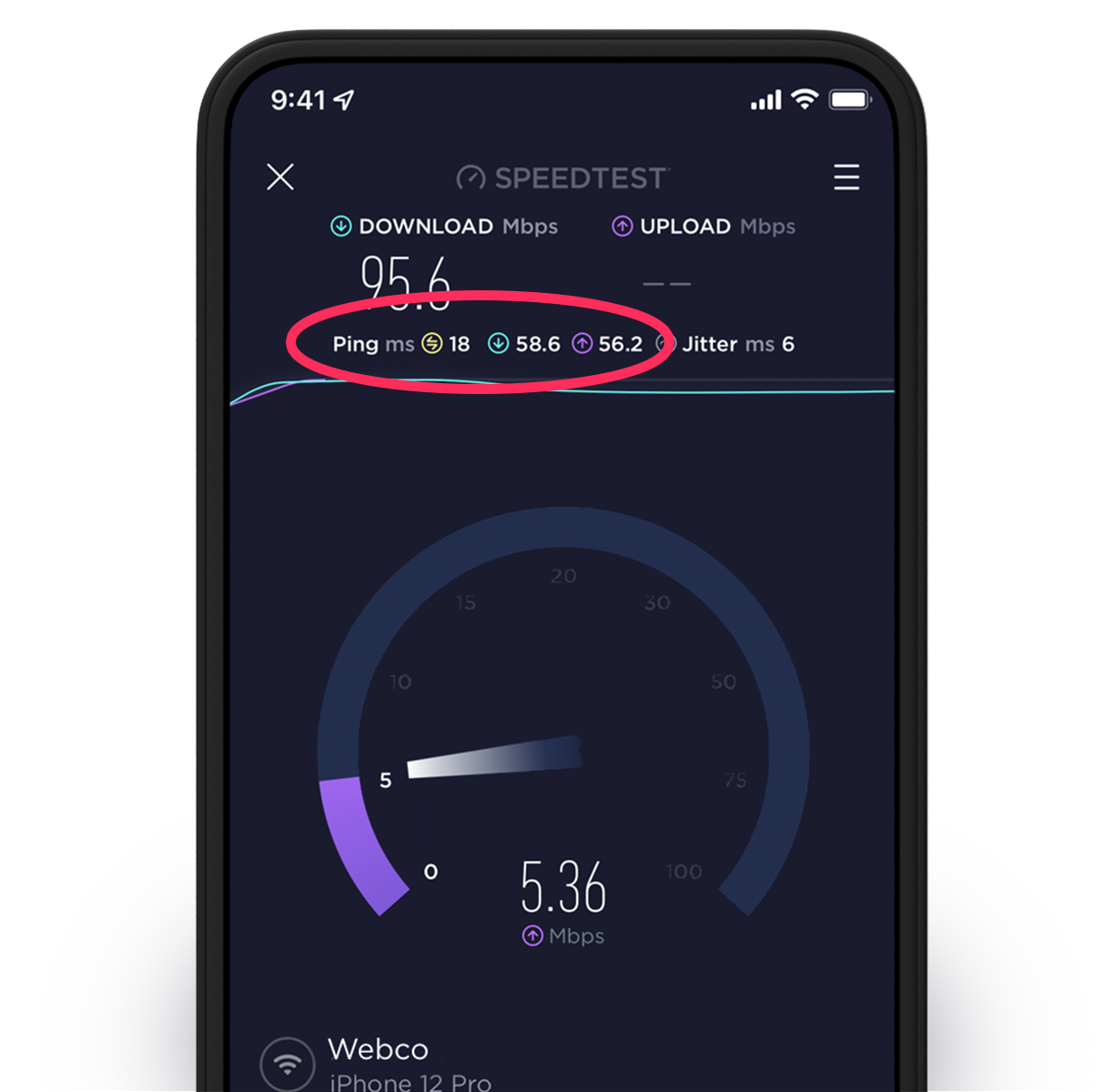
| December 15, 2025

Cellular is Faster than Wi-Fi in Many U.S. Airports

Still downloading shows over airport Wi-Fi before your flight? Here’s where you should consider your mobile provider

Many passengers’ pre-boarding ritual remains that of jumping on the free airport Wi-Fi to download the latest shows from Netflix, Hulu, or Amazon Prime Video for guilt-free binging during the flight. This is despite the improving performance of in-flight Wi-Fi and airlines hosting oodles of content — movies, games, shopping – accessible by fingertip through the screens on the back of the seat inches from one’s eyeballs.

If you are still logging into the airport Wi-Fi to download season 21 of One Piece (197 episodes) or have been saving the season 5 four-episode drop of Stranger Things for your flight home for the holidays (before three more episodes on December 25th), using your mobile service provider might be the faster option if you’re about to board your plane.

Key Takeaways

  • Mobile providers had a faster median download speed than Wi-Fi in most airports and more than twice as fast on average (219.24 Mbps, 101.39 Mbps).
  • Verizon was fastest in the most airports comparing among all mobile providers and airport Wi-Fi including ties, and even with T-Mobile considering outright results.
    • Among only mobile providers in airports, Verizon also led the airports count of outright fastest results. 
  • Airport Wi-Fi was faster than mobile providers in just over one-third of head-to-head comparisons (including ties), and faster than all mobile providers in five airports.
    • Older Wi-Fi technologies may be holding back internet speed in airports with 72.9% of Speedtest samples on Wi-Fi 5 and older generation versus 46.0% in the U.S. overall. 


Approach

In the past year, Ookla reported on airport Wi-Fi and mobile service together. However, mobile service together, in aggregate, does not represent the actual choice the most mobile consumers have before them. That is, the options for online connectivity are Wi-Fi and my mobile service provider.

Across the top 50 U.S. airports by passengers, we examined Speedtest user data for median download speed across the airport Wi-Fi (based on SSID; two airports’ network management policy excludes our tests) and by each of the big three mobile providers – AT&T, T-Mobile, Verizon – in the first half of 2025. Download speed is understandable to the individual, especially for our cherished Speedtest users, and directly appropriate to the use case of downloading content. And, more significantly, it is a representation of network capacity for everyone. That said, network design requirements and performance objectives of the Wi-Fi and mobile providers may not be to maximize throughput speeds, versus handling more connected devices or optimizing connection stability, for example.


Altitude: Highest and Lowest Five Airports for Mobile and Wi-Fi Download Speeds

All of the airport results are available in the map above, and here are the fastest and slowest five airport median download speeds (in Mbps) for each mobile provider and Wi-Fi.


Arrivals

The mobile providers held an edge overall and individually compared with Wi-Fi in terms of the number of airports with the fastest median download speed. Verizon had the most with 34 where it was faster than Wi-Fi, including two airports that were tied with Wi-Fi. T-Mobile was faster than Wi-Fi in 32 airports, and AT&T faster in 28 airports, including one tie.

Mobile or Wi-Fi? Number of airports where faster
Speedtest Intelligence data, count of airports by service provider with fastest median download speed, 1H 2025

Comparing just the mobile providers (i.e., Wi-Fi excluded), Verizon had the fastest median download speed in 26 airports (including two ties), T-Mobile was fastest in 16 airports (including one tie), and AT&T was fastest in 8 airports (including one tie).

Fastest Mobile Provider | Number of airports where fastest
Speedtest Intelligence, based on median download speeds, 1H 2025

Wi-Fi was faster than any mobile provider in these five airports:

  • Cincinnati/Northern Kentucky International 
  • San Francisco International 
  • Orlando International 
  • Hartsfield–Jackson Atlanta International 
  • Baltimore/Washington International (tie)

Mobile and Wi-Fi Median Download Speeds at U.S. Airports
Speedtest Intelligence® | 1H 2025

Observation Deck

Houston’s problem

Appearing in AT&T’s, Verizon’s and Wi-Fi’s bottom five, the two airports serving the Houston metropolitan area had slow median download speeds for their airport Wi-Fi as well.

Airport

AT&T

T-Mobile

Verizon

Airport Wi-Fi

George Bush Intercontinental 

4.77

242.29

15.79

21.36

William P. Hobby 

19.97

108.65

43.74

21.67

Wi-Fi is better by the Bay

As shown in Wi-Fi’s fastest five airports, Oakland International and Norman Y. Mineta San José International made that list. Rounding out the Bay Area airportstrio, the Wi-Fi speed in San Francisco International comfortably topped the mobile providers.

Airport

AT&T

T-Mobile

Verizon

Airport Wi-Fi

Oakland International 

229.70

28.58

103.90

194.23

Norman Y. Mineta San José International 

103.83

211.40

251.06

176.59

San Francisco International 

67.07

92.91

100.56

169.51

If you’re going to San Francisco, SFO was the only airport in our analysis with Speedtest samples using the 6 GHz band. This was on Wi-Fi 6E – too soon to expect Wi-Fi 7 in airports – with a median download speed of 364.74 Mbps (also remarkable were the median upload speed of 426.04 Mbps and an 8 ms multi-server latency).

Wi-Fi generations

Wi-Fi 6E is part of the Wi-Fi 6 standard (802.11ax) that has “extended” (hence the E) to include the 6 GHz band along with 2.4 GHz and 5 GHz bands.

Wi-Fi Generations | U.S. Airports and U.S. Overall
Speedtest sample mix, 1H 2025 and 1Q 2025

Examining the mix of Speedtest samples across Wi-Fi generations, an astonishing share (70.1%) were on Wi-Fi 5 (802.11ac), which was introduced in 2013. Wi-Fi 6, introduced in 2019, offers numerous benefits:

Speed and capacity 

  • Higher theoretical maximum speeds 
  • Sends data to multiple devices simultaneously in a single transmission (versus one device at a time)
  • Handles more connected devices

Performance and latency 

  • Manages traffic more efficiently for lower latency
  • More effective interference mitigation for better performance in crowded environments
  • Improved uplink technology means faster uploads

These are many good reasons for an airport to upgrade to Wi-Fi 6. However, the cost and effort needed for upgrading an airport is undoubtedly magnitudes beyond that of swapping out the home router. Most homes don’t have capital budget planning cycles for upgrading technology infrastructure, but judging by the overall U.S. Wi-Fi 6 at 44.2% (versus 26.2% in airports), more passengers are carrying devices capable of using the upgrade.

Boingo-es faster

Boingo, a connectivity solutions company, frequently appears in this research as the airport’s Wi-Fi service provider – 29 times in this analysis. Boingo-served airports averaged download speeds of 110.30 Mbps compared to non-Boingo airports at 88.38 Mbps. This difference in speed suggests that Boingo’s know-how is scalable and portable.

Baggage Claim

For the millions of passengers traveling through U.S. airports, this analysis offers a clear strategy: don’t assume the free Wi-Fi is your best option. This isn’t to denigrate Wi-Fi’s performance, which in most airports is more than satisfactory, and again, free (well, ad supported, frequently). It’s a great value. 

For mobile-first travelers, already paying for unlimited data, the sunk cost economics of downloading over cellular is also free. But also this isn’t a false-choice fallacy – both options are waiting for you to use. Run a Speedtest to see which to select. Luffy and Nancy Wheeler will be glad you did.


Recent Ookla analysis and reporting on airports:

Ookla retains ownership of this article including all of the intellectual property rights, data, content graphs and analysis. This article may not be quoted, reproduced, distributed or published for any commercial purpose without prior consent. Members of the press and others using the findings in this article for non-commercial purposes are welcome to publicly share and link to report information with attribution to Ookla.