Ookla and Microsoft announce an expanded partnership, establishing Speedtest® as the integrated network performance testing platform across Bing and Windows.
Microsoft and Ookla announced a major expansion of their strategic partnership. Powered by Ookla’s Speedtest Web SDK, the global standard for internet metrics will now be more closely integrated across Microsoft’s most popular platforms. This integration places trusted, accurate network diagnostics exactly where users already are—from Bing to the system tray.
This expanded partnership eliminates the friction of everyday network troubleshooting. Following a successful integration of Speedtest into Bing in late 2023, Speedtest by Ookla will now serve as the public internet speed testing platform of choice for Microsoft, easily launched from Windows 11.
For Windows users, this means a network speed test is accessible directly from the taskbar. Users can soon simply right-click their network icon in the system tray or open their Wi-Fi and Cellular Quick Settings to launch a diagnostic check without needing to manually open a browser or run a secondary tool.
Historically, diagnosing a slow connection meant manually opening a browser, navigating to a testing site, and running a secondary tool. Now, by embedding the testing launchpad within the OS, Microsoft and Ookla are empowering users to understand their network performance seamlessly.
Users across the Microsoft ecosystem gain several key advantages from this expanded partnership:
Faster access from Windows: Launch a speed test from common Windows networking entry points without manually opening the browser and searching, raising visibility for those less familiar with speed tests.
Frictionless Troubleshooting: Instantly diagnose connection speeds and latency natively within the OS or platform, empowering consumers and enterprise users to validate their internet performance without interrupting their workflow.
Trusted Global Infrastructure: Rely on Ookla’s established backend network to provide highly accurate, real-world throughput and latency metrics directly through Microsoft interfaces.
The integrated Speedtest experience is currently available to Windows Insiders in the Release Preview channel and is now rolling out broadly to all eligible Windows devices.
Ookla retains ownership of this article including all of the intellectual property rights, data, content graphs and analysis. This article may not be quoted, reproduced, distributed or published for any commercial purpose without prior consent. Members of the press and others using the findings in this article for non-commercial purposes are welcome to publicly share and link to report information with attribution to Ookla.
Ookla® is a global leader in connectivity intelligence that provides consumers, businesses, and other organizations with data-driven insights to improve networks and connected experiences.
Every day, millions of people rely on Speedtest® to get the most accurate, trusted view of their real-world internet performance. Whether streaming 4K content out and about, looking for a reliable connection to work remotely, or managing a smart home hub of devices, people need to know if their connection can keep up with their needs.
But end users aren’t the only ones that benefit from accurate, real-world connectivity testing information. Businesses, universities, healthcare facilities, and even the leading Internet service providers (ISPs) all use Speedtest to optimize their own networks.
At Ookla®, we sit at the intersection between the service providers tasked with designing and optimizing networks and the consumers that make use of those networks every day. Our insights not only help people choose a mobile or Wi-Fi service provider, we help organizations of every type optimize the networks and services they provide.
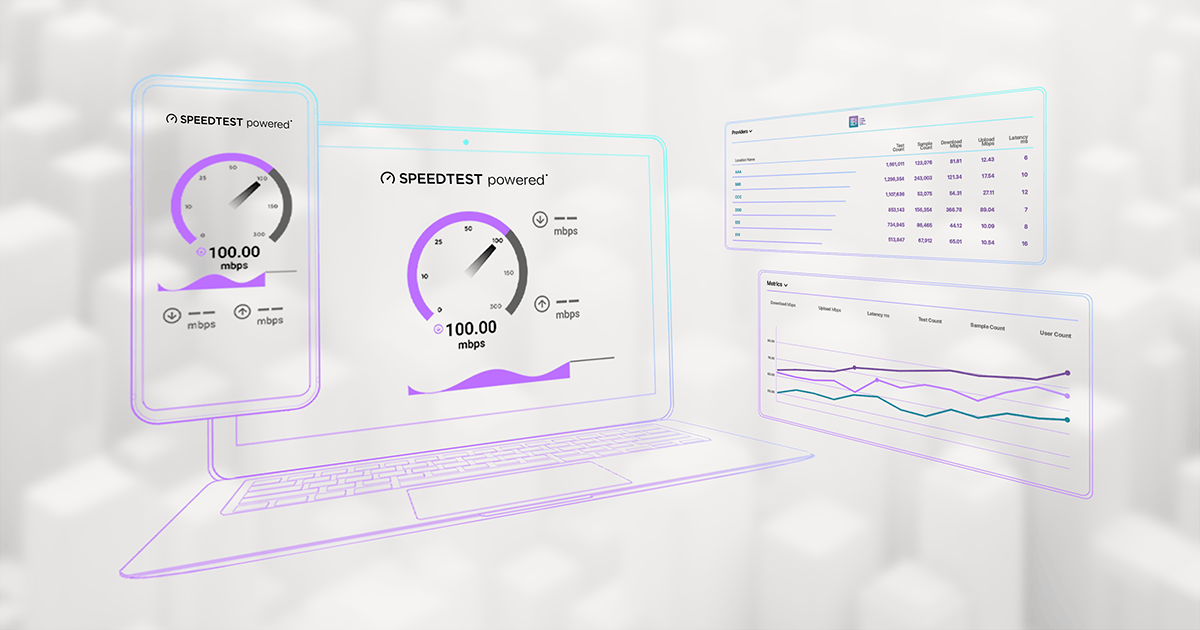
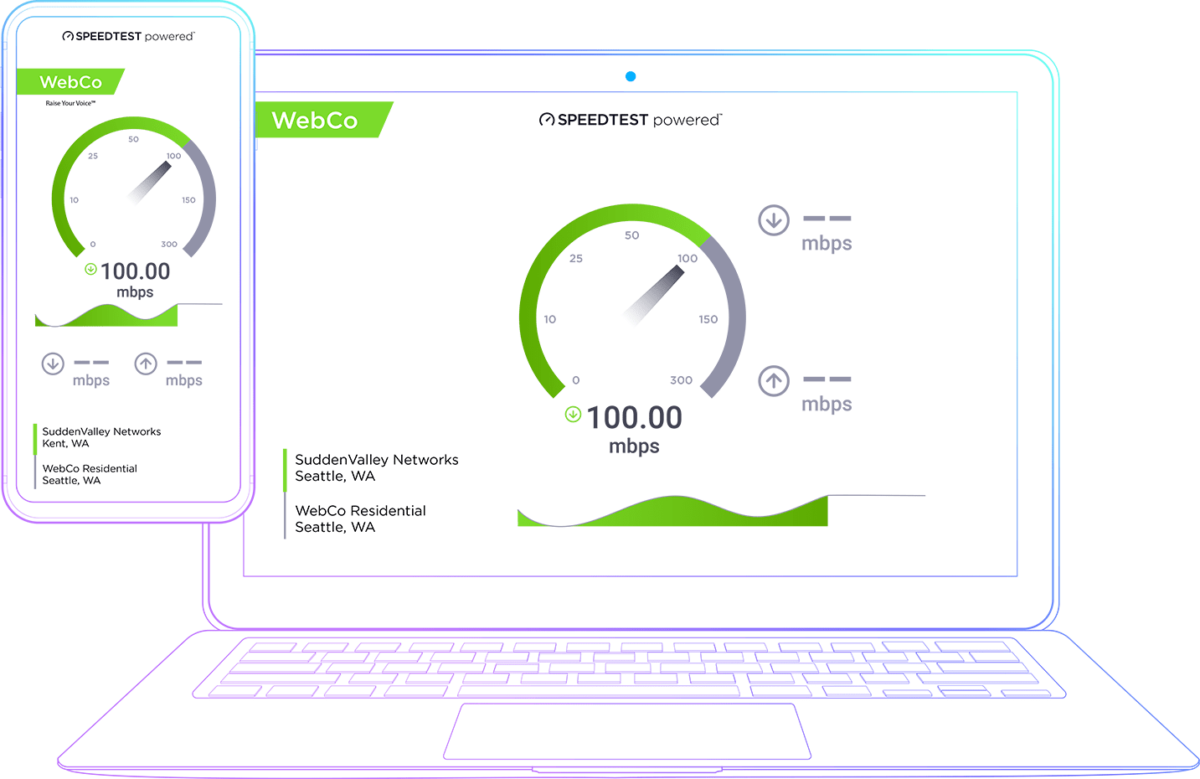
Speedtest Powered™ bridges the gap between these two worlds. As part of the enterprise side of Speedtest that most users never see, it encompasses three solutions: Speedtest Custom, Speedtest SDK, and Speedtest Embedded. These tools allow organizations to leverage the trusted testing capabilities that have made Speedtest the global standard for internet performance measurement while maintaining their unique brand identity. Enterprises rely on these solutions to solve connectivity challenges and deliver reliable service across every network touchpoint.
For a deeper look at how organizations are integrating Speedtest Powered across apps, websites, and connected devices, explore our latest white paper. Here’s how different enterprises are putting these tools to work:
Real-World Data Making a Real-World Impact
From education to aviation, organizations are integrating Speedtest capabilities directly into their systems to solve critical connectivity challenges. Here’s how they’re putting Speedtest Powered tools to work:
Enhanced Customer Experience for Airline In-Flight Connectivity
Many airlines offer in-flight Wi-Fi as a way for passengers to work or just consume some entertainment during their journey. Some even offer upgraded experiences with faster speeds or longer durations at an additional cost. To ensure the highest level of customer experience, airlines use Speedtest Embedded to consistently monitor Wi-Fi performance across their entire fleet. This solution enables real-time performance tracking and SLA verification, ensuring passengers receive the connectivity they expect (and at many times, pay for) at 35,000 feet. Airline IT teams can quickly identify and address connectivity issues, while flight crews have immediate visibility into network performance.
Remote Testing Solutions for Schools and Enhanced Work-from-Home Efficiency
A school district in a major city integrated Speedtest SDK into their student devices to support remote learning initiatives. With this capability, IT teams can monitor student connectivity without requiring manual testing, ensuring educational continuity and compliance with federal remote learning programs. The solution also helps the school district quickly identify and address connectivity challenges, enhancing both student success and operational efficiency. Similarly, enterprises use Speedtest Embedded to monitor connectivity performance across their remote workforce, enabling both automatic and on-demand testing to their private servers to ensure reliable work-from-home experiences.
Healthcare Innovation
A major healthcare system integrated Speedtest solutions across their operations to ensure reliable connectivity for critical medical services and remote staff. By implementing Speedtest Custom in their facilities, medical teams can verify network performance for bandwidth-intensive tasks like medical image transfers. Healthcare providers also use Speedtest Embedded to monitor connectivity for remote employees, ensuring their IT infrastructure supports seamless operations whether staff are on-site or working from home. This approach helps maintain operational efficiency while supporting the high-performance network demands of modern healthcare delivery.
5G Network Optimization
A major 5G provider integrated Speedtest SDK into their customer-facing mobile app to gain comprehensive insights into network performance. The solution enables periodic measurements across consumer devices while allowing both customers and support teams to run on-demand tests. This allows the provider to collect over 200 data points — including device information, Wi-Fi details, connection metrics, and location data — helping optimize their 5G network deployment and identify areas needing coverage improvements.
Customer Care Evolution
Relaying experiential information to a customer care rep can be challenging for invisible mediums like cellular and Wi-Fi services. Terms like “slow,” “stuttery,” “sometimes not great,” are instantly cleared up with a simple Speedtest. A leading ISP integrated Speedtest Custom into their support workflow, empowering customers to verify their connection speeds while providing valuable data to internal support teams. This has reduced the need for on-site technician visits and enhanced customer satisfaction through more efficient problem diagnosis and troubleshooting.
Telecom Compliance and Optimization
A mobile operator in Europe integrated Speedtest SDK into their mobile and web platforms to meet new regulatory requirements for subscriber speed reporting. The solution enabled users to test and report their speeds while providing the operator with comprehensive network performance insights. This breadth and depth of data, including device types, connection quality, and location information, helps the operator optimize their network, diagnose customer issues efficiently, and provide stakeholders with actionable information while meeting regulatory requirements.
Conclusion
Speedtest isn’t just the tool millions use to check their home internet speeds; it’s also powering network measurement and optimization behind the scenes across multiple industries.
Through Speedtest Powered solutions—Speedtest Custom, SDK, and Embedded—organizations can integrate trusted performance testing directly into their platforms while maintaining brand consistency. The result? Better data, better insights, and better customer experiences.
Ready to bring the power of Speedtest to your organization? Visit our product page for a deeper look into our solutions, or check out our latest white paper to explore real-world implementations.
Ookla retains ownership of this article including all of the intellectual property rights, data, content graphs and analysis. This article may not be quoted, reproduced, distributed or published for any commercial purpose without prior consent. Members of the press and others using the findings in this article for non-commercial purposes are welcome to publicly share and link to report information with attribution to Ookla.
Dave Andersen is a Marketing Program Manager at Ookla, where he creates enterprise and consumer content across Ookla’s brands. Dave got his start in the telco space in 2012, producing content for RootMetrics. Dave has a bachelors in marketing from Washington State University and studied creative writing in Oklahoma State’s MFA program.
The Speedtest app is designed to give you the power to test and troubleshoot your internet connection, all in one place. Over the past year, we’ve been working on enhancements to provide you with even more insights into your results. Here’s a look at the latest features that make understanding your internet experience easier than ever.
Troubleshoot Issues Faster with Downdetector Favorites
Ever wonder if slow speeds are because of your internet or the website you’re trying to access? Downdetector is directly integrated into the Speedtest app, providing you with an immediate way to check for widespread service outages. With the ability to track up to 20 of your favorite services, you can easily monitor the platforms you rely on most.
Take a Speedtest, then check Downdetector to see if the service you’re trying to access is experiencing a widespread issue.
Get clarity on whether a problem lies with your personal connection or a larger service disruption.
Understand Your Real-World Performance with Experience Ratings
With our new Experience Ratings, you can see how your Speedtest results translate into real-world performance. This new feature provides ratings based on your Speedtest results for: Web Browsing, Video Streaming, Online Gaming, and Video Calling.
Gain immediate insights on how your connection truly performs for the things you do most online, helping you optimize your setup for the best possible experience.
Speedtest ISP Finder: Compare Your Speeds
Want to see if your current internet plan is truly right for you? The new Compare Your Speeds feature draws insights directly from our Speedtest ISP Finder to help you find the best internet providers across the United States. After taking a Speedtest, scroll down to find the new feature and:
See how your network’s results compare with other ISPs in your area.
Find out if issues are due to your internet plan or if there is a potential internal network or hardware problem.
Equip yourself with the data to find the best plan that’s truly right for you in your area.
Ready to explore these new features? Update your Speedtest app today and take control of your internet experience!
Ookla retains ownership of this article including all of the intellectual property rights, data, content graphs and analysis. This article may not be quoted, reproduced, distributed or published for any commercial purpose without prior consent. Members of the press and others using the findings in this article for non-commercial purposes are welcome to publicly share and link to report information with attribution to Ookla.
Ookla® is a global leader in connectivity intelligence that provides consumers, businesses, and other organizations with data-driven insights to improve networks and connected experiences.
As our digital lives grow more connected and complex, expectations for network performance are rising. It’s no longer just about speed — it’s about whether your internet experience works the way you need it to: consistently, smoothly, and without frustration. As those expectations evolve, so must the way we measure and recognize great networks. New expectations call for new testing — and that means new awards.
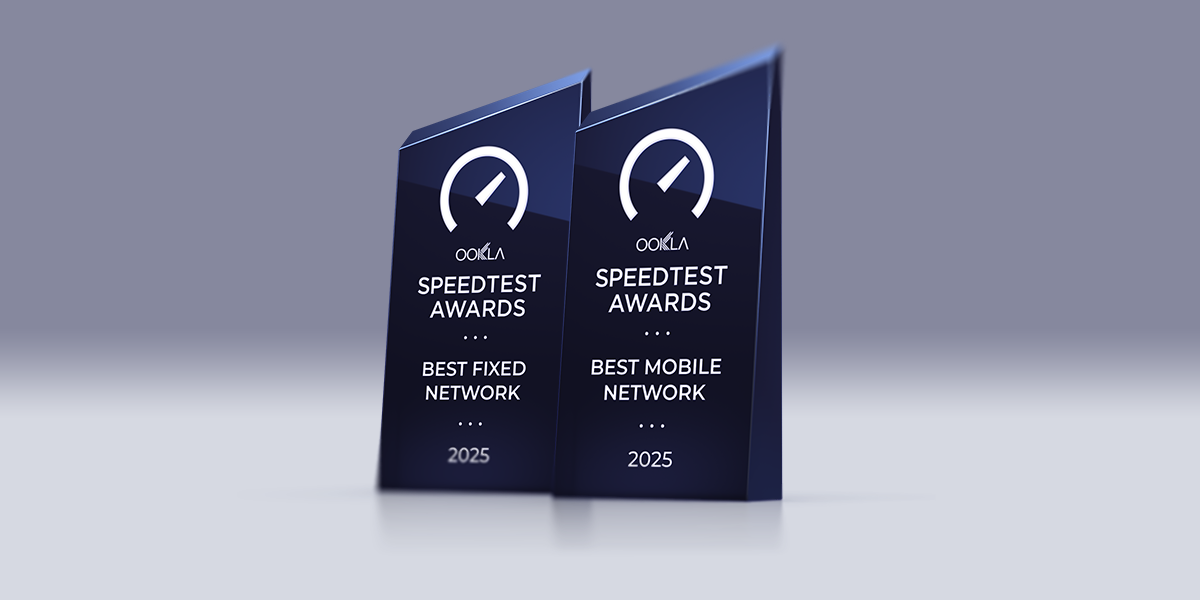
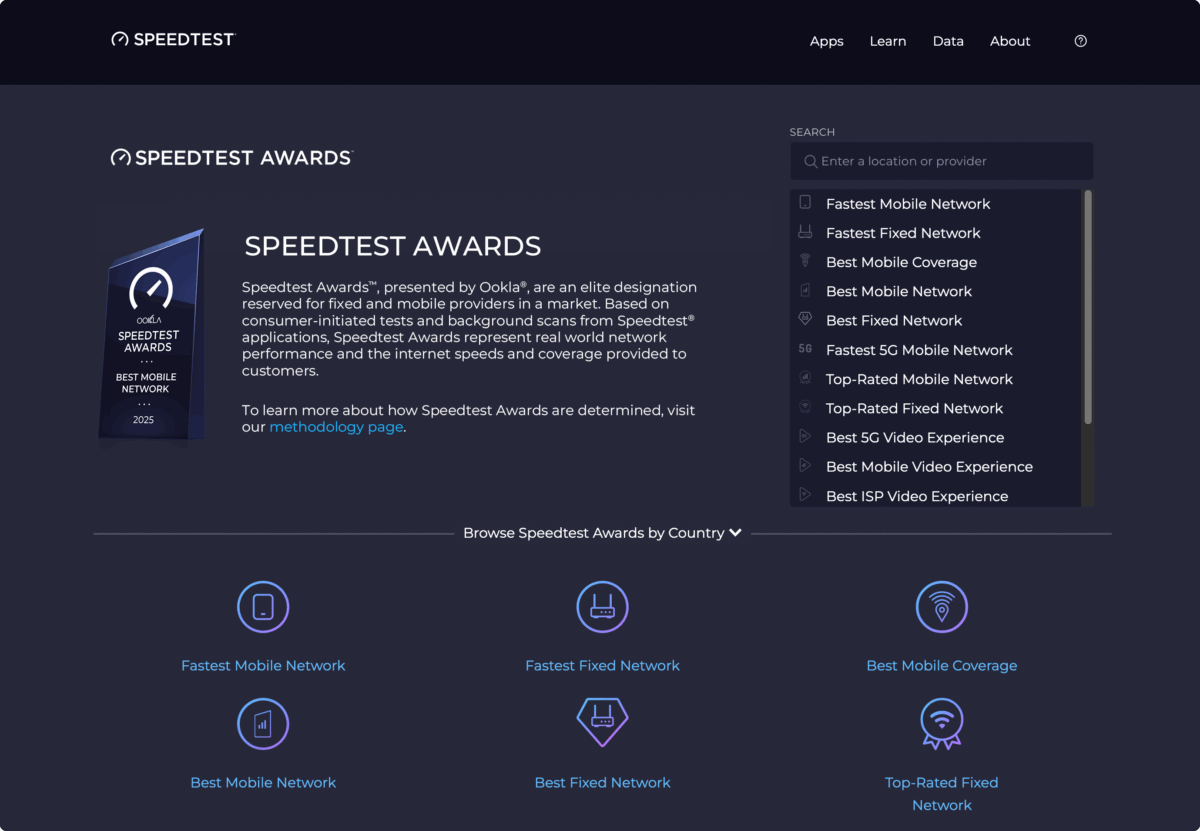
That’s why we’ve updated the Speedtest Awards™ methodology to better reflect what really matters to consumers. The changes include smarter performance criteria and introduce two new awards: Best Mobile Network and Best Fixed Network. These awards — along with updates to our Fastest Network recognition — now factor in not just raw speed, but also real-world experience metrics like responsiveness and quality of experience.
This article explores Ookla’s updated Speedtest Awards™ methodology, designed to offer a more comprehensive view of network performance. We’ll explain how these new awards combine crucial QoE and QoS insights, and why speed still plays a key role in the bigger performance picture, especially when paired with real-world experience metrics.
Why Speed Still Matters
Quality of Experience (QoE) and Quality of Service (QoS) metrics offer valuable depth into network performance — and among them, speed stands out as the most tangible and universally understood. Speed is a key QoS measure that reflects the capacity of a network and continues to play a central role in enabling new digital use cases. That role is cyclical: faster speeds unlock new applications, which in turn drive demand for even greater speeds — continually pushing the boundaries of what networks can deliver.
Speed is foundational because it:
Affects how quickly users can load and upload content and use apps: From instant webpage loading to rapid file downloads, speed is critical.
Acts as a high-level indicator of overall network health and capacity: A fast network generally indicates robust infrastructure and sufficient capacity to handle demand.
Enables emerging and demanding use cases: High-bandwidth applications like 4K streaming, virtual reality (VR), and cloud gaming are only possible with consistently high speeds.
In short, speed isn’t going anywhere. It continues to be critical for users and is a useful and widely understood metric for operators — especially when paired with QoE metrics.
A More Holistic View: Speedtest Connectivity Score™
While speed remains a major part of the equation, the true measure of a network’s performance lies in how it enables real-world activities. The Speedtest Connectivity Score™ provides a rich, contextual understanding of the actual consumer experience by factoring in not just speed, but also the responsiveness (or latency) of common online tasks like web browsing and video streaming. This holistic approach helps operators understand what truly matters to their users.
The Speedtest Connectivity Score is calculated on a 0-100 scale and comprises three key components:
Speed Score: It combines download and upload speeds with latency to provide a smarter, more complete measure of a network’s overall responsiveness.
Web Browsing Score: This measures the responsiveness of web page loading, reflecting how quickly and smoothly users can navigate the internet.
Video Streaming Score: This assesses how well a network handles video playback, reflecting the ability to stream popular services smoothly and without buffering or interruptions.
The components of the Speedtest Connectivity Score — speed, web browsing responsiveness, and video streaming quality — work together to provide a more complete view of real-world network performance. By blending speed with Quality of Experience (QoE) insights, the Speedtest Connectivity Score reflects what matters most to users: the ability to seamlessly browse, stream, and stay connected in their everyday lives.
The Ookla Difference: Measuring What Matters Most
Ookla stands apart by delivering superior insights on both Quality of Service (QoS) and Quality of Experience (QoE) — thanks to our unmatched scale, methodology, and real-world data.
Scale and volume of QoS testing: Our consumer-initiated Speedtests are trusted worldwide by millions every day. Consumers actively hit the “Go” button, generating 11+ million daily tests. This huge volume of consumer-initiated tests offers a trusted, real-world snapshot of network performance that’s both broad and representative.
Testing anywhere users go: Our testing reaches wherever phones go — indoors, rural areas, stadiums, highways, and beyond. This ensures our data captures performance at the times and places consumers actually use their devices, unlike other testing methods.
Scale and relevance of real-world QoE measurements: We offer QoE insights like web browsing and video streaming across more than 200 countries. And those web browsing and video streaming insights come directly from when consumers are actively engaged on their phones — not from passive background collection, not from synthetic testing, and not from estimates of what the consumer experience should be like based solely on RF conditions. This direct measurement delivers a practical benchmark of how well networks support the activities consumers care about most.
With a combination of unparalleled scale with real-world relevance, Ookla provides operators and users alike with the most precise and actionable view of network performance — both in speed and quality.
Introducing New Speedtest Awards™: Recognizing True Performance
Our commitment to accurately reflecting the consumer network experience is driving the evolution of our Speedtest Awards. The new methodology, which incorporates QoE and QoS insights, is designed to recognize operators who truly excel in delivering superior connectivity.
Best Fixed Network Award: Highlights operators excelling in both Quality of Service (QoS) and Quality of Experience (QoE), reflecting overall fixed network performance that matters to users.
Best Mobile Network Award: Recognizes mobile operators delivering strong, dependable performance by measuring both QoS and QoE to capture real-world user experience.
Tying It All Together: Speed and QoE for a Complete Picture of Performance
Speed and QoE aren’t competing metrics—it’s quite the opposite. They work together to give a complete picture of network performance. Speed shows how fast the network can go, acting as a quick snapshot of its capacity. QoE reflects how the connection actually feels to the user and how well it supports real-world activities. When combined, speed and QoE provide a stronger, more balanced view of performance than either metric alone.
This comprehensive approach to network performance is precisely why Ookla’s Speedtest Awards™ are evolving to incorporate not just raw speed, but also key QoE metrics through the Speedtest Connectivity Score. By acknowledging both the underlying power and the real-world usability of a network, our awards highlight providers who truly excel in delivering superior connectivity.
Speedtest has long given the cleanest and most trusted view of speed performance; we believe our QoE data is similarly a touchpoint for how this type of data should be collected. Providing the best and most relevant view of performance for today’s connectivity needs means pushing beyond traditional testing methods and metrics. That’s what we’re offering. It’s better data, for better insights, to help create better connectivity for all.
Interested in learning how these changes might impact you? Contact us—we’re happy to chat.
Ookla retains ownership of this article including all of the intellectual property rights, data, content graphs and analysis. This article may not be quoted, reproduced, distributed or published for any commercial purpose without prior consent. Members of the press and others using the findings in this article for non-commercial purposes are welcome to publicly share and link to report information with attribution to Ookla.
Dave Andersen is a Marketing Program Manager at Ookla, where he creates enterprise and consumer content across Ookla’s brands. Dave got his start in the telco space in 2012, producing content for RootMetrics. Dave has a bachelors in marketing from Washington State University and studied creative writing in Oklahoma State’s MFA program.
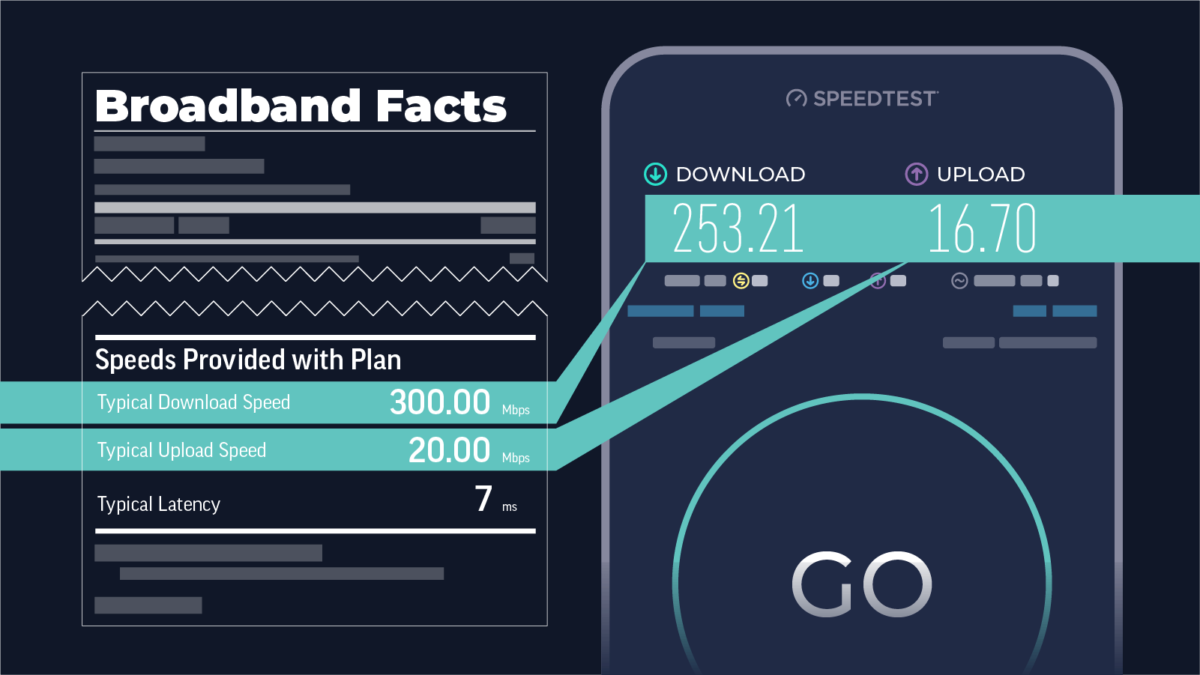
Network performance stats in the tech press catch our attention here at Ookla – especially download and upload speeds or latency. Here’s a quick look into this press release about the Starlink satellite internet service being offered by Claro Colombia. The release states that Starlink will offer download speeds ranging from 40 to 220 Mbps, upload speeds ranging from from 8 to 25 Mbps, and latency in the range of 20 to 60 ms.
Speed and Latency Ranges Are In Reach
On the surface, Starlink’s performance claims appear possible for users to achieve, even though Q3 2024 Speedtest user data for Starlink in Colombia is not yet there.
The article doesn’t state how its ranges were determined, so, to make a comparison, we constructed our own ranges by examining the lowest and highest 10th percentiles, along with medians, of Starlink Speedtest users.
For download speeds, the Speedtest range (8 – 140 Mbps) fell short of the Starlink range (40 – 220 Mbps) and the median Speedtest (54 Mbps) was well short of the middle of the Starlink range (130 Mbps). Still, there was a healthy overlap, and there are other factors that can explain slower speeds in Speedtest user test than what Starlink is providing, such as older user equipment or Wi-Fi propagation path loss.
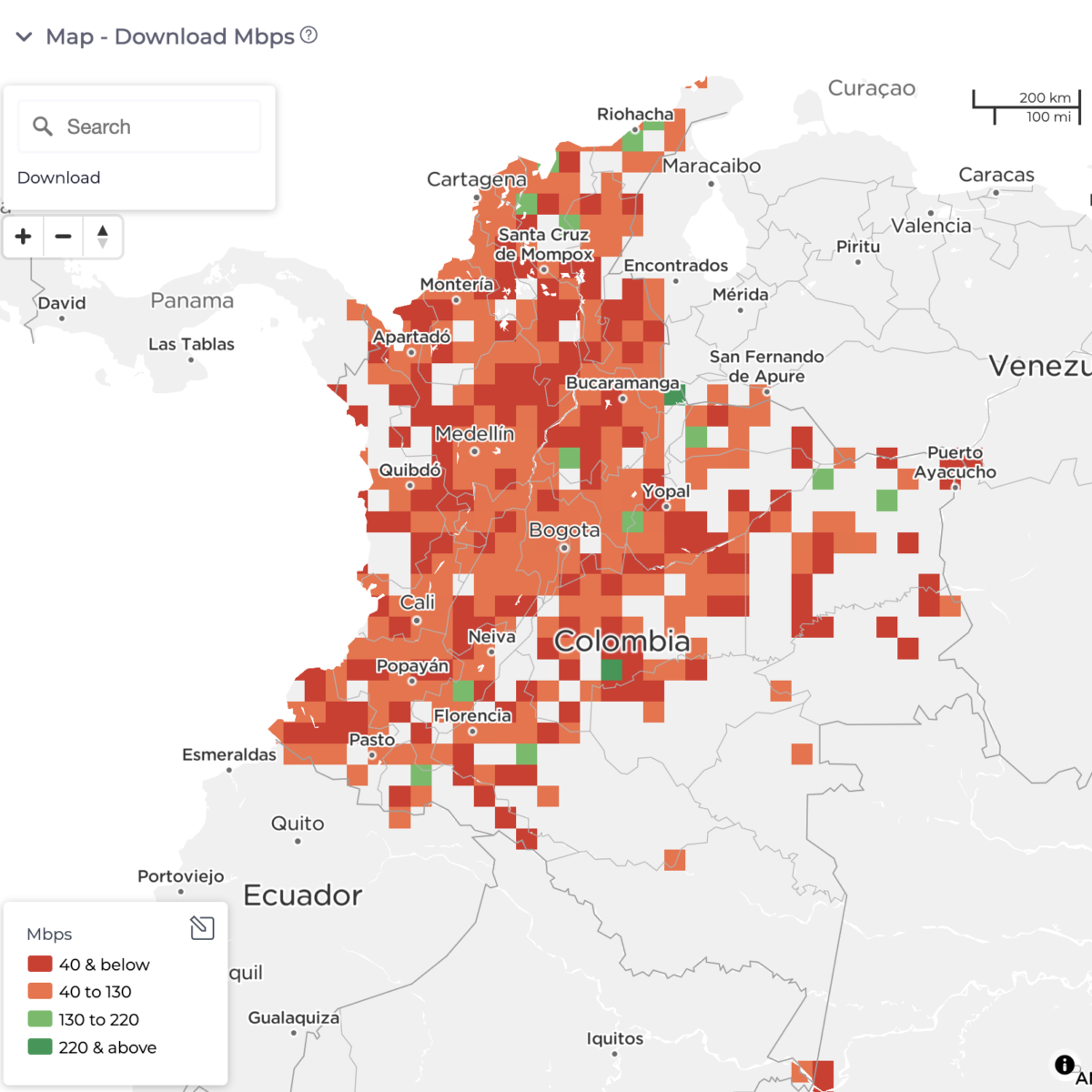
To get a picture of download speeds, we mapped our Starlink Speedtest users’ tests based on the 40 – 220 Mbps range with a color break at the 130 Mbps midpoint. The light red and light green squares coalesced, forming an area of tests within the range – a clear visual majority. And while many tests fell below the range (dark red squares), a few were also above range (dark green squares).
Turning to upload speeds, the Speedtest range (4 – 27 Mbps) and the Starlink range (8 – 25 Mbps) were much closer than download speeds. Likewise, Speedtest median (14 Mbps) and the Starlink midpoint (17 Mbps) are close, too.
Last, the latency Speedtest range (30 – 116 ms) and the Starlink range (20 – 60) were also closer than they may appear. Latency tests are susceptible to extreme values (very high latency) that result in a long-tail effect. More insightful for latency is the closeness of the Speedtest median (44 ms) and the Starlink mid-point (40 ms).
Quick Take Away
Starlink began service in Colombia in February 2023. It continues to add capacity to its constellation and introduce new terminals to support more use cases.
The Speedtest perspective finds the speed and latency ranges in the press release to be credible, and we look forward to revisiting the data to see more Speedtest users enjoying the benefit of the Claro Colombia and Starlink alliance.
Low for Starlink is the bottom of its stated range for speed and top for latency; for Speedtest it is the slowest 10th percentile for speed and highest 10th percentile for latency ↩︎
Mid for Starlink is the simple average of its stated range; for Speedtest it is the median speed ↩︎
High for Starlink is the top of its stated range for speed and bottom for latency; for Speedtest it is the fastest 10th percentile for speed and lowest 10th percentile for latency ↩︎
Ookla retains ownership of this article including all of the intellectual property rights, data, content graphs and analysis. This article may not be quoted, reproduced, distributed or published for any commercial purpose without prior consent. Members of the press and others using the findings in this article for non-commercial purposes are welcome to publicly share and link to report information with attribution to Ookla.
Kerry Baker leads Ookla's research and content efforts in North America. He has over 20 years experience in the telecom industry, primarily at T-Mobile studying network performance benchmarking and customer experience. Kerry also has founder’s experience with four technology-related startups. Kerry holds masters degrees from the University of Washington in Business and International Political Economics.