| November 5, 2025

MTN Opcos Generally Outperformed Airtel, Orange, and Vodacom in SSA During H1 2025

More operators in Sub-Saharan Africa (SSA) are introducing 5G, as they continue to expand their 4G networks. For telecom service providers, it is crucial to gauge how these investments affect mobile customer experience and support their operational and financial objectives. Using Ookla Speedtest Intelligence® data and operators’ reports, we analyzed the mobile network and operational performance of operating companies (opcos) and joint ventures of four main groups in the region – Airtel Africa, Orange, MTN, and Vodacom – across the 8 countries. These countries account for 55% of the region’s mobile cellular connections, according to GSMA Intelligence. They include:

  • East Africa: Kenya, Tanzania, Uganda
  • Southern Africa: Democratic Republic of Congo (DRC), Botswana, and South Africa
  • West Africa: Cote d’Ivoire and Nigeria
Map of Select Opcos and Joint Ventures for Airtel, Orange, MTN, and Vodacom in Sub-Saharan Africa

Key Takeaways

  • The groups’ opcos in South Africa and Botswana led SSA with a median mobile download speed of over 50 Mbps. Speedtest Intelligence data shows that MTN South Africa delivered the fastest median download speeds for All Technologies across the analyzed operators, at 74.76 Mbps in H1 2025. It was followed by MTN’s joint venture, Mascom, and Orange in Botswana, with a download speed of over 56 Mbps.
  • MTN South Africa led the region in median download speed, while Vodacom ranked fourth among surveyed operators, but the latter came first for 5G in South Africa. MTN significantly outperformed in both median download and upload speeds of 74.76 Mbps and 13.65 Mbps, respectively, in H1 2025, while Vodacom recorded 52.31 Mbps and 7.88 Mbps, respectively. However, Vodacom took the top spot with 5G median download and upload speeds of 174.9 Mbps and 11.86 Mbps, respectively. This advantage is linked to the use of a wider bandwidth of spectrum bands and a network strategy that prioritizes network densification in urban centres.
  • MTN took the top spot in Nigeria and Uganda, way ahead of Airtel in terms of median download and upload speeds. MTN Uganda is the top performer among the surveyed opcos in East Africa, while MTN Nigeria outperformed other operators in West Africa in 5G download speed.
  • Mascom and Orange in Botswana were among the best-performing operators. The country has been a pioneer in 5G, with Mascom getting a slight edge in median download and upload speeds over Orange, at 65.34 Mbps and 18.35 Mbps, respectively. In Côte d’Ivoire, where the same two groups compete, Orange secured the top spot with a median download speed of 35.25 Mbps.
  • MTN operations in Uganda, Nigeria, and Botswana were also the only operators with a 5G median download speed above 200 Mbps. The second group of operators includes Orange (Botswana), Safaricom (Kenya), Airtel (Nigeria and Uganda), Vodacom, and MTN (South Africa). These operators achieved median download speeds ranging from around 160 Mbps to 186 Mbps. In contrast, Airtel (Tanzania and Kenya) and Vodacom (Tanzania) had lower median download speeds, ranging between 60 Mbps and 130 Mbps.
  • Safaricom commanded a significant lead over Airtel in median download speed for All Technologies in Kenya, while in Tanzania, Airtel comfortably outperformed Vodacom in 5G. Safaricom comes in on top by a long shot in Kenya for median download and upload speeds for All Technologies; more than 2.4x higher than those of Airtel at 43 Mbps and 15.11 Mbps, respectively, the highest gap between two opcos in any reviewed market. The gap in 5G performance is even bigger, with Safaricom’s download and upload speeds around three times those of Airtel.
  • In the DRC, which hosts opcos from three groups, Orange outperformed in download speed, and Airtel had the highest upload speed. However, compared to the other groups’ opcos, the lack of 5G services and relatively limited 4G performance in the country weighed on the ranking of all DRC operators, with Airtel and Vodacom trailing at the bottom of the opco list.

The groups’ opcos in South Africa and Botswana led SSA in terms of  median mobile download speeds

Speedtest Intelligence data shows that the median download speed of the 19 selected operators from the four groups ranged from 14.8 Mbps for Vodacom (DRC) to 74.76 Mbps for MTN (South Africa) in H1 2025, while the median upload speed varied between 6.15 Mbps in Airtel (Kenya) and 18.35 Mbps for Mascom (Botswana), a joint venture of MTN.

We also used Speedtest Intelligence data to assess how frequently mobile users connect to 4G and/or 5G networks (referred to as Network Availability). A high propensity to connect to 4G and/or 5G suggests a high level of network reach and users’ readiness to use 4G/5G services (i.e., owning a smartphone and subscribing to a 4G/5G data package). Generally, the more time users spend connected to 5G, the more likely they are to experience better performance.

All Technologies and 5G Median Download and Upload Speeds, Select Operators and Countries in Sub-Saharan Africa
Source: Speedtest Intelligence® | H1 2025
All Technologies and 5G Median Download and Upload Speeds, Select Operators and Countries in Sub-Saharan Africa

The four groups’ operators in Côte d’Ivoire and the DRC have not yet widely launched 5G services. Deployment of 5G generally leads to a boost in mobile performance, with operators in South Africa, Botswana, Uganda, and Kenya leading the region. Sparse 5G coverage likely limited the 5G performance uplift for operators like Airtel (Kenya, Nigeria, and Tanzania) and Vodacom (Tanzania). These operators underperformed in terms of median download and upload speeds. 

On the other hand, MTN (Cote d’Ivoire) and operators in DRC, which have not commercialized 5G, tended to underperform others, with a median download speed not exceeding 25 Mbps in H1 2025. The few exceptions include Orange (Côte d’Ivoire), which achieved competitive performance levels despite not having launched 5G.

Comparing the 5G performance of the same operators shows that MTN’s opcos and joint ventures top the list. MTN operations in Uganda, Nigeria, and Botswana were the only operators with a 5G median download speed above 200 Mbps. The second group of operators, which includes Orange (Botswana), Safaricom (Kenya), Airtel (Nigeria and Uganda), Vodacom, and MTN (South Africa), achieved a median speed between around 160 Mbps and 186 Mbps. Airtel (Tanzania, Kenya) and Vodacom (Tanzania) trail the list with a median download speed between 60 Mbps and 130 Mbps.

In terms of regional differences, operators in Southern Africa tend to perform better than those in Eastern Africa, with median download speeds above 45 Mbps. Operators in Eastern Africa also deliver better network download speeds than those in Western Africa, where the top speed reached 35.25 Mbps for Orange (Côte d’Ivoire) in H1 2025.

Median Download per Region, Select Operators and Countries in Sub-Saharan Africa
Source: Speedtest Intelligence® | H1 2025
Median Download per Region, Select Operators and Countries in Sub-Saharan Africa

Sub-Saharan Africa continues to be an attractive market for telecommunications groups despite some headwinds

Africa remains appealing to telecom groups because of a combination of a young and rapidly growing population and demand for digital and financial services. Despite positive economic prospects, the groups reported headwinds in the form of currency devaluation and inflation impacting revenue, high and fluctuating energy costs, subdued economic growth affecting demand, and regulatory interventions, such as a reduction in mobile termination rates in Uganda (affecting MTN and Airtel). Tariff adjustments helped some operators, such as Airtel in Nigeria, to accelerate revenue growth to offset the effect of currency devaluation.

For the rest of the article, we analyze the markets by sub-region:

Safaricom significantly outperformed Airtel in both download and upload speeds for 5G and All Technologies

Kenya is a vital market for both Airtel and Vodacom with a thriving digital and financial services ecosystem. According to the Communications Authority of Kenya (CA), there were 76.2 million mobile subscribers in March 2025, translating into a population penetration rate of 145.3%. Thanks to operator customer win-back campaigns, the number has grown by 4.8 million SIMs since December 2024. The market is advanced in terms of data usage, thanks to the 42.3 million smartphone users. There were 57.1 million mobile data users, out of which the great majority, or 36.3 million, used 4G, while over 1.1 million connected to 5G. The Kenyan market is led by Safaricom (part of Vodacom), which has long maintained its dominant position. Safaricom held a 62.9% share, while Airtel Kenya is the second player, with a market share of 32.7%.

Armed with an extended 4G network and a growing 5G network, Safaricom has shifted its focus from connectivity to enabling digital services. To this end, it announced an investment of US$500 million in AI infrastructure across East Africa over the next three years (2025-2028), with Kenya as the focal market. On the other hand,  Airtel announced in June 2024 that it would invest more than $77 million to deploy 480 new 4G and 5G sites, which will reach 1,000 by the end of the year and increase the population’s coverage from 89% to 94%.

According to Speedtest data, Safaricom’s 4G Availability —the percentage of time users spend connected to 4G — and 5G Availability —the percentage of time users with 5G-capable devices spend connected to 5G only — is slightly lower than that of Airtel. In terms of performance, Safaricom comes out on top by a long shot for median download and upload speeds that are more than 2.4x higher than those of Airtel, at 43 Mbps and 15.11 Mbps, respectively, the highest gap between the two opcos in any reviewed market.

The gap in 5G performance between the two operators is even more pronounced. Safaricom’s median speed reached 183.26 Mbps, and its upload speed attained 27.12 Mbps, around three times the speeds achieved by Airtel in H1 2025.

4G/5G Network Availability, Airtel and Safaricom, Kenya
Source: Speedtest Intelligence® | H1 2025
4G/5G Network Availability, Airtel and Safaricom, Kenya

All technologies and 5G Performance, Airtel and Safaricom, Kenya
Source: Speedtest Intelligence® | H1 2025
All technologies and 5G Performance, Airtel and Safaricom, Kenya

Vodacom commands a slight lead in median download speed in Tanzania and enjoys a higher 5G Availability than Airtel

Tanzania is a high-growth market with 91.7 million active mobile subscribers as of June 2025 (excluding M2M), according to the Tanzania Communications Regulatory Authority (TCRA). Of these, 53.8 million are active mobile data subscribers.  Vodacom controls nearly one-third of mobile subscribers (32.1%), followed by Yas (formerly Tigo) with 28.1%. Airtel is the third largest operator, commanding a 22.4% market share.

Vodacom’s 4G population coverage reached 72.5% in FY 2025. It acquired Smile Communications in early 2024 for around US$28.18 million, giving it access to essential spectrum resources (20MHz of 800MHz and 20MHz of 2600MHz bands), and enabling it to expand its 4G coverage and accelerate the rollout of 5G technology. On the other hand, Airtel Tanzania has actively engaged in government tenders through the Universal Communications Service Access Fund (UCSAF). As a result of these efforts, 81% of the total population in Tanzania is covered by Airtel’s 4G network.

4G is the most popular technology to access the internet as it is used by nearly 24 million users. According to TCRA, 4G population coverage reached 92% in June 2025, supported by 13,736 base stations. On the other hand, 5G remains a niche service as coverage reached 26%, provided by 1,038 base stations. 5G is used by 1.3 million mobile subscribers, representing 2.4% of the mobile data user base and 1.4% of total mobile subscribers. 

Speedtest Intelligence data reveals that both operators have a fairly similar level of 4G Availability, but   Vodacom pulls ahead in terms of 5G Availability, with 26.4% compared to 2.8% for Airtel. This contrast in 5G Availability did not translate into a significant lead for Vodacom in network performance, as Vodacom recorded a median download speed of 21.42 Mbps for all technologies compared to Airtel’s 19.58 Mbps.

In contrast, Airtel comfortably leads in 5G with a median download and upload speeds of 130.35 Mbps and 18.7 Mbps, respectively. By comparison, Vodacom achieved a 5G median download speed of 89.09 Mbps and a median upload speed of 12.11 Mbps.

4G/5G Network Availability, Airtel and Vodacom, Tanzania
Source: Speedtest Intelligence® | H1 2025
4G/5G Network Availability, Airtel and Vodacom, Tanzania

All technologies and 5G Performance, Airtel and Vodacom, Tanzania
Source: Speedtest Intelligence® | H1 2025
All technologies and 5G Performance, Airtel and Vodacom, Tanzania

MTN Uganda is the top performer among the surveyed opcos in East Africa

Uganda’s mobile telecom operator market is dominated by MTN and Airtel. According to the Uganda Communications Commission (UCC), there were 44.6 million mobile subscribers as of March 2025, 43.2 million of whom were 90-day active, and 18.4 million were smartphone users. MTN controlled nearly half of the market with 22 million subscribers in 2024 and invested US$110 million in 2024 to improve its network, including nearly 50% expansion of its fiber backhaul network. In addition, it signed an agreement with Airtel Africa to share its infrastructure in Uganda in March 2025. Following this initial agreement, both groups are exploring similar network-sharing opportunities in other markets, including the Republic of the Congo, Rwanda, and Zambia.

According to Speedtest Intelligence data, 5G Availability reached 59.3% for Airtel and 42.8% for MTN in H1 2025, while 4G Availability for both operators attained around 90%. Despite Airtel’s users likely spending more time on 5G, it underperformed MTN on both median download and upload speeds for all technologies in H1 2025. MTN Uganda is the top performer among the surveyed opcos in East Africa in terms of median download speeds, and ranked fifth overall.

While the speed differential between the two operators for 5G is less significant, MTN leads the surveyed group of operators with a median download speed of 235.22 Mbps, ahead of Airtel’s 160.21 Mbps. MTN also has one of the highest upload speeds, at 27 Mbps.

4G/5G Network Availability, Airtel and MTN, Uganda
Source: Speedtest Intelligence® | H1 2025
4G/5G Network Availability, Airtel and MTN, Uganda

All technologies and 5G Performance, Airtel and MTN, Uganda
Source: Speedtest Intelligence® | H1 2025
All technologies and 5G Performance, Airtel and MTN, Uganda

Orange leads in DRC Congo download speeds, but 5G’s absence disadvantages local operators regionally.

The Democratic Republic of Congo (DRC) is the largest country in SSA by land mass. According to the country’s regulator, Autorité de Régulation de la Poste et des Télécommunications du Congo (ARPTC), there were 63.7 million active mobile subscribers and 33.65 million mobile internet users in Q1 2025. Vodacom leads the market with 36.9% of subscribers. It is closely followed by Airtel, which holds the second position with 29.8% of active subscribers, and Orange, in third with 27.2%. While Vodacom leads in the number of subscribers, Airtel commands the largest share of internet revenues, capturing 41.8% of the segment’s total value, equivalent to US$120 million in Q1 2025. This suggests that Airtel’s subscriber base generates a higher ARPU from data services than its competitors.

Vodacom reported that 4G population coverage was only 39.8% in FY 2025 (ending in March 2025). In 2025, it announced a partnership with Orange to build, own, and operate 2,000 solar-powered rural mobile base stations in the country. Airtel also secured a US$70 million loan from the International Finance Corporation (IFC) in March 2025, part of a larger financing arrangement worth US$100 million that includes its operations in Rwanda and DRC. This follows a US$200 million facility approved by the IFC in 2024 to improve mobile connectivity and accelerate the rollout of 4G and 5G.

Data shows that Orange has a slight edge for 4G Availability compared to Airtel and Vodacom, which translates into better median download speeds at 24.22 Mbps in H1 2025. However, Airtel’s customers enjoy better upload speeds than its competitors. When compared to other opcos in the region, the absence of 5G services and relatively limited 4G performance weighed on the ranking of DRC operators, with Airtel and Vodacom trailing at the bottom of the download speed list.

4G Network Availability, Airtel, Orange, and Vodacom, DRC
Source: Speedtest Intelligence® | H1 2025
4G Network Availability, Airtel, Orange, and Vodacom, DRC

All technologies Performance, Airtel, Orange, and Vodacom, DRC
Source: Speedtest Intelligence® | H1 2025
All technologies Performance, Airtel, Orange, and Vodacom, DRC

Botswana is a duopoly and a 5G pioneer in Africa, with Mascom and Orange among the best-performing operators in the region

Botswana is a relatively small mobile market with 4.4 million subscribers as of March 2024, according to the Botswana Telecommunications Regulatory Authority (BOCRA).. According to BOCRA in March 2024, Mascom and Orange split the market roughly equally, with market shares of 43% and 42%, respectively. Botswana has been a 5G pioneer in Africa, with Mascom and Orange launching the service in February and November 2022, respectively. However, there is little recent data on reported 5G coverage – Orange announced population coverage for 5G at launch, while Mascom announced 100 5G sites in 2023.

Based on Speedtest data, Mascom users appear to have much higher 5G Availability than Orange. Mascom also has an edge in terms of median download and upload speeds for All Technologies, at 65.34 Mbps and 18.35 Mbps, respectively. That said, Orange is faring better than expected, with median download and upload speeds of 56.26 Mbps and 13.28 Mbps, respectively. In fact, both operators are among the best-performing ones in our group, only superseded by MTN in South Africa.

Mascom is one of the top-three fastest 5G operators in the list of analyzed operators, with a median download speed of 206.26 Mbps and a median upload speed of 21.45 Mbps. Orange also fared well by regional standards.

4G/5G Network Availability, Mascom and Orange, Botswana
Source: Speedtest Intelligence® | H1 2025
4G/5G Network Availability, Mascom and Orange, Botswana

All technologies and 5G Performance, Mascom and Orange, Botswana
Source: Speedtest Intelligence® | H1 2025
All technologies and 5G Performance, Mascom and Orange, Botswana

MTN South Africa came first for median download speed in the region, while Vodacom secured fourth place among surveyed operators 

South Africa is the continent’s most technologically advanced and competitive telecom market. Despite economic and sociopolitical challenges, the market for data and enterprise services remains attractive. According to the Independent Communications Authority of South Africa (ICASA), it had 116.8 million mobile subscribers as of September 2024, 82.7 million of whom were smartphone users. Vodacom leads the market with a 39.1% share of subscribers, followed by MTN with 30.7% at the end of 2024, according to GSMA Intelligence data. 

MTN and other operators introduced 5G services in Q3 2020  with the initial deployment of 100 5G sites using the emergency spectrum granted by the telecom regulator ICASA. The much-anticipated spectrum auction was finally completed in March 2022, with spectrum bands across 700 MHz, 800 MHz, 2.6 GHz, and 3.5 GHz bands awarded. According to ICASA, the population coverage of 5G reached 46.6% at the end of 2024, up from 20.2% in 2022, while that of 4G exceeded 82%.

Vodacom plans to invest around US$1.1 billion during the 2025/2026 financial year to expand its 5G coverage and extend coverage in rural areas as part of its Vision 2030 strategy to bridge the digital divide. MTN also announced a series of investments across different regions, including US$12 million for the Eastern Cape, US$16 million for Gauteng, and US$23 million for KwaZulu-Natal to deploy new base stations, modernize existing sites, and improve battery backup and security.

According to Speedtest data, Vodacom has slightly higher 4G Availability but lower 5G Availability at 94.8% and 37.8%, respectively. However, the two operators demonstrate contrasting network performance. MTN commands a significant lead over Vodacom in both median download and upload speeds at 74.76 Mbps and 13.65 Mbps, respectively. That said, both operators are in the top four of the list of surveyed operators in SSA.

If we consider 5G performance, Vodacom takes the top spot with median download and upload speeds of 174.9 Mbps and 11.86 Mbps, respectively. MTN is following very closely behind, with corresponding speeds of 164.2 Mbps and 21.68 Mbps, respectively. This is linked to the use of a wider channel bandwidth of 80 MHz in the 2600 MHz spectrum band (compared to MTN’s 40 MHz bandwidth in the same band) and 60 MHz in the 3600 MHz band (compared to MTN’s 40 MHz), and its network strategy to prioritize network densification in urban centres.

4G/5G Network Availability, MTN and Vodacom, South Africa
Source: Speedtest Intelligence® | H1 2025
4G/5G Network Availability, MTN and Vodacom, South Africa

All technologies and 5G Performance, MTN and Vodacom, South Africa
Source: Speedtest Intelligence® | H1 2025
All technologies and 5G Performance, MTN and Vodacom, South Africa

Orange secured the top spot in Côte d’Ivoire and is the top performer among the surveyed opcos in West Africa

According to the local telecom regulator, Autorité de Regulation des Telecommunications de Côte d’Ivoire (ARTCI), there were 58.7 million mobile subscribers in Côte d’Ivoire at the end of 2024. Orange controls the lion’s share of subscribers, with a 51.8% share, while MTN attracted 27.9% of the user base. 

5G rollout was supposed to coincide with the African Football Championship (CAN) in January 2024, covering Abidjan and several major cities. Orange completed network upgrades in preparation for the launch of 5G in Abidjan and continues to expand fiber and mobile coverage in rural areas. We understand that MTN has not yet launched 5G but confirmed its plan to invest over US$300 million in ‘digital infrastructure’ in Côte d’Ivoire over the next three years (2025–2027). According to Speedtest data, the number of 5G tests peaked in January 2024 at the start of the African Football Championship (CAN) but then subsided, suggesting that 5G services were launched on a trial basis. ARTCI has considered using network sharing to expedite 5G deployment, similar to the model adopted in Malaysia, but there have been no updates on this plan so far in 2025.

According to Speedtest data, Orange is ahead of MTN in terms of 4G Availability at 92.7% and performance, with a median download speed advantage for All Technologies at 35.25 Mbps, while upload speeds are similar. As a result, Orange takes the top spot in download speeds among the reviewed opcos in West Africa.

4G Network Availability, Orange and MTN, Côte d’Ivoire
Source: Speedtest Intelligence® | H1 2025
4G Network Availability, Orange and MTN, Côte d’Ivoire

All technologies Performance, Orange and MTN, Côte d’Ivoire
Source: Speedtest Intelligence® | H1 2025
All technologies Performance, Orange and MTN, Côte d’Ivoire

MTN outperformed Airtel in both download and upload speeds in Nigeria, and is the second fastest 5G operator among surveyed opcos

Nigeria is the largest mobile market in Africa by subscribers, with more than 169.3 million mobile customers in July 2025. According to the Nigerian Communications Commission (NCC), MTN and Airtel continued to dominate the market, with 52.7% and 33.4% market share in July 2025, respectively.

Nigeria faces economic challenges, including currency depreciation, high inflation, and a shortage of hard currency. Operational challenges such as fuel shortages, infrastructure vandalism, and regional unrest also impede infrastructure expansion and maintenance. Amidst these hurdles, MTN Group announced in 2023 its ambition to invest US$3.5 billion in Nigeria over the next five years (2023–2028). It also signed an agreement with Airtel to share network infrastructure in Nigeria to realize efficiencies, increase coverage, and improve the quality of service.

MTN was the first operator to launch 5G in Nigeria, followed by Airtel and ISP Mafab Communications in June and January 2023, respectively. According to the NCC, by July 2025, 5G represented only 3.2% of the total 169.3 million active mobile subscribers.

According to Speedtest Intelligence data, MTN’s 5G Availability reached 15.8% in H1 2025, while that of Airtel was 4.6%, according to Ookla’s data. MTN also had a slight lead in 4G Availability, recording 91.2% compared to Airtel’s 89.9%. MTN’s Availability advantage translated into high median download and upload speeds, more than twice the speeds attained by Airtel. 

While MTN’s median download speed for All Technologies is midway between the best and worst-performing operators on our list of opcos, Airtel (Nigeria) is the second-lowest in the group at 17.44 Mbps, only ahead of Vodacom (DRC). Airtel Nigeria’s median upload speed also trails most other surveyed operators.

The 5G performance gap between the two operators is smaller. MTN still leads with a median download speed of 226.59 Mbps compared to Airtel’s 182.6 Mbps in H1 2025. In fact, MTN Nigeria is the fastest 5G operator among the list of surveyed operators in West Africa based on median download speed. 

4G/5G Network Availability, Airtel and Vodacom, Nigeria
Source: Speedtest Intelligence® | H1 2025
4G/5G Network Availability, Airtel and Vodacom, Nigeria

All technologies and 5G Performance, Airtel and Vodacom, Nigeria
Source: Speedtest Intelligence® | H1 2025
All technologies and 5G Performance, Airtel and Vodacom, Nigeria

In conclusion, the telecommunications landscape in SSA is characterized by significant regional disparities and competitive dynamics among major groups. MTN continues to dominate in terms of median download speeds across multiple countries, showcasing its robust infrastructure and investment in network expansion. Vodacom, while leading in subscriber numbers in certain markets, faces challenges in speed performance, particularly in regions lacking 5G services. The ongoing investments by these operators, particularly in 4G and 5G infrastructure, should help them meet the growing demand for digital services, while the quality of connectivity should give them a competitive edge to grow their market shares and monetize their investments.

Despite facing economic headwinds, the potential for growth remains strong, driven by a youthful population and increasing smartphone penetration. As these telecom groups navigate the complexities of their markets, their strategies will be crucial in shaping the future of telecommunications in the region.

We will continue to monitor mobile networks’ performance across Africa, benchmark countries, and operators, and explore how various factors affect it. For more information about Speedtest Intelligence data and insights, please contact us.

Ookla retains ownership of this article including all of the intellectual property rights, data, content graphs and analysis. This article may not be quoted, reproduced, distributed or published for any commercial purpose without prior consent. Members of the press and others using the findings in this article for non-commercial purposes are welcome to publicly share and link to report information with attribution to Ookla.

| October 24, 2023

Government and Regulatory Support is Key to Improving 4G Performance in Africa

In this article, we analyze select African countries that have consistently improved their ranking in Ookla’s Speedtest Global Index™ between June 2020 and June 2023 and discuss the drivers that contributed to this rise. These countries can provide lessons and best practices that other operators and regulators can apply to bridge the 4G performance gap.

Key takeaways

  • Government and policy intervention is critical in supporting the rollout of 4G networks in Africa. Operators need more than ever support amid the challenging macroeconomic, operating conditions, and shrinking consumer disposable income. For example, the government intervened in Nigeria to cancel excise tax to reduce operators’ financial burden, promoted infrastructure sharing in Cote d’Ivoire and Zimbabwe to speed up network deployment, and led the expansion of 4G infrastructure in Libya.
  • Spectrum availability is crucial to improving network performance and coverage to meet growing data demand. For example, public authorities encouraged the efficient spectrum usage by freeing up legacy bands and refarming existing ones in Mauritius, Namibia, and Tanzania, and by adopting technology-neutral spectrum licensing in Zimbabwe.
  • Non-punitive network QoS compliance policies can help drive investments and promote fair competition. Policymakers and regulators in Africa are increasingly adopting alternatives to financial sanctions to encourage operators to meet coverage and QoS obligations. For example, the regulator in Tanzania mandated network investments instead of issuing non-compliance penalties.

Some African countries show a marked improvement in 4G download and upload speeds as well as coverage

Cellular networks are critical to connect individuals and businesses as internet access in Africa is predominantly mobile. In addition, the adoption of digital services, spurred by the COVID-19 pandemic, has rapidly increased the demand for data services. As a result, consumer needs and economic growth will increasingly depend on a fast, reliable mobile network.

We used Ookla’s Speedtest Global Index™ to identify African countries that have consistently improved their mobile speed ranking between June 2020 and June 2023. We then used Speedtest Intelligence® data to compare 4G mobile performance on modern chipsets between Q2 2020 and Q2 2023.

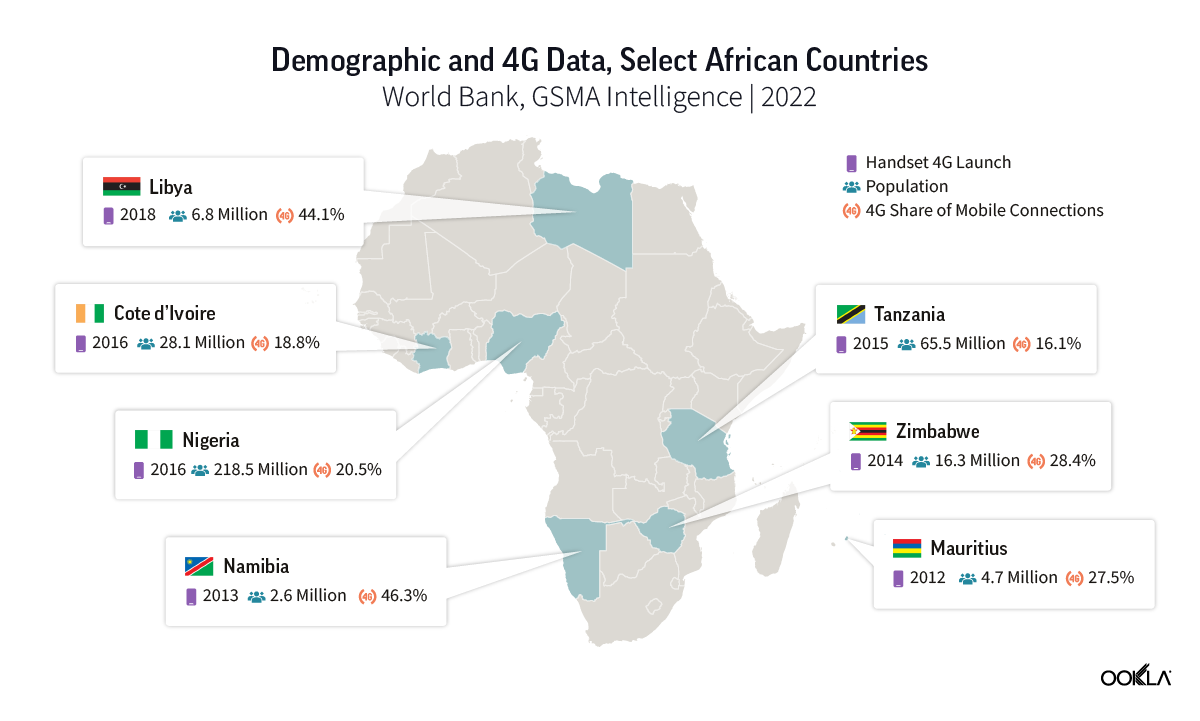
We focused on markets that offer strong growth potential for 4G, so we selected countries whose 4G share of connections was lower than 50% at the end of 2022 (based on data from GSMA Intelligence). The shortlisted countries represent different sub-regions and have different demographical and geographical characteristics, as shown on the map below. 

Map of Demographic and 4G Data in Select African Countries

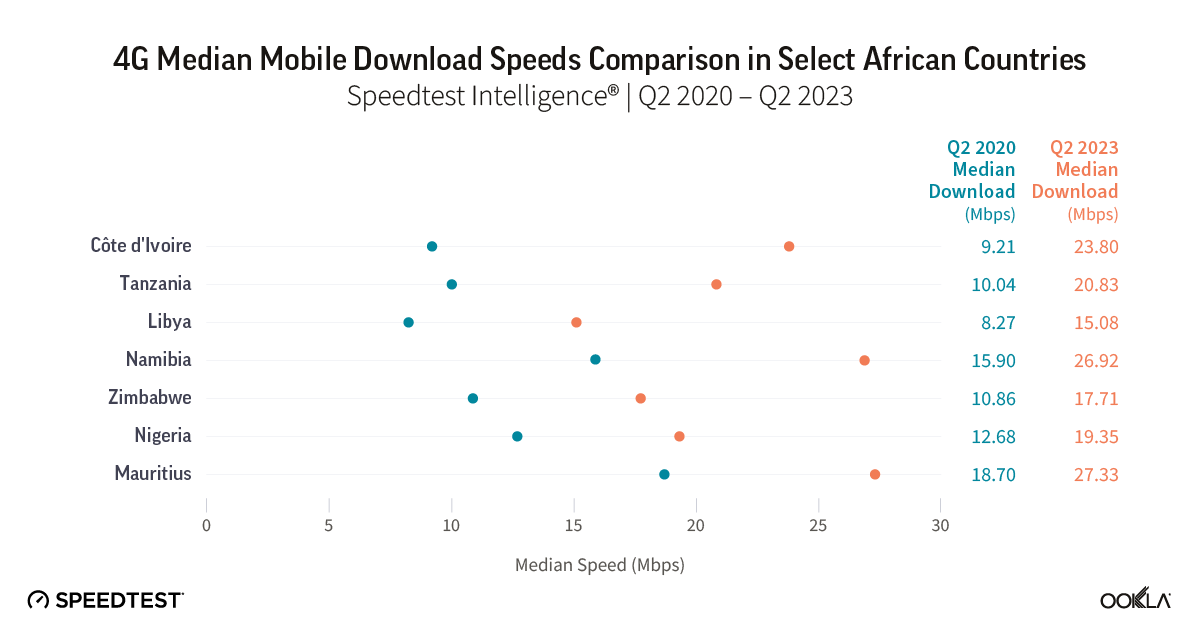
According to Speedtest Intelligence data, Cote d’Ivoire showed impressive improvement in 4G network performance since Q2 2020, reaching a median download speed of 23.8 Mbps in Q2 2023, the third highest speed behind only Mauritius with 27.33 Mbps and Namibia with 26.92 Mbps. Tanzania doubled its 4G download speeds to 20.83 Mbps while Libya, Nigeria, and Zimbabwe had download speeds between 15 Mbps and 20 Mbps in Q2 2023.

Chart of 4G Median Mobile Downloads Speeds Comparison in Select African Countries | Q2 2020 - Q2 2023

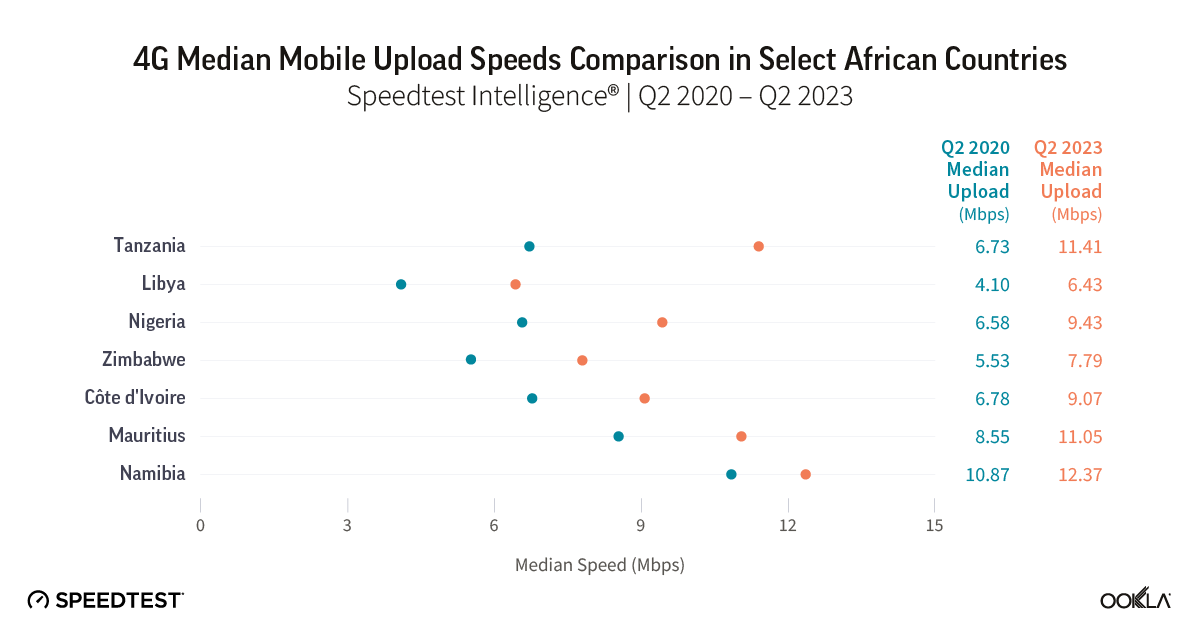
Improvements in upload speeds over the same period and the differences between the countries were less pronounced than download speed results. With a jump of 1.6 times in 4G upload speed between Q2 2020 and Q2 2023, Tanzania moved from fourth to second place, ahead of Cote d’Ivoire and Mauritius and just behind Namibia. Notably, Libya lagged behind other countries in download and upload speeds but improved markedly over three years, despite being the last one to launch 4G in 2018, and arguably, where operators had the most challenging environment. 

Chart of 4G Median Mobile Uploads Speeds Comparison in Select African Countries | Q2 2020 - Q2 2023

In the following sections, we analyze market dynamics in each country, review operators’ 4G investments, and discuss the factors that drove (or inhibited, at times) 4G market development.

Cote d’Ivoire has plenty of room to increase 4G adoption

Mobile penetration of the population in Cote d’Ivoire increased rapidly since 2020 to reach 142.4% in Q1 2023 (according to Autorité de Régulation des Télécommunications (ARTCI)). 

Orange is the largest mobile operator in Côte d’Ivoire in terms of subscribers (45.6% in Q1 2023) and 4G network population coverage (90.6% in December 2022). It launched 4G services in March 2016 over 1800 MHz. It expanded its subscriber base rapidly thanks, in part, to a $312 million investment in network deployment and upgrades in 2019 and 2020. It also set a plan to invest a further USD120 million between 2020 and 2025 to upgrade the fiber-optic backbone of its 4G network. 

MTN captured just over a third of mobile subscribers in March 2023. It launched 4G shortly after Orange, followed by LTE-A in Abidjan in December 2020, the only operator to offer this service to date in the country. In October 2022, it signed a $75 million five-year contract with Canadian infrastructure supplier NuRAN Wireless to expand its network coverage in rural areas. However, we understood that this only concerns 2G and 3G services. MTN’s 4G coverage reached 57.4% of the population at the end of 2022, way behind Orange. 

Moov had been capturing an increasing share of mobile connections until 2018. Since then, its market share has remained mostly stable at around 20%. It launched 4G services in Q3 2016 over 900 MHz. Moov has extensive network coverage in remote areas, which has helped it to grow its subscriber base. Coverage reached just over half of the population at the end of 2022, lagging behind Orange and MTN.

The three operators managed to rapidly expand 4G coverage after launch. According to Speedtest Intelligence®, 4G service availability, which represents the proportion of an operator’s known locations where a device has access to 4G LTE service, already reached 83.5% in 2018 and increased to 94.3% during Q1-Q3 2023. Despite this, 4G share of mobile connections remains low at 18.8% in 2022 (according to GSMA Intelligence). The unaffordability of smartphones, combined with the limited coverage in rural areas and poor network QoS remain obstacles to mobile data adoption.

To address these challenges, Orange and MTN launched financing schemes and introduced affordable handset models. Further, ARTCI initiated discussions with the operators in 2022 on how to implement improvements in their network and was given additional powers to improve service quality levels. ARTCI also awarded the three operators 2×20 MHz in the 2600 MHz band for LTE to improve network data capacity and is looking for infrastructure sharing as an option to speed up 5G deployment, in time for the African Cup, which will take place at the beginning of 2024.

Government support was pivotal in Libya to accelerate 4G rollout amidst challenging conditions

Libya experienced prolonged political unrest and violence since 2011, leading to the destruction of communication networks, equipment theft, and power shortage. The progressive return to stability since 2021 has somewhat enabled the restoration and extension of existing network infrastructure.

Despite these challenges, Libya has one of the highest mobile penetration in Africa (178.5% in June 2023, according to GSMA Intelligence), and it is one of the few North African countries with an MVNO (albeit capturing less than 1% of the market). The market is a duopoly with two subsidies of Libyan Post, Telecommunication and Information Technology Company (LPTIC): Al Madar Aljaded and Libyana. Both operators introduced 4G over 1800 MHz in 2018, initially covering only a few cities.

Libyana took the lead by launching LTE in January 2018 and covering 30 major towns and cities by the end of that year. It subsequently expanded coverage to more than 49 towns and cities by April 2022. 

Almadar Aljaded launched LTE and LTE-A in October 2018 in Greater Tripoli Benghazi and Misrata before expanding nationwide, claiming coverage for more than 80% of the population in 2022. 

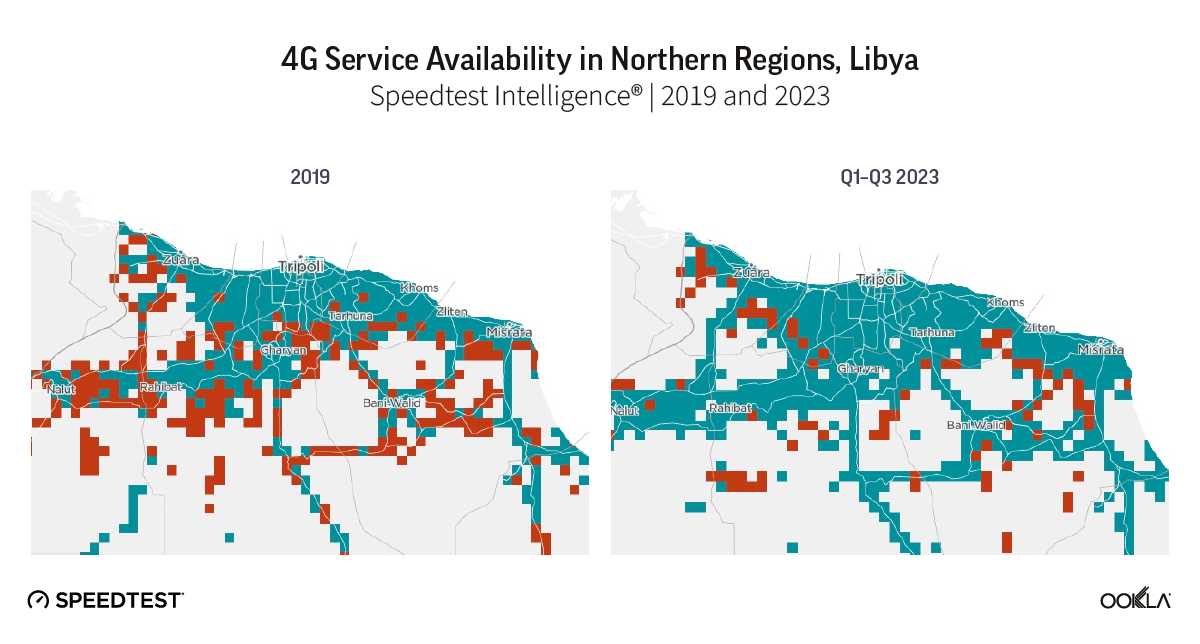
4G deployment gained momentum and the restoration of the telecoms infrastructure resumed thanks to LPTIC’s program launched in 2021 to extend LTE coverage to underserved areas thanks to cooperation agreements with foreign governments and telecoms groups. According to Speedtest Intelligence®, access to 4G service increased from 11.8% in 2019 to 76.8% during Q1-Q3 2023. Northern regions had particularly benefited from network coverage enhancements as shown in the map below where green squares show locations where 4G service is available and red squares where 4G service is unavailable.

This coverage expansion was accompanied by a boost to median download and upload speeds reaching 15.08 Mbps and 6.43 Mbps in Q2 2023, respectively. However, 4G network throughput is low compared to the performance of other countries featured in this article, suggesting that there is room to improve capacity.

Unfortunately, the deadly floods that struck the eastern part of the country in September 2023 are a significant setback. We expect network expansion and upgrade efforts will be delayed as funding will be directed toward relief efforts and the restoration of basic mobile services.

Maps of 4G Service Availability in Northern Regions, Libya | 2019 and 2023

The allocation of additional spectrum in Mauritius helped to improve 4G coverage and speed

Mauritius is an early adopter of 4G with a saturated mobile market (population penetration reached 160.0% in Q3 2023). The market has three active mobile network operators: incumbent operator Cellplus Mobile Communications (under my.t mobile), Emtel, and Mahanagar Telephone Mauritius Limited (MTML) (operating under the CHiLi brand).

Cellplus Mobile launched 4G in 2012 over the 1800 MHz band. It initiated a major network modernization project in 2017, which resulted in a 50% increase in data traffic in 2018 enabling 4G traffic to overtake 3G traffic for the first time. It achieved quasi-nationwide 4G coverage by mid-2019.

The second operator Emtel also launched 4G in 2012 and claimed its 4G network covered the whole island by end-2022. Lastly, MTML (CHiLi), introduced LTE services in 2015 and progressively expanded coverage until it reached 90% of the population by end-2022. This led to a 7% increase in monthly data traffic year-on-year in FY2022/2021.

Operators continued to improve 4G coverage and speed as they prepared to launch 5G. According to Speedtest Intelligence®, access to 4G service increased from 64.40% in 2019 to 96.3% during Q1-Q3 2023. During that period, Mauritius pulled further ahead than the other countries with 27.33 Mbps median 4G download speed in Q2 2023, overtaking Namibia which, until then, had the fastest download speed among the countries analyzed.

These achievements were partly driven by initiatives led by the Information and Communication Technologies Authority (ICTA) which continually encouraged the refarm and release of additional spectrum. For example, the 2100 MHz spectrum (1920‐1980 MHz paired with 2110‐2170 MHz) was reused for LTE and LTE-A services since 2018, after being used exclusively for 3G. ICTA also assigned 2×10 MHz of spectrum in the range 832MHz-862MHz and 791MHz-821MHz for LTE services in 2021, which helped to increase 4G coverage.

Access to additional spectrum and operators’ investment in Namibia helped to boost 4G coverage and performance

Mobile population penetration reached 110.7% in Q3 2023, behind other African markets with similar GDP. Similar to Libya, the market is a duopoly with two mobile operators controlled by a state company, Namibia Post and Telecommunications Holdings (NPTH): MTC, with an 86% market share, and Telecom Namibia (TN Mobile).

Market leader MTC launched a 4G LTE network over 1800 MHz in May 2012, initially for mobile broadband only. MTC then activated LTE-A in April 2016 contributing to boosting download speed, despite limited service availability in selected urban areas. MTC refarmed 2100 MHz for LTE in 2018 and was awarded 2x5MHz lots in the 900 MHz spectrum band in August 2021, but that was deemed insufficient to serve its large subscriber base. It initiated the ‘081EVERY1’ project to build additional base stations and upgrade 4G infrastructure in towns to provide 100% population coverage by the end of 2023. However, we understand that this objective has not been attained as of October 2023 (LTE coverage expanded to more than 68% of the population in 2022).

TN Mobile launched 4G in November 2013 and LTE-A in late 2019, using only 1800 MHz. In July 2022, the operator outlined a plan to invest more than $124 million over five years to modernize its network, starting with its national backbone, core network, and access technologies to boost population coverage and network QoS. Before that, TN Mobile had been deploying or upgrading mobile sites in selected rural and urban areas since 2019 to achieve 100% population 4G coverage by end-2023. However, the cost of competing with the dominating incumbent operator will likely make it difficult to achieve it.

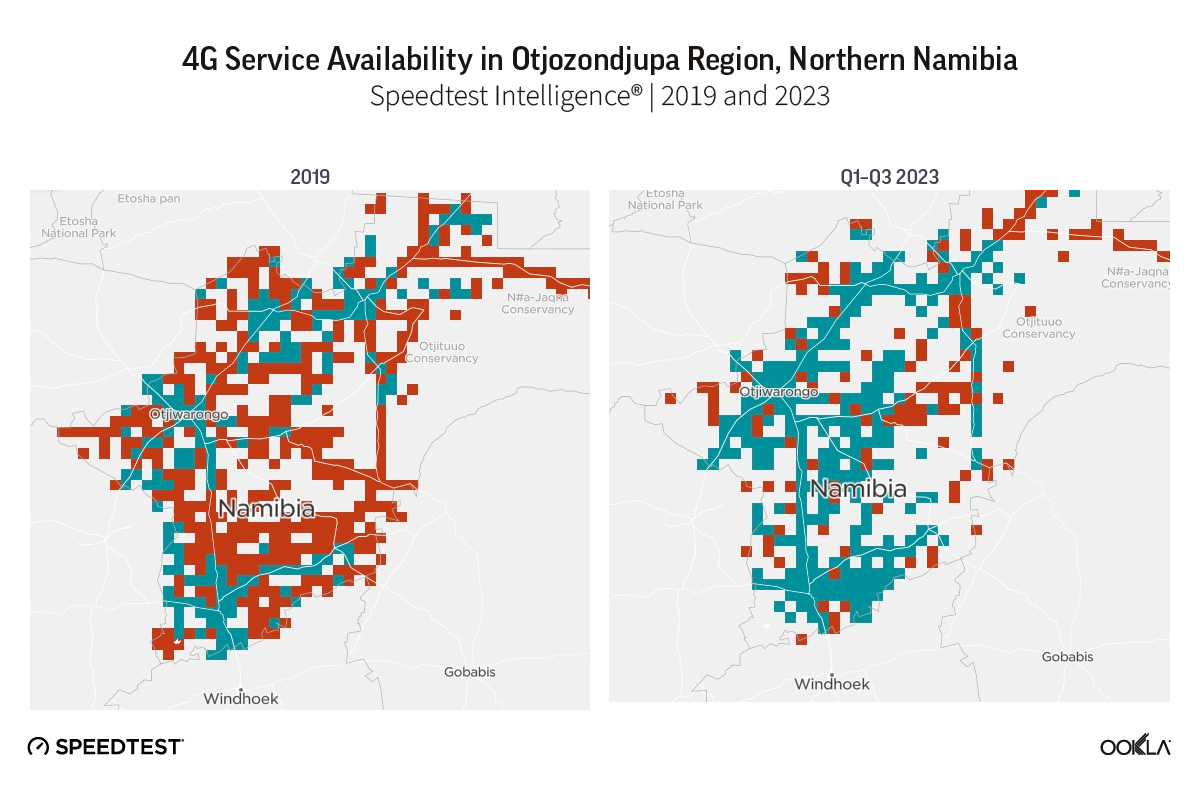
According to Speedtest Intelligence, 4G service availability in Nambia increased from 24.7% in 2019 to 76.6% over January-October 2023, with the Otjozondjupa region showing substantial improvement (see map below). However, according to the Communications Regulatory Authority of Namibia (CRAN), only seven out of fourteen regions were covered by 4G, calling for more private-sector investment to increase 4G footprint. To support these efforts, the CRNA kicked off the auction process for 700 MHz (703-788 MHz) and 800 MHz (790-862 MHz) frequency bands in February 2023. The spectrum was awarded in October 2023 to the two mobile operators and local ISP Loc8 Mobile for 4G and 5G services.

The three licensees should provide 4G and 5G services with at least 20 Mbps download speed and have to extend 4G coverage to at least 80% of the population in six out of the 14 regions. This suggests that operators will need substantial investments in network infrastructure to satisfy these coverage and speed requirements.

Maps of 4G Service Availability in Otjozondjupa Region, Northern Namibia | 2019 and 2023

Access to multiple spectrum bands helped operators in Nigeria to rapidly expand 4G network coverage

Nigeria is the largest market in Africa in terms of mobile connections with over 220 million mobile subscribers. The market peaked in 2020 and then contracted due to the implementation of the SIM registration policy. The market started recovering more in the second half of 2021 as previously-restricted subscribers obtained a new SIM through ID verification. Mobile penetration reached 90.3% in Q3 2023.

The market is highly competitive with three main players: MTN (38.7% share of subscribers in July 2023), Glo (Globacom) (27.82%), and Airtel (27.24%). 4G coverage increased rapidly to reach 80.9% at the end of 2022 though adoption peaked at around 25% before starting to fall as some customers migrate to 5G. 

Glo was the first main operator to introduce 4G services in 2016 over 700 MHz, which it then combined with 1800 MHz spectrum in 2019. It launched LTE-A in 2023 by combining  700 MHz, 1800 MHz, and 2600 MHz (which it acquired recently), and plans to deploy 4,000 LTE-A mobile sites in major towns and cities.

MTN launched 4G the same year using 1800 MHz and 2600 MHz bands. It then launched LTE-A by combining 2600 MHz and 1800 MHz in 2019. MTN then acquired 800 MHz spectrum to improve coverage 4G coverage which reached 83% in 2023. Its CAPEX (excluding right-of-use assets) increased by 18.1% in 2022 to around $470 million to accelerate 4G and 5G network expansion. In September 2023, it acquired an additional 10 MHz of spectrum in the 2600 MHz band to improve the capacity of its LTE network. 

Airtel was the last to launch LTE over 1800 MHz, before incorporating 2600 MHz in 2019 and 900 MHz in 2022, which helped to expand coverage to more than 463 locations in the country.

Maps of 4G Service Availability in Nigeria | 2019 and 2023

Operators faced several technical and operational challenges that impacted the quality of 4G connectivity in Nigeria. This was the result of the network infrastructure not being able to keep up with pent-up demand for mobile device services. Other factors also contributed to the deterioration of network quality including the limited access to continuous power supply, vandalism, and multiple taxes and levies. 

Furthermore, the Nigerian Communications Commission (NCC) and the government took a tough stand against operators for failing to meet QoS obligations or delaying tax payments, resulting in significant fines between 2012 and 2016. 

The NCC started adopting less punitive measures against operators recently and being more actively engaged with them on QoS issues, following the South African model. The government also reversed its decision to impose a 5% excise duty on telecom services in 2023. These measures should help somewhat operators weather the current challenging macroeconomic climate.

The regulator’s efforts helped improve 4G coverage in Tanzania but data services remain unaffordable to most of the population

Tanzania has a crowded mobile market with seven operators and fierce price competition. The introduction of biometric SIM identification slowed market growth in 2020 (the market contracted by 9.5 million) before recovering in 2021. Mobile penetration reached 93.9% in June 2023.

Three operators dominate the market: Vodacom (30% of subscribers in June 2023), Airtel (27%), and third-placed Tigo (27%), which was acquired by a consortium led by Axian Telecom in April 2022.

Vodacom launched 4G commercially in 2016. It uses 700 MHz and 1800 MHz spectrum bands. It reported having deployed 2315 4G sites by the end of 2022 (up from 1814 in September 2021) and that broadband coverage reached 93% of the population.

Airtel launched LTE services over 1800 MHz in the capital Dodoma in November 2019 then expanded to other cities in 2020. It announced the deployment of its ‘Supa 4G’ LTE-A network in 2021 which uses 700 MHz and 2100 MHz in 500 cities and villages. It claims to have rolled out LTE-A in 80% of its mobile sites by April 2022. Airtel was also allocated an additional spectrum in the 1800 MHz band in 2019. 

Tigo launched LTE services in Dar es  Salaam in April 2015 over 800 MHz. It progressively expanded its network to reach 26 regions by February 2022. It launched LTE-A in September 2018 over 800/1800 MHz in a limited number of cities. In May 2022, Axian Telecom announced plans to invest $500 million in infrastructure over the next five years to improve 4G coverage and QoS, especially in rural areas, and to support the country’s digital transformation and bridge the digital divide. 

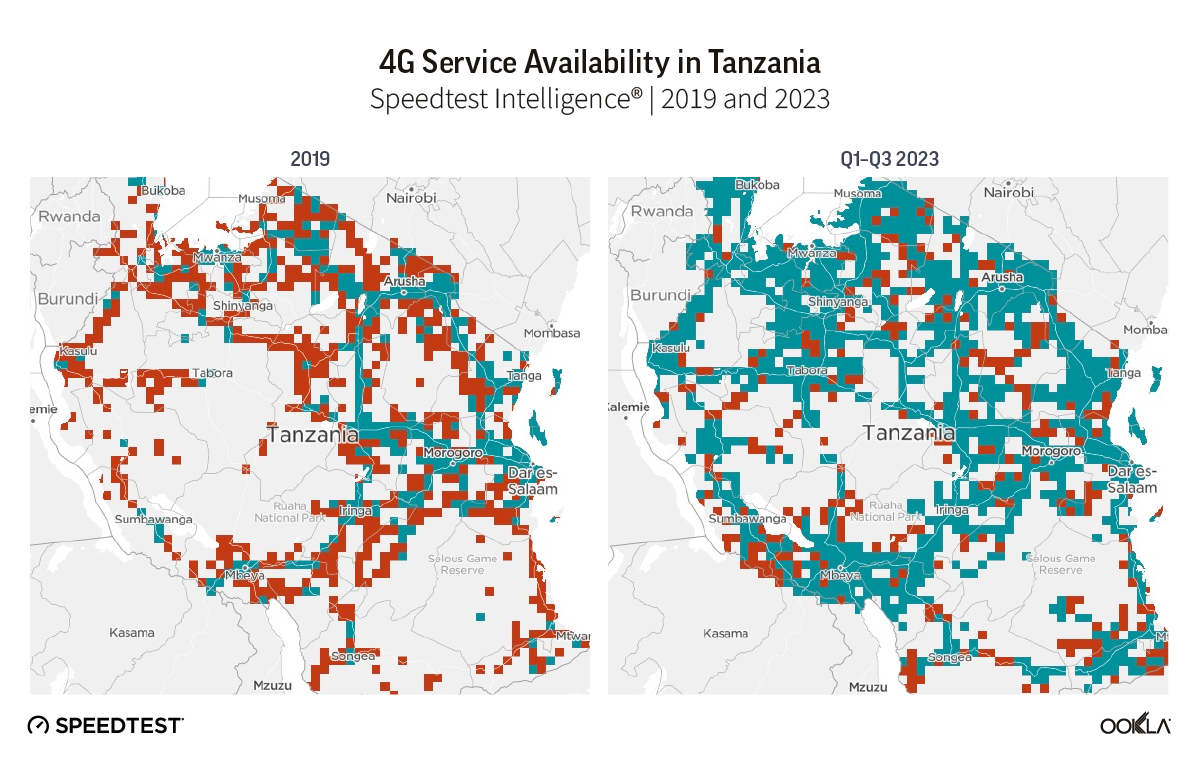
Maps of 4G Service Availability in Tanzania | 2019 and 2023

The Tanzania Communications Regulatory Authority (TCRA) has been less punitive than before. For example, in 2019, it fined the six operators $2.6 million for failing to meet QoS standards. However, in 2021, the TCRA ordered the operators to invest $16.4 million to address network issues rather than issue a new fine

The government also freed up the 700 MHz band and auctioned it off in 2018 to enable operators to provide 4G data services to more communities. Four years later, another auction was completed for 2300 MHz, 2600 MHz, and 3500 MHz bands to be used for 4G and 5G. More recently, the government launched the ‘Digital Tanzania’ project in May 2023 in partnership with mobile operators and with support from the World Bank to reach 80% broadband population penetration by 2025. Operators will use the universal access fund to deploy 758 mobile towers to provide data services to 1407 villages and over 8.5 million potential users. 

While 4G coverage reached 65%, Tanzania has the lowest 4G share of connections among the countries reviewed in this article, at 17.8% in Q2 2023. Furthermore, according to TCRA, only 27% of Tanzanians owned smartphones and mobile internet-enabled devices in 2022. 

This suggests that many consumers still can not afford data-enabled handsets and that data tariffs remain out of reach for most Tanzanians, given low income levels, since most of them live in rural areas and work in the agriculture sector.

The government plays a crucial role in progressing the national broadband connectivity agenda in Zimbabwe

According to the Postal and Telecommunications Regulatory Authority (POTRAZ), mobile penetration reached 91.9% at the end of Q2 2023. Mobile data connectivity is the most common way to access internet services. 3G and 4G services represented more than 98% of data connections in the country, and the main driver for internet penetration.

The market is dominated by Econet which controls 72.3% of subscriptions as of June 2023. It launched 4G over 1800 MHz in August 2013, but adoption was muted because of limited coverage, and expensive tariffs. Fast forward to October 2022, and 4G network reached 39% of the population. Econet has the highest number of LTE base stations in the country, 54.3% of the 1962 stations in June 2023. In September 2023, it announced the deployment of 30 new 4G sites by March 2024 and an upgrade of all existing 2G sites to 4G in the eastern provinces. 

NetOne is a state-owned operator and the second-largest player with a 25.5% market share in June 2023. It launched 4G in November 2014, using 1800 MHz before adding 700 MHz in 2016. It resumed deployment of LTE base stations in rural areas in 2021, which helped it to control more than 44.5% of total 4G towers in the country (867 base stations) and grow its data subscribers.

Telecel has been struggling to maintain its market share over the past few years. It initially opted not to launch LTE along with competitors because it believed that the market was not ready. It eventually introduced LTE in late 2017 but had just 17 LTE base stations according to the regulator by mid-2022.

The government announced its plan to raise internet penetration to above 75.0% by 2025, up from 65.2% in Q2 2023. It announced the national broadband program covering 2023–2030 to reduce the cost of broadband access to 2% of the average monthly income from 10.1%. The government is committed to raising the funds for this plan which includes the deployment of fibre infrastructure for broadband access and backhaul. It also plans to deploy 300 base stations across the country to be shared by the operators to support mobile services in rural areas using the universal services fund.

This is a vital initiative as operators are struggling to finance their network deployment and upgrade their networks due to currency depreciation, and limited access to foreign currency to pay for equipment. Their revenues are also down due to the reduction in consumer spending as a result of inflation and reduced disposable income, which is impacting their ability to finance their infrastructure development plan.

It is clear, from the examples discussed above, that the role of governments and regulatory authorities is crucial to making mobile data services accessible in Africa. Operators need sufficient spectrum, favorable policies and regulations, and the support they need to expand 4G infrastructure. In light of the current macroeconomic and operational challenges hindering the adoption of 4G, such as spectrum availability, coverage requirements, and handset affordability, overcoming these challenges will help with the next phase of 5G development.

Connectivity is crucial to economic development, competitiveness, and innovation in the Middle East and Africa region. Ookla’s crowdsourced insights and data help policymakers make informed decisions on how to use spectrum efficiently and improve network performance and user experience. Ookla also regularly hosts events in the region to help regulators share knowledge and experiences on how to close the digital divide. Regulatory officials from Jordan, Palestine, Iraq, Qatar, Bahrain, and Libya attended the last regulatory summit in June 2023 in Jordan.

Ookla retains ownership of this article including all of the intellectual property rights, data, content graphs and analysis. This article may not be quoted, reproduced, distributed or published for any commercial purpose without prior consent. Members of the press and others using the findings in this article for non-commercial purposes are welcome to publicly share and link to report information with attribution to Ookla.